Gubernatorial candidates present drastically different plans to improve healthcare costs, access
Sep 04, 2026 | 4:23 pm ET
Description
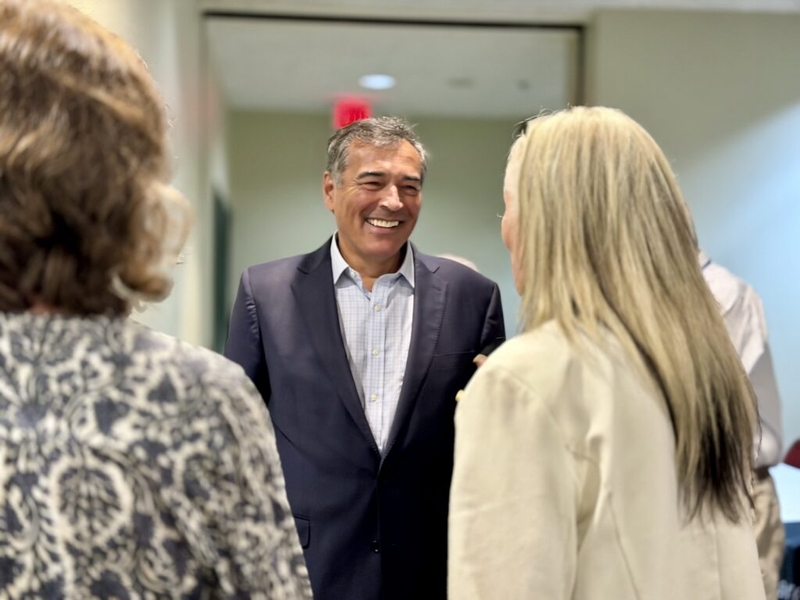
Independent gubernatorial candidate Rick Bennett at the Health Care for Maine conference on Sept. 3, 2026. (Photo by Eesha Pendharkar/Maine Morning Star)
Maine’s three gubernatorial candidates acknowledge that Mainers are having trouble accessing and paying for healthcare. Their solutions to fix that problem are starkly different.
At the annual Health Care for Maine conference organized by nonprofit Consumers for Affordable Healthcare, all three candidates — Democrat Hannah Pingree, independent Rick Bennett and Republican Bobby Charles — were invited to present their plan to address challenges with rising costs, closing hospitals and federal cuts to Medicaid and health insurance subsidies.
Pingree and Charles sent in video messages while Bennett appeared in person.
Ann Woloson, executive director of the nonpartisan Consumers for Affordable Health Care, said it’s important “that everybody agrees something needs to happen. Consumers, providers and our healthcare infrastructure are all struggling.”
Approximately 31,000 Mainers are expected to lose health care coverage due to the Trump administration’s cuts to Medicaid, and thousands of others are foregoing marketplace coverage due to spiking costs.
“In fairness to each of the candidates,” she continued, “they understand that this is a priority for Maine people, and that something needs to be done to address rising costs and the barriers that many of them are facing accessing the health care they need.”
Gov. Janet Mills was honored at the conference as a “healthcare hero” for signing voter-approved Medicaid expansion into law, launching the health insurance marketplace CoverME.gov, and defending reproductive rights throughout her eight years in office.
“The progress we’ve made here in Maine in healthcare at the state level is in jeopardy because of the actions of this president and this Congress,” Mills warned in her speech. “Please make sure that the next person who occupies the Blaine House does appreciate what you’ve done, we’ve done, and that they stand up against the federal government that seems determined to strip healthcare access for the Maine people.”
Bennett: Prevention-first and eliminating medical debt
Bennett, a state senator from Oxford and former head of the Maine Republican Party, left the GOP to run for governor as an independent last year. On stage Thursday, he blamed both parties for the current state of healthcare.
“Our healthcare system in Maine is failing,” Bennett told the crowd. “And those in charge, both the Democratic Party here in Maine and the Republican Party in Washington, are papering over the crisis with empty promises to get through the next election.”
Throughout his campaign, he has emphasized thinking outside party lines for solutions. His plan focuses on strengthening the healthcare workforce, taking a prevention-first approach to health, and eliminating medical debt. He also highlighted his pro-choice stance and most recent 92% approval rating from Planned Parenthood — although the organization endorsed Pingree in July. He also said Maine needs to find a “real path to universal care,” which might require working with other states.
Universal healthcare has long been discussed as an option in Maine, with an ongoing campaign to put it on the ballot for 2027.
One key point of Bennett’s healthcare plan is a prevention-first approach, which includes investing in primary care and recruiting doctors to Maine to be able to avoid ER visits or behavioral health crises, he said.
“We need to support the doctors, the nurses, the direct care workers, mental health professionals, recovery workers, and community health teams Mainers depend on,” he said.
“That means better and quicker reimbursement and higher pay, it means … scholarships and debt forgiveness for health professionals, and better working conditions.”
He also proposed eliminating medical debt for the more than 40% of Maine households that currently have outstanding healthcare bills. Several other states have passed legislation to limit medical debt, including a Maine law passed in April that bans medical debt collectors from placing a lien on a person’s home or garnishing their wages.
Under Bennett’s plan, the state would negotiate with providers to pay “pennies on the dollar” to pay offMainers’ medical debt. The senator is proposing a $2 million allocation to start such a program.
Woloson told Maine Morning Star that she thought eliminating medical debt was a “worthy goal.”
“While I believe that is important and hope that that could happen, I think what we should also be doing is trying to do all we can to make sure that Mainers don’t end up with medical debt unnecessarily,” she added.
Charles: Compliance with the federal healthcare agenda
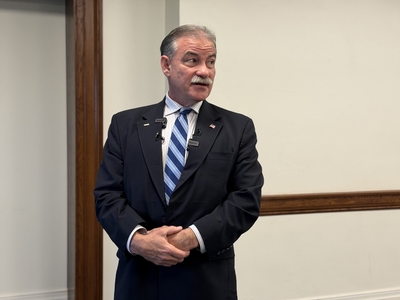
Charles said in his video message that he supported the Trump administration’s changes to the federal Medicaid program, including work requirements, which are estimated to make thousands of people drop out because of the bureaucratic burden, and changes that will make several groups of non-citizens ineligible starting Oct. 1.
“I also believe Maine now has no choice but to make these changes on the state level because without the federal subsidy, we would end up having to pay 100% of the cost of these two groups,” he said.
“Maine simply does not have a billion dollars to provide free healthcare to non-citizens and able-bodied childless adults.”
Charles also vouched for increased cooperation with the federal government, citing an example of a Medicaid audit that found $46 million in improper payments — not necessarily an indication of fraud — and saying he would have complied with the probe, instead of challenging its findings.
The Maine Department of Health and Human Services has disputed claims that the agency is not cracking down on fraud, announcing earlier this month that it suspended payments to five providers and terminated two providers’ contracts for subjecting residents to serious health risks and unsafe conditions.
Charles said Mills’ passage of Medicaid expansion is the “single cause” for the vast majority of healthcare problems in the state.
“On her first day in office, Janet Mills expanded MaineCare and every day since, she has refused to properly fund it,” he said. “Federal-state partnerships do not work when they are left unfunded.”
Charles also connected hospital closures in Maine to insufficient Medicaid reimbursement rates. “Those who reluctantly made the decision in nearly every one of those closures of hospitals and other institutions cited the same cause,” he said, “state Medicaid reimbursement rates were too low, and bills were not paid on time.”
Research has shown that expanding Medicaid helped hospitals by reducing the rate of uninsured patients and thus ensuring that hospitals were reimbursed for services they otherwise would’ve had to offer free of charge. Since passage of the Republican budget reconciliation bill last summer, at least four hospitals have been identified for being at risk of closure due to the cuts in that package.
Charles did agree with his opponents on the need to recruit physicians, forgive education loans and for the state to build relationships with medical schools.
Pingree: A public health insurance option
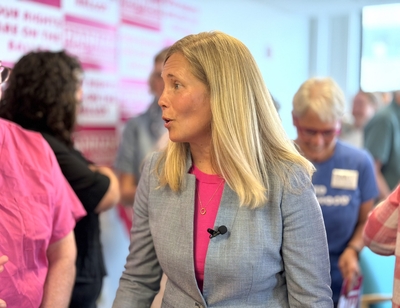
Pingree, who also spoke by video, said her plan is focused on creating a public health insurance option to offer an alternative to private coverage.
“It will give people and small businesses another real choice,” she said. “A reliable, affordable option puts pressure on the entire system’s lower cost.”
Wolson said a public option is something Maine should “definitely explore.” It would bring competition into the market and may force other private health insurers to reduce their costs,” she added.
Pingree’s proposal also included cracking down on private equity-owned hospitals and insurance companies to make care and medications more affordable.
“We’ll use bulk purchasing, multi-state partnerships, and stronger state authority to bring down drug prices and stop outrageous price hikes,” she said.
“We’ll cut red tape, like the excessive use of prior authorizations that waste time, that delay care and put insurance companies between patients and their doctors,” Pingree added.
She also promised to keep investing in MaineCare, including prioritizing enrollment so people know about their options, imposing a moratorium on future hospital closures and focusing on reversing the trend, and investing in recruitment and retention in Maine’s healthcare workforce.
Finally, she declared an intention to work with tribal nations “to make sure our care reflects community needs, not one-size-fits-all systems.”
Mills, who has endorsed the Democrat, commended Pingree’s healthcare proposal, saying it is “concise. It’s attractive, and I give her all kinds of credit for thinking outside the box.”
“I hope she’s the next governor, and I hope she continues to use these values, the same values that we have, and continues to make progress on the progress we made the last few years in her own way.”
Augusta, ME