State tax revenues miss target by over $1 billion dollars to allow another income tax cut
Sep 04, 2026 | 2:05 pm ET
Description
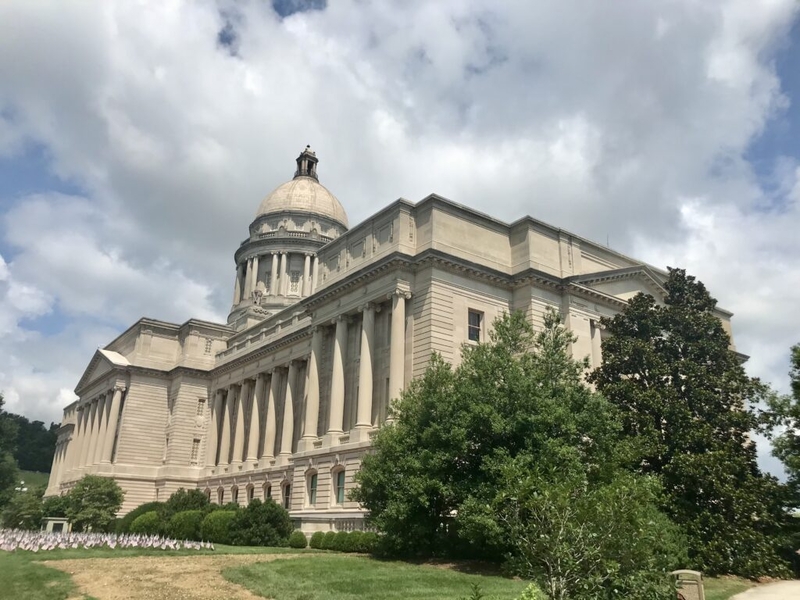
Kentucky State Capitol in 2020 before construction project (Photo by Sarah Ladd)
Kentucky has missed key fiscal targets within the state budget to allow for another future cut to the state’s income tax rate in 2028, the second year in a row and the third time in four years that such targets have been missed.
That’s according to a Friday letter by State Budget Director John Hicks to the Interim Joint Committee on Appropriations and Revenue, obtained through a spokesperson for Democratic Gov. Andy Beshear.
In his letter, Hicks presented data that showed the amount of tax receipts going into the state’s General Fund missed a target to allow for a half percentage point reduction to the state’s income tax rate by more than $1 billion.
The letter was first reported by Louisville Public Media.
The GOP-controlled state legislature in 2022 established an intricate system of fiscal triggers that, if met, allow lawmakers to lower the state’s income tax rate. The triggers are intended to prevent state revenues from rapidly plunging and creating a financial crisis, akin to what happened in Kansas when lawmakers there slashed income taxes, and allow for a more gradual decrease in the income tax rate.
The key fiscal trigger in question that was not met is a requirement that General Fund receipts for the fiscal year exceed spending by the amount of funding it would take to cut the income tax rate by one percentage point.
Sen. Chris McDaniel, R-Ryland Heights, the co-chair of the Interim Appropriations and Revenue Committee, told the Lantern despite the fiscal triggers not being met “it shows the General Assembly is being exceptionally responsible with our spending and exceptionally good stewards of taxpayer dollars.”
“While there still is work that remains to be done, we’re committed to doing that hard work,” McDaniel said.
GOP state lawmakers have already decreased the income tax rate from 5% to 3.5% with the eventual goal, supported by the Kentucky Chamber of Commerce, to eventually eliminate it. Under the current system of fiscal triggers, the soonest the state legislature could vote to reduce the income tax rate would be in 2029.
In 2025, state lawmakers also made changes to the system of fiscal triggers to allow for a smaller cut to the income tax rate with a smaller tax receipts threshold to meet within the state budget. Hicks wrote in his letter that the smaller fiscal trigger had also not been met.
Jason Bailey, the executive director of the progressive think tank Kentucky Center for Economic Policy, said in a provided statement the state legislature “has hit the wall in its effort to eliminate what was once Kentucky’s largest revenue source.”
He criticized efforts to reduce the state income tax as primarily benefiting wealthy Kentuckians while costing the state billions of dollars in needed funds for Medicaid, public education and meals for seniors.
“It’s time to shift the focus away from tax cuts skewed to the wealthy and toward the public investments Kentuckians need to build a stronger economy and thriving communities in every corner of the state,” Bailey said.
Some Republican state lawmakers have called to more quickly cut the income tax rate despite fiscal triggers not being met, and a member of Kentucky House leadership had argued last year the state had actually met the requirements to lower the income tax rate.
Beshear has had a mixed history of supporting and opposing cuts to the income tax rate at different times. When state receipts didn’t meet fiscal triggers last year, he warned against lawmakers disregarding the fiscal “guardrails” put in place and moving ahead with an income tax rate cut anyway. Lawmakers did not approve an income tax rate cut last year.
In response to a question about some GOP lawmakers wanting quicker income tax cuts, McDaniel said it is “nice when things are quick, but it’s important that they’re responsible.”
“We don’t always like the outcomes that we get, but if we trust in the overall structure we’ll continue to move in the right direction in a responsible manner,” McDaniel said.
He also criticized the governor over “explosive costs” within the executive branch, particularly on Medicaid spending, echoing critiques from lawmakers earlier this year during the state budget-crafting process. Earlier this year, a spokesperson for the governor had called efforts to control executive branch spending on travel and other expenditures as unfounded and politically motivated.
Frankfort