Corruption scandals, silver coins and grasshoppers were the hot topics in Colorado’s 1876 election
Sep 04, 2026 | 12:19 pm ET
Description
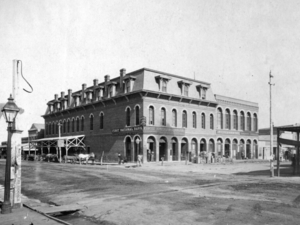
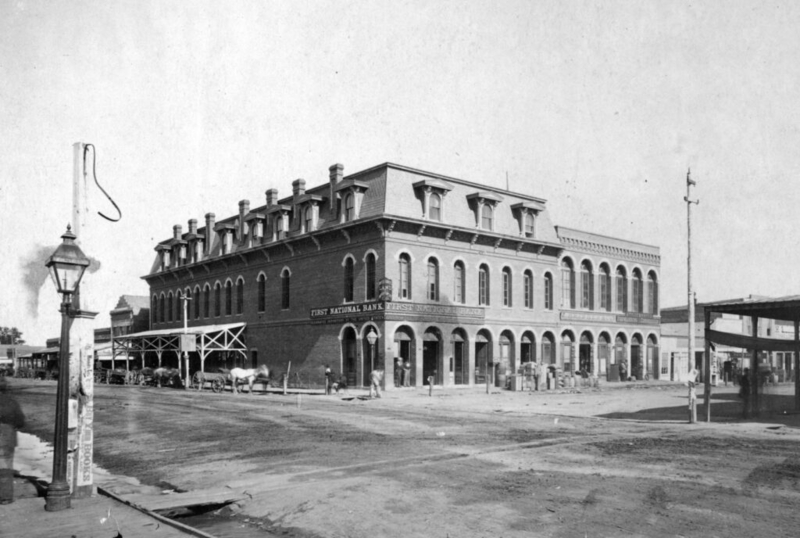
The third floor of the First National Bank building on 15th Street served as the chambers of Colorado's 1876 constitutional convention. (Courtesy of Denver Public Library Special Collections, X-23704)
The conclusion of the 1876 Democratic and Republican state conventions kicked off a month-long sprint of canvassing, oratory and breathless newspaper commentary before Colorado’s first state elections were to be held in the first week of October.
Political clubs formed in Front Range cities and mountain mining camps, and candidates criss-crossed the new Centennial State by rail and stagecoach to make their pitches to voters.
Thomas Patterson, a Democrat who’d served as Colorado’s territorial delegate to Congress since 1874, represented his party’s best hope in an election otherwise thought to favor Republicans, and the “Little Tiger,” as some papers called him, wasted no time in hitting the campaign trail.
“Mr. Patterson is racing over southern Colorado, springing from stump to stump and rending the air with touching tributes to his immortal services in Congress and expositions of his claims on the people for reelection,” reported the Rocky Mountain News.
An organ of the Colorado Republican establishment, the News urged a vote instead for James Belford, the GOP’s congressional nominee. Its commentary dismissed Patterson’s election two years earlier — “by a rather satisfactory majority on a very light vote” — as a fluke, even as it betrayed an obvious anxiety that Patterson’s popularity would now carry him back to Congress.
“Colorado is Republican, and must be represented by a Republican,” the News insisted. “No personal liking for Mr. Patterson can justify any Republican now in giving his vote against Belford and in favor of continuing the Confederate House of Representatives in power.”
Though Americans in the 19th century were often bitterly divided along party lines, the nature of partisan conflict was less ideological than it would later become. As the News’ editorial implied, community ties, patronage networks and the lingering enmities of the Civil War were typically the most important factors in determining party affiliation.
The parties’ broad, often overlapping stances on the major social and economic questions of the day — tariffs, monetary policy, corporate regulation, suffrage, temperance and more — “were only partly what made people Democrats or Republicans,” writes historian Richard White.
“Issues could bring voters to the polls or keep them home, but usually they would not lead them to desert one party and vote for another,” White writes. “Politics remained as much about identity as issues.”
Both state party conventions adopted platforms that were duly reprinted by partisan newspapers, often on a daily basis, alongside party slates for the long list of state offices up for election.
“As the preservation of our nation from destruction by a Democratic rebellion was by the Republican Party,” declared the Colorado GOP, “so we believe that its perpetuation as a nation, and the maintenance of our civil liberties, depend upon the continuance in power of the Republican Party.”
As President Ulysses S. Grant’s administration reeled from a series of corruption scandals, Colorado Republicans promised “true and genuine reform” of the nation’s civil service, arguing that the GOP had “displayed the courage and integrity to punish its criminal public officials, whereas the Democratic Party always allows its rogues to go unwhipped of Justice.”
1876 marked the start of Colorado’s decades-long ‘free silver’ crusade
Both parties’ platforms promised to bring relief to Colorado farmers impacted by the devastating grasshopper plagues of the preceding few years. Both promised to champion the Centennial State’s emerging interest in silver coinage laws, backed by the state’s powerful mining industry. On both counts, Democrats believed they were more in touch with the common man than the Denver GOP establishment.
“Compared with the glittering generalities endorsed by the (GOP’s) Pueblo convention, the Manitou platform is a masterly statement of the real issues of the day, especially in Colorado,” said the Golden Transcript, the state’s leading Democratic paper. “The grasshopper plank, unlike the one that was passed with a sneer at Pueblo, reads as though it meant something.”
The Democratic platform attacked the Republican federal appointees who had governed the Colorado Territory as “corrupt and unscrupulous,” promising instead to inaugurate a state government with “moderate fees and salaries to officials, the lowest possible rate of taxation, (and) the strictest economy in disbursing the public funds.”
“Our object is reform, retrenchment, and relief,” the Democrats concluded. “We believe that by honesty and economy we may reduce the taxes and lighten the burdens of the people, giving at the same time absolute security and protection to the rights and property of all.”
In spite of the heated rhetoric that could be stirred up in a country just 11 years removed from a bloody Civil War, dialogue wasn’t impossible. In Pueblo on Sept. 6, Patterson met George Symes, a Denver attorney and prominent Republican, for “a discussion of the political events of the day.”
“Many ladies were present, and the cornet band discoursed excellent music,” reported the Pueblo Chieftain the following day. “Both speakers were frequently applauded … The most cordial feeling prevailed during the meeting.”
Denver, CO