Skirmish on banks of the Willamette reminds us Oregon cities face challenging fiscal future
Sep 04, 2026 | 8:30 am ET
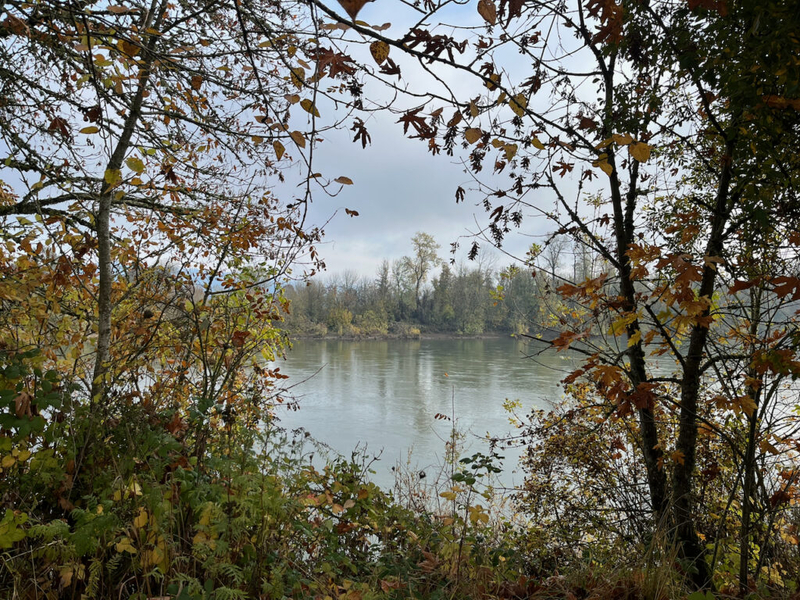
Description
The Willamette River is visible through the trees from a Riverview Park trail in Independence, Oregon. The park temporarily closed as the city prepares for a referendum on a fee meant to fund city services, including parks. (Photo by Julia Shumway/Oregon Capital Chronicle)
The battle of Bunker Hill it was not. But, just last week, the city of Independence experienced a virtual storming of the gates at its closed municipal parks and a volunteer mower brigade threatening to reclaim their civic turf. But, unlike “the course of human events” that followed in the history of the city’s namesake, this revolt was halted when a nonprofit organization intervened to reopen the city’s riverside events venue.
Historical analogies aside, this was a skirmish with reverberations for other small and mid-sized cities in Oregon that have been growing rapidly in the wake of the pandemic. As these cities add housing in pace with the state’s home-building goals, they may benefit in state aid to expand their water and sewer lines; but then they’re stuck with a bill they can no longer afford to provide ongoing services for their expanding populations.
For Independence, a city of 10,000 southwest of Salem, that bill came due when a new administration at City Hall decided it was time to end the practice of shuffling money from other funds to maintain the city’s parks and library. In June, the city council enacted a $20 monthly utility fee to set things straight and put funding for its parks and library on a more sustainable and, proponents argue, a more honest footing.
Then, in another reprise of our nation’s founding document — the part about “a decent respect to the opinions of mankind” — city residents launched a petition drive to challenge the new fee and bring it to the voters for approval. When the petition garnered enough signatures, it froze the fee and its funding for the city’s parks until the November election.
The council responded by closing city parks, fencing them off from the public. Social media, faster than any midnight ride of yore, took over from there. And, within the space of three days, the fences came down, thanks to a $30,000 donation from the local Friends of Community Parks.
It will now be up to the city’s voters to decide whether to approve the fee or find out what is meant by the phrase “the rest is history.”
I’ve written before about the causes that led to the civic eruption in Independence last week. Small and mid-sized cities in Oregon, like most of their big city counterparts, face an unsustainable fiscal future.
That’s a warning that has gone unheeded ever since Oregon’s Task Force on Comprehensive Revenue Restructuring called out the stranglehold facing cities and counties: With local property tax revenues largely disconnected from economic growth and population growth ratcheting up the demand for public services, local governments face a not-if, but-when reckoning. That warning was delivered to the Legislature in 2009, but the reckoning was forestalled by a decade of low inflation and favorable borrowing costs.
Now the threats that looked all too distant in 2009 have finally materialized. The rate of inflation has more than doubled since then. Interest rates have followed suit. And mid-size cities like Independence with affordable housing, slower-paced lifestyles and attractive amenities have become a magnet for urban migrants and young families.
Independence has been doing its part to house more Oregonians. The state helps out with grants for infrastructure. But the city, constrained by state limits on property taxes and local option taxes, has been left with a budget that dips deeper in the red with every new arrival.
Economists call this a structural deficit, an eyes-glazing term meaning that the time is coming when a city like Independence can no longer afford to be the city it is now.
The voters of Independence may yet to decide to approve the new fee. The city’s Riverside Park may continue to host rock bands, outdoor movies and a Saturday market.
But this skirmish on the banks of the Willamette River is another reminder that our cities have become the stepchildren of a state government that continues to claim the lion’s share of revenues from economic growth while leaving local governments to cope with the civic needs of their growing populations.
As the signers of the Declaration of Independence said of King George, the citizens of Independence and other cities doing their best to welcome new residents may yet accuse their state overlords of “refus(ing) to pass other Laws for the accommodation of large districts of people.”
Those “other laws” in this case are what’s needed to restore a better balance in distributing the revenue dividends from our economy. Only state lawmakers and voters statewide can fix that, no matter what the voters of Independence decide.
Salem, OR