Citizens’ group pledges big ideas to reform CT property tax
Sep 04, 2026 | 5:00 am ET

Description
Photo courtesy of CT Mirror
The Citizens’ Assembly hoping to reform Connecticut’s property tax system teased big ideas and a robust political debate this fall and winter but will keep the details under wraps for a few more weeks.
The four assembly members who met virtually with reporters Thursday predicted their biggest challenge rests not with Connecticut’s governor or legislators but with a public long frustrated by the property tax but unfamiliar with how thoroughly it’s entwined with nearly all aspects of their lives.
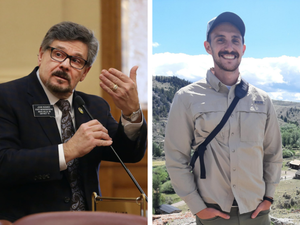
“You’re going to see some great ideas,” said James Farrell, an East Haven accountant on the assembly, which will wrap 11 weeks of research and deliberations when it issues recommendations Sept. 26.
“We want it to be meaningful, we want it to be taken seriously,” said Carly Tuthill, a new homeowner from Litchfield who was selected by lottery by the Connecticut Conference of Municipalities, which launched the new look at one of the state’s oldest means of raising revenue for public services.
That means crafting proposals that can make a real difference for households, municipalities, school systems and others — but ensures that ideas aren’t so radical that political leaders dismiss them immediately.
Assembly members said repeatedly that while they’ve made substantial progress studying the system that is the primary source of revenue for Connecticut’s 169 cities and towns and the chief funder of K-12 schools, there’s no final consensus on reforms yet, and it would be premature to disclose potential recommendations.
But they did offer insights into the scope of the assembly’s analysis.
Communities grapple constantly with having enough resources for their schools, and homeowner complaints about the growing burden of property taxes are well documented. But former Bridgeport Board of Education Chairwoman Christine Baptiste, who also serves on the assembly, said the group also looked at the impact of property taxes on business growth.
Education advocates long have argued that the state budget, which is fueled chiefly with income and sales taxes and enjoys far greater surpluses than most municipalities enjoy, should cover a greater share of special education costs.
The state will send $221 million to districts through its chief special education grant this fiscal year, leaving cities and towns to grapple with billions of dollars in additional expenses.
Baptiste said shifting more costs away from communities and onto the state wasn’t the assembly’s chief focus but “is definitely one of the areas of conversation.”
Tuthill confessed she didn’t realize until serving on the assembly that state law grants municipalities only one method — levying property taxes — to generate revenue in large quantities, adding that diversifying this process also has been part of the assembly’s discussions.
“That’s just been on my mind a lot,” she said, “What can we do differently and [be] more diverse?”
But the citizens’ group also realizes that shifting local expenses onto the state or giving towns new revenue-raising options aren’t the only ways to ease property tax burdens. “We need to cut where we can and look for other ways of funding things” at the local level, Farrell said.
Members also said Thursday their work really doesn’t end with the report they will issue in just over three weeks.
The report’s timing was arranged to force candidates for state office, including Gov. Ned Lamont, GOP gubernatorial nominee Ryan Fazio and those running for the General Assembly, to discuss property tax issues before the November election, according to CCM Executive Director Joe DeLong.
State Comptroller Sean Scanlon, who has been assisting the assembly, said Thursday he expects to use the group’s report to inspire debate on property tax reform when the regular 2027 legislative session opens on Jan. 6
“I can’t say that I will personally agree with everything they come up with,” said Scanlon, who’s also been working with a 14-member bipartisan group of mayors and first selectmen to study property tax issues. “What I do agree with is that we have a crisis and that we have to solve it, and what better way to try to solve it than to get consensus from 100 diverse, representative people from the state?”
But assembly members said Thursday that any reform effort likely will bog down unless more than 100 citizens statewide get involved. The group’s recommendations will include some program to educate residents about the property tax.
“Where does the money go? Where is it coming from?” said assembly member Dawris Gomez, a Verizon manager from Bridgeport, who added that the education also should include “the effects of the state not fulfilling its promises” to help communities fund the programs it mandates.
Assembly members didn’t offer many details Thursday of what an education program might cover, but they agreed the property tax’s impact is huge.
That levy generates more than any single tax levied by the state. According to the Department of Revenue Services’ last major tax analysis, the property tax generated $12.5 billion in 2022, about $400 million more than the income tax did.
Further complicating matters, the property tax often exacerbates poverty.
The tax is regressive, meaning the rates are not conditional upon the taxpayers’ income.
And property tax burdens often can be shifted, such as when a landlord builds that cost into the fee charged to renters.
State government’s own fairness studies, which consider nearly all state and municipal levies, show the ability to shift property tax and other burdens worsens Connecticut’s extreme income inequality. The lowest-earning 10% of Connecticut workers effectively lost 40% of their income to state and municipal tax burdens in 2022, according to the most recent study, done in late 2025. The middle three deciles lost 16% to 20%, and the highest-earning decile lost just 10.6%.
“It’s probably going to take a lot of public education,” Farrell said. “We went through a lot learning the basics about what this involves and, for the everyday citizen, they don’t understand it.”
But “just know that we’re looking at everything,” he added, “and trying to do what’s best for all and is equitable for all.”
Hartford, CT