Thousands of Arizona voters received letters asking if they’d moved. Here’s why.
Sep 03, 2026 | 6:30 pm ET
Description
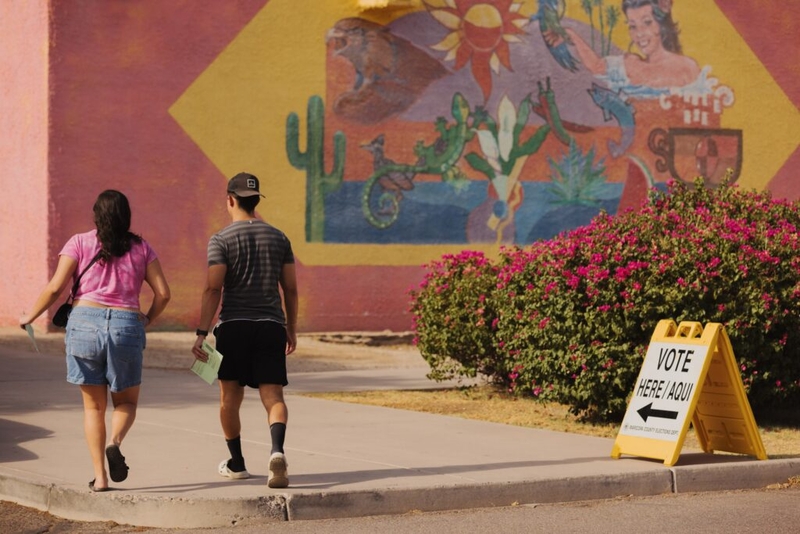
Voters enter Guadalupe Mercado to drop off their ballots for the Primary Election in Maricopa County on July 30, 2024, in Guadalupe, Ariz. Thousands of voters, many in Maricopa County, recently received confusing notices because of flaws in state and some county officials' implementation of a new state law. (Courtney Pedroza for Votebeat)
Kimberly Dorris wasn’t expecting to see a letter from the Maricopa County Recorder’s Office in her mailbox on Monday.
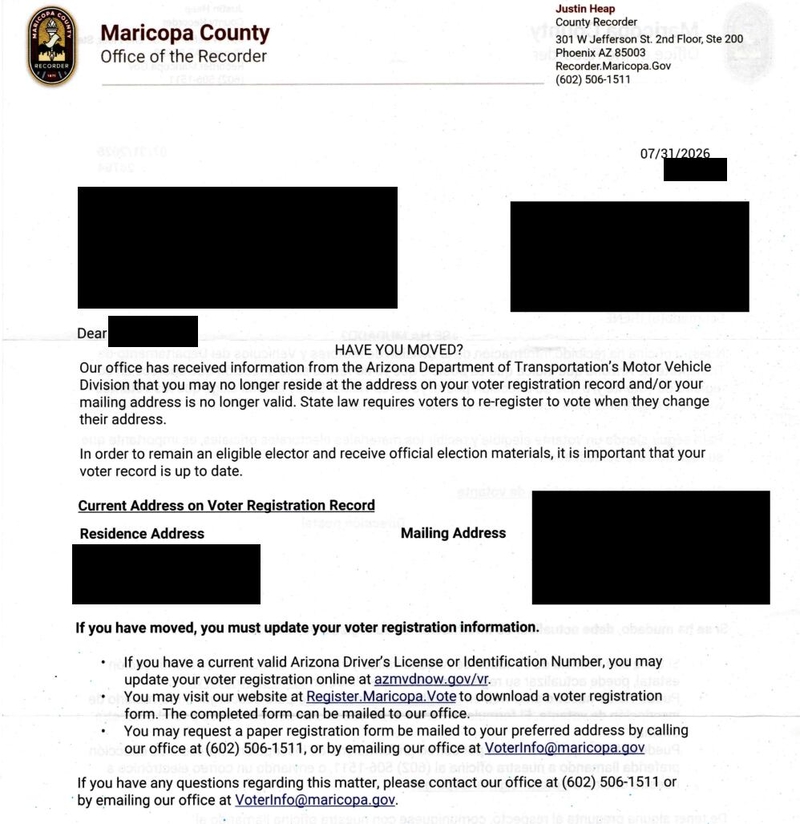
Dorris, 59, had just voted by mail in Arizona’s July 21 primary election from her Scottsdale address. So she was surprised to open the notice and read “HAVE YOU MOVED?” at the top. The letter went on to inform her that county officials had received information suggesting her address may no longer be current.
Dorris wasn’t alone. Thousands of Arizonans have received similar notices in recent days, even though many have not moved. More than a dozen told Votebeat and the Arizona Mirror that they were longtime voters who had lived in their homes for years or even decades.
Officials said the notices generally do not cancel a voter’s registration or impact voting eligibility. But anyone who received one should check to make sure their address is correct.
If it is, nothing needs to be done. If it isn’t, you should get in touch with local election officials to correct it.
The confusing mailing appears to have stemmed from flaws in state and some county officials’ implementation of a new state law. Here’s what to know.
What does the new state law say?
The law requires Arizona Secretary of State Adrian Fontes, a Democrat, to compare the state’s voter registration database to the state’s driver’s license database each month. His staffers are then required to inform county recorders if they find discrepancies in a voter’s residential address or citizenship status.
Supporters of the law, which passed as House Bill 2243 in 2022, said its purpose is to improve maintenance of the voter rolls and catch ineligible voters, including people who had moved to a new address. In a May 2022 letter to then-Gov. Doug Ducey, a coalition of conservative groups wrote that the law would ensure it was “easy to vote, and hard to cheat” in Arizona.
But opponents worried it could disenfranchise some voters and noted that the state already had voter list maintenance measures in place.
Ducey, a Republican, ultimately vetoed an early iteration of the bill, saying the wording was too vague and could lead to “bad actors” attempting to disqualify voters for discriminatory reasons. But a second attempt, penned by then-Rep. Jake Hoffman of Queen Creek, earned his signature at the very end of the 2022 legislative session. Hoffman, a Republican and a leader of the state legislature’s far-right Freedom Caucus, is now a state senator.
Democrats said the underlying bill was still “very problematic.” Several voting rights groups immediately challenged it in court, delaying its implementation until earlier this year.
I haven’t moved. Why did I receive a letter?
The issue comes down to what counts as a discrepancy between the state’s voter registration and driver’s license databases.
When staff at the Secretary of State’s Office compared the two data sets, the voter registration database flagged minor variations in voters’ addresses as potential changes that needed to be reported to local election officials.
For instance, a voter might have an address that includes an apartment or unit number. If that’s listed in one database as “Unit 1,” and in another as “# 1,” that voter would be flagged. Many voters whose addresses had not changed were therefore included in the report that the secretary’s office sent to county recorders.
Judy Keane, a spokesperson for the Maricopa County Recorder’s Office, said the report also caught voters with small address differences, such as “lane” versus “LN,” and abbreviated street directional prefixes, such as “N” versus “North.”
“The notices were not sent in error, nor were they the result of a mistake by the Maricopa County Recorder’s Office,” she said in a statement. Keane added that her office, headed by Recorder Justin Heap, a Republican, does not have access to the Motor Vehicle Division’s records and relies on the secretary’s office to provide address comparison information.
How many people got this notice?
At least 149,776 voters statewide received the letters, according to data gathered by Votebeat and the Arizona Mirror.
Nearly all of those notices were sent to voters by the Maricopa County Recorder’s Office. Keane said the letters were mailed to voters in the county between July 31 and Aug. 15.
Mohave, Greenlee, Graham and Navajo counties said they had also recently mailed similar notices to voters. Graham and Navajo sent 33 and 114 letters, respectively. Mohave and Greenlee did not immediately provide counts.
Some other jurisdictions, including Gila County, said they were actively “processing” the data but had not sent out notices yet.
I got this notice. What should I do?
Keane said the notices generally will not impact a voter’s eligibility or cause their registration to be canceled.
“It simply advises the voter of the information provided to us so they can verify it and update their registration if necessary,” she said.
Voters should check the notice they received. Notices mailed as a result of the state law should be labeled “Confirmation Notice — MVD — In State Mover” in the bottom-right corner. (If you received a different notice, you might have different instructions to follow.)
Then, make sure your address is correct. If it is, no response is required. If not, you should contact your local election officials to update your address in your voter record.
Sometimes, election mail is marked undeliverable by the U.S. Postal Service. Keane said that can lead officials to initiate the lengthy voter removal process. But if that happens to you, local officials will send another notice attempting to confirm your address before taking steps to alter your registration status.
If you’re concerned about your registration status, be sure to double-check it at My.Arizona.Vote by Oct. 5. That’s the state’s voter registration deadline for the general election.
If you have additional questions, reach out to your local election officials. Votebeat and the Arizona Mirror may also be able to help if you run into an issue. Reach us at [email protected] and [email protected].
Were there ways around this problem?
Keane said her office sent the notices in two batches. About 142,000 notices went out between July 31 and Aug. 1, she said. Roughly 7,500 more were mailed on Aug. 14 and 15.
That second batch, she said, was “significantly reduced due to filtering performed by our office for that month.” But it’s unclear whether her office took steps to filter the first batch, too. Keane said in a statement that her office had generally “taken proactive steps to reduce unnecessary notices by removing repeats and false positives where we are able to identify them.” But she did not directly respond to questions about what that filtering process looked like or whether it was applied to the first, larger batch of notices.
The Arizona Mirror and Votebeat also reached out to counties across the state to gather information about how they handled the report from the secretary’s office. Those that responded largely said they had combed through the list to remove false positives or held off on sending notices at all because they lacked the bandwidth and staffing to do so ahead of the November election.
Yavapai County was among those that did not plan to immediately mail letters. Recorder Michelle Burchill, a Republican, said her office needed to manually compare the address discrepancies flagged by state officials before sending out the notices. She added that one of her staffers spent a whole day exclusively going over the 30,000-line spreadsheet from Fontes’ office and “got through about 10% of it.” A preliminary review of the list suggested that about half of the address changes reported to her office were false positives.
“This may end up being a useful endeavor, but initially it is a heavy lift for the counties,” Burchill said.
Keane said counties were “required” to send notices to voters on the list provided by the secretary’s office. But there’s no requirement in state law that the county recorders do anything with the address data. Still, Burchill said officials statewide would likely want to use it to ensure “good list maintenance.” Her office planned to process the report after the election, once it received “a workable list,” she said.
Gila County Recorder Wendy Mannigel-Smith, a Republican, said in an email that her office needed to “physically investigate each voter record.” She said recorders statewide felt they should be able to work with the state to “come up with a more efficient way of handling the data.”
Calli Jones, a spokesperson for the secretary’s office, said in a statement that recorders had specifically requested a “straight look” at the address changes, without any additional coding. After counties received their first report from the secretary’s office in May, she said, many began requesting improvements to the address comparison process, including Maricopa County.
Jones said her office had yet to make changes to the state’s voter registration database that could produce a more detailed and accurate report. But she noted that “most” counties were not processing the reports provided by her office before the general election — and, in a phone call, said it was “up to them” and “entirely” their decision whether to do so before improvements could be made.
“This is a new report and another possible source for list maintenance, but it is messy and counties need to work to come to (a) consensus about what they want the report to say and how they want it delivered to them,” she said.
Sasha Hupka is a reporter for Votebeat based in Arizona. Contact Sasha at [email protected].
Jerod MacDonald-Evoy is a reporter for the Arizona Mirror based in Phoenix. Contact Jerod at [email protected].
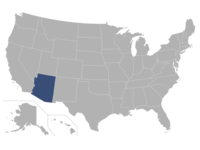
Phoenix, AZ