Johnson defied odds in the SC gubernatorial primary. Now people want to know if he can do it again.
Sep 03, 2026 | 8:00 am ET
Description
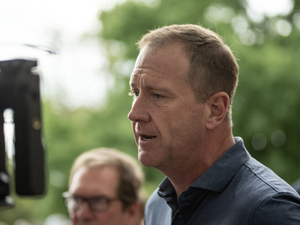
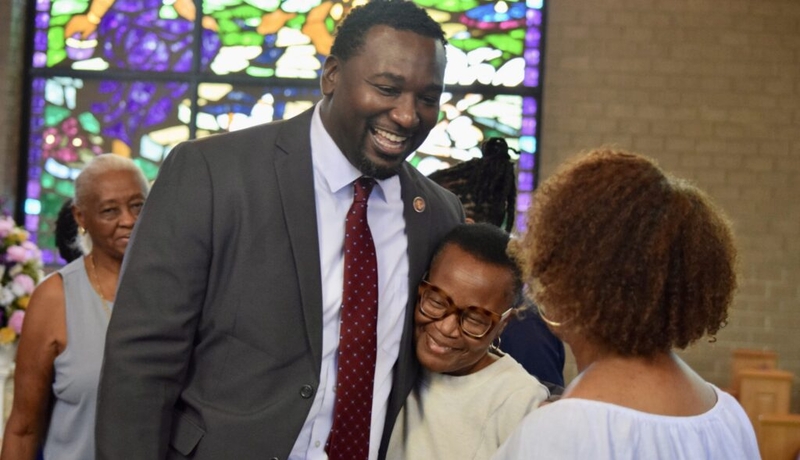
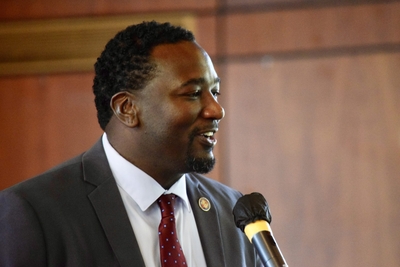
South Carolina Rep. Jermaine Johnson, the Democratic nominee for governor, meets with voters at First Calvary Baptist Church in Columbia Wednesday, Sept. 2. 2026. (Photo by Jessica Holdman/SC Daily Gazette)
COLUMBIA — Rep. Jermaine Johnson spoke of his journey from a homeless childhood in California to his election to the South Carolina Statehouse. He then asked the more than 50 people gathered Wednesday at First Calvary Baptist Church to send him to the Governor’s Mansion.
A woman stepped to the mic and said his story was inspiring: “But inspiration doesn’t necessarily win elections.”
She and others wanted to know how he planned to gain support from not just Democrats but long-time Republicans and to convince young people to vote.
His answer: Exactly what he was doing in that church.
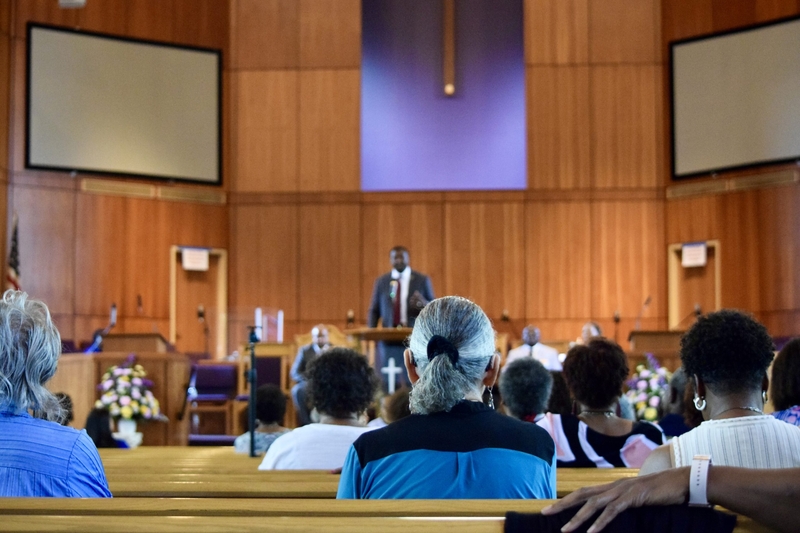
“We were able to make history just by getting out into these communities and talking to the people, meeting them where they are, so that they understand that they do have a choice in this election,” Johnson told congregants.
In the primary, the three-term House member was vastly out-spent, and big-name Democrats lined up behind a wealthy-and-connected opponent. Yet the Hopkins Democrat clinched the party’s gubernatorial nomination outright. In the three-way primary, he received 60% of the vote, easily avoiding a runoff.
In two months, he faces an even greater challenge against Republican Attorney General Alan Wilson in the governor’s race.
No Democrat has won the office since then-Rep. Jim Hodges in 1998. (The one-term governor was among Democrats backing the primary’s second-place finisher.)
If Johnson pulls it off, he’ll be the first Black governor in state history.
“I am more than sure that many of you who are sitting before me right now did not ever think that you would see the day that you could have your first Black governor here in the state of South Carolina,” he said at the church located steps away from the campus of Allen University and a couple of blocks from Benedict College, two historically Black private schools.
“Just making it through the primary, I am now only the second African American in the history of the state to be nominated for governor,” he said.
The first was 36 years ago, when Democratic state Sen. Theo Mitchell, of Greenville, won the nomination but got tromped by Gov. Carroll Campbell. The GOP incumbent won re-election in 1990 by more than 40 percentage points, which remains the widest victory margin of a Republican governor since Reconstruction.
Connecting to voters
Political insiders credit Johnson’s primary upset to a grassroots ground game, reaching people in less-visited communities across the state.
Former state Democratic Party Chairman Trav Robertson said Johnson’s campaign, through its volunteer corps, “created the perception that he was in every county all the time.”
Johnson also connected with voters that past Democratic candidates didn’t even try to reach.
“He was able to get into neighborhoods and communities we normally neglect, which I think is an extremely positive thing,” Robertson said.
But primaries are vastly different than a general election, where Democratic candidates need to appeal beyond their base to an estimated 400,000 to 500,000 independent and swing voters in the state, Robertson said.
That takes money and involves both advertising and the on-the-ground campaigning Johnson is known for.
Fundraising differences
And it’s questionable how he’ll stand up to Wilson’s fundraising machine.
The most recent campaign filings show Johnson increased his fundraising rate by nearly 60% in the weeks leading up to and following the June primaries.
But his $711,000 total, as of June 30, lagged far behind his competitors.
The Democratic primary’s runner-up, Billy Webster, raised about $900,000 and put in more than $3 million of his own money. And Webster spent all of it, according to his last filing that closed out his account.
Third-place finisher Mullins McLeod didn’t raise much, collecting $127,000, but the Charleston attorney spent $2.6 million of his own money.
Johnson’s tally was also a fraction of the $4.8 million raised by his Republican opponent, Wilson, over the course of his June primary and runoff campaigns. And, like Johnson, Wilson didn’t self-fund at all.
As of the end of June, the four-term attorney general had nearly $861,000 on hand, not including money spent and raised by political action committees working in his favor.
By comparison, Johnson headed into general election season with one-fifth of that, filings show.
What both nominees’ campaigns have raised and spent since then is unclear. Third-quarter filings are still a month away.
Democrats running for SC governor pitch plans for affordability
Johnson says his shoe leather politicking makes up for what he lacks in financing.
“Going into these different communities, allowing them to hear directly from me was something that couldn’t be bought,” he told the SC Daily Gazette. “We didn’t have any shortage of invitations.”
Johnson, who owns a business consulting firm, also said he already had connections in many communities through New Economic Beginnings Foundation, a nonprofit he founded to help troubled teens, veterans and the recently incarcerated find jobs. Through that organization, he’s spent nearly a decade visiting schools and acting as mentor to students.
“Our campaign has been grassroots this entire time: boots on the ground, people in communities, volunteers,” he added. “That’s the type of movement you want to build for any campaign — one where people are putting their hopes and their dreams in a campaign that shows there is a future for everybody in the state.”
‘A viable candidate’
At the start of his run, Johnson spent a lot of time on the phone with party insiders.
“They were more standoffish than anything,” he told the Daily Gazette in an interview.
Some said they wanted to see how the primary shook out before committing to help. Others backed Webster.
A Greenville businessman and philanthropist who worked for former Gov. Dick Riley and the Clinton administration, Webster is a known commodity in Democratic circles, willing to aid candidates whenever they call, Robertson said.
He’s also independently wealthy. Webster made his money as the former president of a Bojangles franchisee and the co-founder of Advance America who helped supersize the payday lending industry nationwide. So, money was not an issue for Webster.
But it became Johnson’s biggest roadblock.
“It’s like if you have millions of dollars, then you’re a viable candidate,” Johnson said. “And the more traditional, established people, they didn’t see all that money in my bank account. If they don’t see all that money in a bank account, it’s like, all right, well, are you actually going to be able to compete out here?”
Former state Rep. Bakari Sellers, who was among prominent Black Democrats backing Webster, said he was thinking of the legislative seats Democrats lost in the last two election cycles when Johnson approached him. After watching Republicans in both the House and Senate gain beyond-supermajority status, Democrats want to win a half dozen seats back in November.
Sellers, who in 2014 made an unsuccessful run for lieutenant governor against now-Gov. Henry McMaster, said flipping House seats back to blue was his focus when he was weighing who to endorse. And traditionally, down-ballot races depend on the ability of candidates at the top to bring in donors and voters’ support.
In addition to his personal wealth, Webster showed serious fundraising chops in a short amount of time, said Sellers, son of civil rights icon Cleveland Sellers.
For a candidate who entered the race in late March, Webster hauled in more than $800,000 in two months, he noted.
So, he endorsed Webster in the primary over Johnson.
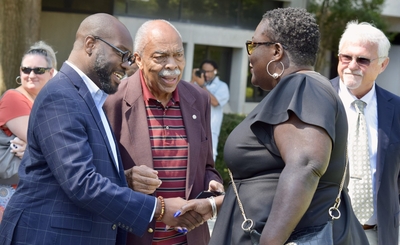
As did former state Rep. Jim Felder, who in 1970 was among the first three Black legislators elected since Reconstruction.
Felder said he’d known Webster for years, from his days in Riley’s office.
“He knows government,” on top of having the financial resources to mount a good campaign, Felder said.
Plus, while Felder thought Johnson was a good candidate, Webster asked for help before the Johnson campaign did, he said.
A shoe leather campaign
But Webster was a surprise entry after the candidate filing window opened.
Johnson officially launched his campaign last October, but he’d already been publicly exploring a bid for months. Webster didn’t have time to make up the outreach, his supporters said.
And while Webster worked heavily within the party for decades, he wasn’t a candidate directly connected to voters, especially younger voters, said Mark Owens, a political science professor and pollster at South Carolina’s military college, The Citadel.
The repeated turn downs bothered Johnson, especially from those whom he had helped over the years.
Some in the party even pushed Johnson to drop out. In a video posted on social media in March, Johnson said he considered it and even prepared a statement about his departure, before tearing it up and filing to be on the ballot.
Sam Skardon, Johnson’s lieutenant governor pick, said insiders misjudged Johnson.
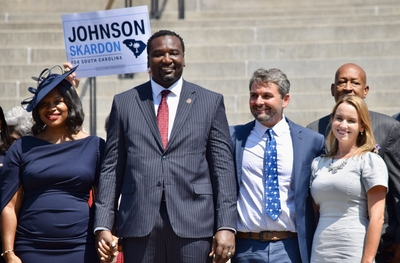
“They doubted the movement he was building. They underestimated the strength and convictions of South Carolinians who want a new beginning for our state,” Skardon said when Johnson announced him as his running mate in July.
“But Jermaine made a courageous and tough decision to stay in this race, and 10 weeks later, achieved a historic victory against two better-funded candidates with deep ties to our party establishment,” he said at the Statehouse news conference.
With all of that in mind, Johnson said he knew early that his was not going to be a high-dollar campaign. He didn’t run a single television commercial or send out a single mailing during the primary, while Webster was on TV a lot.
“We were essentially just going to have to outwork everybody with messaging, with our social media presence,” he said. “But I’ve always said money doesn’t vote; signs don’t vote; people vote. And as long as we can get to the people, the people will vote.”
He continues to run his campaign the same way headed into November — on the ground rather than the airwaves.
“No matter if we raise $5 between now and November or we raise a few million dollars, I’m not going to change who I am in terms of going directly to the people and letting rural communities know that they have not been forgotten, he said. “Letting these people who who have never seen a candidate before understand that they have not been forgotten.”
Connecting to voters
The grassroots approach becomes more difficult in a general election because the number of cities to visit and hands to shake increases dramatically. But, wherever he goes, Johnson’s visits can also help draw attention to down-ballot candidates.
“To be in an election that he was outspent and still able to reach most voters in lots of places, those are the parts that are going to make Attorney General Alan Wilson’s campaign most concerned — is that he will be a well-liked Democratic candidate across the state,” said Owens, The Citadel professor.
Sellers said he recognized Johnson’s hard work, reaching voters in rural counties such as Williams and Clarendon that often go untouched.
“The blessing is Jermaine is willing to do those things,” said Sellers, a native of Denmark in rural Bamberg County. “It’s apparent his message resonated.”
Sellers said his focus now is on getting Johnson the money necessary to “put up the best possible fight he can” against Wilson.
The key, Sellers said: “You have to get people off the sideline who haven’t voted since Barack Obama.”
Felder, too, signed on to help the campaign.
“I guess I’m old school,” Felder said. “I believe in working the precincts. Jermaine did that to a degree. It’s grunt work but you’ve got to be willing to spend the time in the communities.”
As for Johnson, he was not shy to ask for help Wednesday from the parishioners of First Calvary Baptist.
“I need you to get into the community,” he told the churchgoers. “I need you to get on that phone and start calling your friends … and I need you to start getting people to register to vote.”
The Nov. 3 general election will determine if his strategy can defy the odds again.
Columbia