Missouri nonprofit launches campaign focused on abortion options ahead of November vote
Oct 02, 2026 | 8:00 am ET

Description
A billboard campaign by Missouri Abortion Fund and Shout Your Abortion is part of an effort to raise awareness around telehealth medication abortion access ahead of the November vote on abortion. One of the billboards is located off Interstate 70 in St. Louis (photo provided by STL From Above).
As Missouri prepares to vote on whether to reinstate an abortion ban, a new information campaign by a local nonprofit is setting out to remind Missourians that regardless of what happens in November, some abortion options will remain available.
The campaign launched last week and will run through Election Day, when Missourians will decide whether to repeal the 2024 reproductive rights amendment that legalized abortion up to the point of fetal viability.
The campaign, which includes billboards on the interstate heading into St. Louis and Kansas City, as well as video ads and mailers, comes amid continued statewide access fights and growing efforts nationally to restrict medication abortion.
“Our patients that we help, they can’t wait for policy changes, they can’t wait for elections. They need help today,” said Robin Frisella, communications director at Missouri Abortion Fund, a nonprofit that helps people pay for abortions. “There’s a real information and resource gap, and people are really left trying to figure out on their own what is actually legal.”
Missouri Abortion Fund partnered with a Seattle nonprofit called Shout Your Abortion that provides information about abortion access, including obtaining medication abortion in advance.
The idea is to allow people to obtain abortion pills before facing an unplanned pregnancy so they already have the medication if they need it later.
“In the same way that I have Narcan in my bathroom cabinet even though I’m not an opioid user,” said Amelia Bonow, executive director of Shout Your Abortion. “SYA would love to help illustrate a future where people know that pills are available by mail in all 50 states.”
After launching the first campaign in Michigan’s Upper Peninsula, Bonow said they wanted to partner with organizations in states with more hostile abortion politics: Missouri and West Virginia.
“It’s clear that Missouri is a very uniquely-fraught state in terms of the information landscape,” Bonow said, pointing to the “strong, persistent presence” of the state’s anti-abortion movement.
Six months after Missourians narrowly approved the 2024 citizen-led reproductive freedom amendment, Republican lawmakers voted to place an abortion ban on the ballot. That proposed ban, which will appear on the ballot as Amendment 3, would outlaw nearly all abortions, with limited exceptions for medical emergencies, fetal anomalies and survivors of rape or incest in the first 12 weeks of pregnancy.
The proposed amendment would also place a constitutional ban on gender-affirming care for minors, which is already outlawed in state statute.
In the nearly two years since Missourians overturned the state’s near-total abortion ban, the state’s Planned Parenthood clinics have gradually resumed medication and procedural abortions while courts considered challenges to regulations enacted before the constitutional amendment.
“It’s clear that misinformation, disinformation, people simply not knowing what their options are is one of the biggest problems there,” Bonow said.
The November vote is only one source of uncertainty surrounding abortion access. Another is the growing political and legal fight over abortion pills obtained through telehealth.
Under federal law, women in every state, regardless of abortion legality, can order medication abortion to their home by seeking a prescription from an out-of-state provider.
But for several Republican leaders at the national level, including U.S. Sen. Josh Hawley of Missouri, efforts to limit or eliminate access to mifepristone are a top priority.
Hawley in recent months has urged the Justice Department to investigate mifepristone’s manufacturer, launched a national political group aimed at reshaping abortion debates, asked the FDA to review the safety and efficacy of mifepristone, and has introduced legislation to withdraw FDA approval of the medication.
“The time for bold leadership is now,” Hawley said at the Pray, Vote, Stand summit hosted last week by the Family Research Council. “There is a role for Congress, and it is to ban mifepristone.”
Medication abortions obtained through telehealth have become increasingly common, including among patients living in states with abortion bans and restrictions.
Between 2023 and 2025, the number of Missourians who obtained medication abortions through telehealth from out-of-state clinicians nearly quadrupled, from about 880 to 3,220, according to data released by the Guttmacher Institute. Nationwide, medication abortion now accounts for about two-thirds of abortions.
That access has also emerged as a fault line among abortion opponents in the campaign over Amendment 3. Some anti-abortion activists and lawmakers argue the proposed ban isn’t strict enough, and that the threat of criminalization is the only way to reduce abortions.
Anti-abortion divide could complicate Missouri Amendment 3 campaign
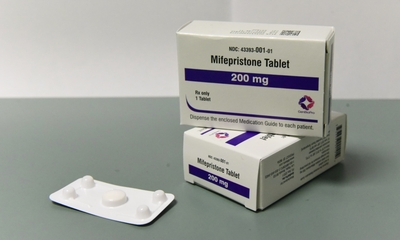
Mifepristone is typically used with misoprostol for medication abortions. Mifepristone blocks progesterone, a hormone needed for a pregnancy to continue. Misoprostol causes the uterus to contract and empty. The medications are also used in miscarriage care.
Bleeding and cramping are expected side effects. Serious complications, including heavy bleeding and infection, are rare.
Even when abortion is legally available, cost can remain a barrier because insurance coverage is limited. Groups such as Missouri Abortion Fund help patients cover those expenses. But Frisella said the organization has seen its pool of donors shrink.
Ballot campaigns, like the Stop the Ban effort to vote down Amendment 3, can attract donors who might otherwise give directly to groups helping patients pay for abortions, Frisella said.
As a result, Frisella said, Missouri Abortion Fund has seen a heavy decline in sustained monthly donors. Right now, the nonprofit gives about $45,000 a month toward helping Missourians pay for abortions. That funding usually runs out by the middle of the month, she said.
Many of those patients are still traveling to Kansas or Illinois for abortion access as Missouri clinics work to rebuild an infrastructure decimated by years of abortion regulations, restrictions and lawsuits.
In July, for example, Missouri Abortion Fund helped 80 patients afford abortions, Frisella said. Only 12 were seen in Missouri; the rest went to Kansas and Illinois.
Missourians are used to a constantly changing abortion landscape, Frisella said. But it doesn’t make the current state of access any less confusing. She still receives emails from women asking if they can access abortion in Missouri, and if they’re legally allowed to leave the state to access it elsewhere.
“There’s a real information and resource gap,” Frisella said. “And people are really left trying to figure out on their own what is actually legal.”
Bonow, like Frisella, is looking beyond November.
“Policy is insufficient to address the crisis of abortion access,” she said, calling abortion funds “the foundation of abortion access in this country, not a ballot measure that will ping and pong back and forth a million different times.”
Jefferson City, MO