Coal increased its share of Iowa electricity generation in 2025, report shows
Sep 02, 2026 | 6:53 pm ET
Description
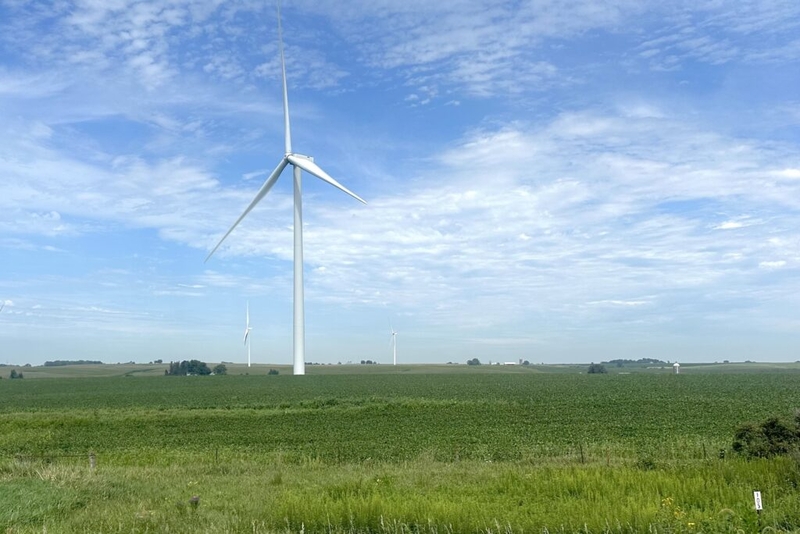
Wind energy continues to dominate Iowa's electricity generation. Pictured are wind turbines near U.S. 80. (Photo by Cami Koons/Iowa Capital Dispatch)
Iowa Environmental Council’s annual “condition of the state” report on Iowa’s electric generation shows that while wind continues to dominate Iowa’s electricity generation sources, there has been a “reversal” in the state’s progress to meet energy demand with renewable sources.
For the first time in several years, according to the report, the share of energy generated by coal increased in 2025.
The environmental council holds that for other sectors to reach climate goals of net zero greenhouse gas emissions by 2050, the electricity sector needs to be “carbon-free” by 2035.
While the report says this goal is “achievable and necessary” a statement from MidAmerican Energy Company, one of Iowa’s top utilities and a subject of the report, said the request “oversimplifies an extraordinarily complex challenge.”
“It ignores the costs, reliability considerations, and operational realities that utilities must manage on behalf of customers every day,” the company said in a statement.
The utility also said the report lacks “any meaningful acknowledgment” that utilities are responsible for “keeping the lights on,” maintaining affordability and reliability – not just emissions reductions.
“Iowa’s energy future has never been a choice between reliability and environmental progress,” MidAmerican said. “The real challenge is achieving both in a way that customers can afford and the electric system can support.”
More coal in 2025
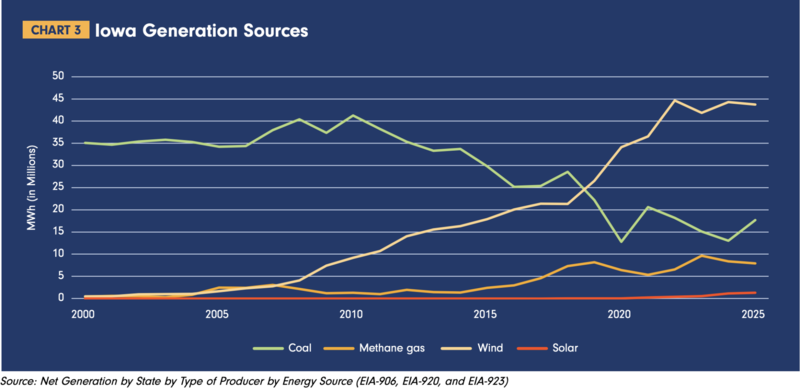
According to the report, the share of electricity generated from coal in 2025 was 3% more than the share in 2024.
Steve Guyer, Iowa Environmental Council’s senior energy policy counsel and an author on the report, said in a webinar Wednesday the change is “troubling.”
When comparing the council’s latest report with figures from its 2025 report, both Alliant Energy Corporation and MidAmerican, Iowa’s largest utilities, had a greater share of generation from coal in 2025 than they did in 2024. The IEC reports look at figures from the year prior to when the report is released.
In 2024, 21% of MidAmerican’s generation mix came from coal and 64% came from wind energy. In 2025, 27% of the mix was coal and 59% was wind energy generation. Alliant’s energy generation mix, according to the report which pulled figures from Federal Energy Regulatory Commission filings, included 12% coal and 50% natural gas in 2024. In 2025, 20% of the company’s resource mix came from coal, and 42% came from natural gas. Wind decreased from 37% to 32% from 2024 to 2025 in Alliant’s resource mix, however solar increased from 1% in 2024 to 6% in 2025.
While MidAmerican and Alliant represent the majority ownership of utility coal generation in the state, the report notes that smaller interests, like power cooperatives and municipal utilities, play a role “in keeping coal generation online cannot be discounted.”
The report said that despite the recent reversal toward coal, the overall trend in Iowa over the past 26 years shows that “wind and solar power is affordable and reliable, and we should be transitioning away from coal” ahead of 2040 and 2049, which are the goals set by Alliant Energy and MidAmerican, respectively, to end coal generation.
“Although wind and solar continue to meet more of the energy demand, there has not been a corresponding reduction in fossil plant operation,” the report said.
A spokesperson for Alliant said the company remains “focused on our commitment to balancing reliability, affordability and sustainability for customers, while making progress toward our goal of net-zero greenhouse gas emissions by 2050.”
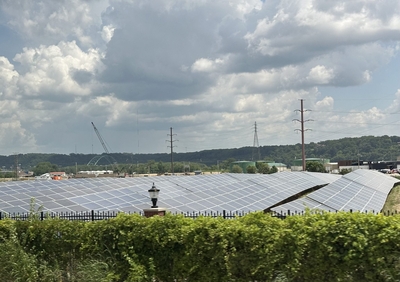
MidAmerican said it has done “exactly what advocates of a renewable energy future have asked utilities to do” over the past 20 years by investing “billions” in wind generation, “dramatically” reducing reliance on fossil fuels and cutting emissions by “significant amounts.”
“Since 2004, we have added 7,631 megawatts of wind generation and 141 megawatts of solar generation,” the statement said. “We also have approval to add 800 megawatts of solar, the largest solar approval in Iowa history.”
These accomplishments, MidAmerican said, have also resulted in reductions in emissions, and below-average electricity costs for customers, “even as total generation has increased.”
Impact on public health and finances
According to the report, greenhouse gas emissions from power plants has continued to decline over the past 20 years. In 2024, emissions from power plants accounted for 16% of Iowa’s overall greenhouse gas emissions. Agriculture and residential/commercial/industrial uses continue to account for the greatest share of greenhouse gas emissions, at 29% and 28% respectively.
The report notes, however, that certain sectors, such as the residential, commercial and industrial sector and the transportation sector, cannot achieve net zero emissions without a “carbon-free electricity sector” to power their operations.
Despite power plant emissions making up a smaller chunk of overall emissions, the report holds that electricity generation from coal plants accounts for the greatest share of air pollution. The report cites an Iowa Department of Natural Resources report which tags electricity generation as the point source industry with the greatest contributions to various air pollutants.
The environmental council’s report emphasizes the industry’s connection to particulate matter 2.5 pollution, PM2.5, or “fine inhalable particles” that have a diameter about 30 times smaller than that of a single human hair, according to the U.S. Environmental Protection Agency.
These fine particles can contribute to asthma, premature death in people with heart or lung conditions, heart attacks and decreased lung function. The report noted some research that links PM2.5 and other air pollutants as contributing factors to certain types of cancers.
“While many factors may contribute to cancer risk, we have to keep in mind that exposures to air pollution are increasingly being recognized as important contributors,” Guyer said.
The link between coal plants and PM2.5 pollution was also part of a recent Iowa Environmental Council report examining the Sioux City community. However, a spokesperson with MidAmerican said the report’s conclusions that a nearby coal plant was contributing to the region’s air quality conditions were “based primarily on correlations.”
The environmental council’s 2026 electric generation report also said the air pollutants and greenhouse gas emissions from coal plants pose a financial risk in the state through increased healthcare costs, impacts to agriculture and overall contribution to climate change, which is costing Iowans more in home insurance premiums.
“Climate change, this is happening,” Guyer said. “We can’t ignore it. We can’t pretend it doesn’t exist. More and more evidence is pointing to the need to actually do something.”
The report holds that Iowa’s utilities are “uniquely positioned” to achieve a generation mix of 100% renewable energy by 2035, if they “aggressively act” to take advantage of tax incentives for renewable energy projects.
And, it says, utilities need to “aggressively” add solar, wind and energy storage options to meet projected 31% to 93% load growths in the next 20 years.
“The best way to meet projected increased customer demand is the addition of solar, storage, and wind,” the report said. “The pursuit of 100% renewable energy starts with an honest accounting of the costs of coal, an acknowledgement that we can transition to 100% renewable energy, the complete elimination of coal generation by 2030, and the addition of more solar, storage and wind.”
MidAmerican said it plans to add new solar generation in the next three years, and to “continue investing in renewable energy resources where they make sense for customers and the system.”
“We will continue investing in Iowa’s energy future, but we will do so responsibly, balancing environmental goals with our obligation to keep electricity reliable and affordable for the customers who depend on us every day,” the statement said.
Des Moines, IA