Lawsuit over doctors supervising nurse practitioners adds new twist to long NC debate
Sep 02, 2026 | 6:34 pm ET

Description
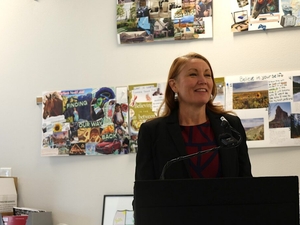
The nurse practitioner who founded the menopause center Peri & Pause is suing to be able to operate without contracting with a supervising doctor. (Courtesy photo)
A nurse practitioner is suing over state rules that require oversight from a doctor for her to run her practice.
Jamie Gallagher says in a lawsuit filed in Wake County Superior Court that the requirement for her to have a contract with a doctor in order to practice violates her rights and is an unnecessary expense.
Gallagher founded Peri & Pause, a menopause and perimenopause care clinic with offices in Wake County. The lawsuit says she is required by state law to have a supervision contract with a doctor — which, in her case, costs $16,500 a year — who does not oversee her day-to-day work.
Lawyers with the Pacific Legal Foundation are representing her in the lawsuit that names N.C. Medical Board President Dr. Anuradha Rao-Patel and Racquel Ingram, chair of the N.C. Board of Nursing, as defendants in their official capacities. Jean Fisher Brinkley, communications director for the N.C. Medical Board, declined to comment on pending litigation. N.C. Board of Nursing representatives did not return calls Wednesday.
The lawsuit says that the state medical board and nursing board are in charge of enforcing rules that violate Gallagher’s rights.
Experienced nurses with advanced degrees have pushed for years to have the legislature change that law so they can work independently without doctors’ supervision. Some advanced practice nurses, which include nurse practitioners, have said they have to pay for supervision that amounts to little more than paperwork and a few conversations a year.
Bills ending the supervision requirement have had bipartisan support in recent years, but doctors’ groups oppose dropping it, and the bills have not become law.
The contracts, known as collaborative practice agreements, do not require face-to-face meetings, chart reviews, or direct supervision, the lawsuit says.
“North Carolina thus gives a private physician continuing control over whether Dr. Gallagher may practice a profession the State itself has determined she is qualified to practice. The mandatory collaborative practice scheme violates Dr. Gallagher’s fundamental rights: the fruits of her labor, due process, and equal protection guaranteed by the North Carolina Constitution,” the lawsuit says.
In an interview, Gallagher said she loves the doctor with whom she has a collaborative agreement. They meet twice a year over lunch to talk and sign paperwork. But requiring these contracts is bad for the state because it limits expansion of healthcare to underserved areas, she said.
“Limiting access that nurse practitioners can provide is harming health in North Carolina,” she said. And the contract requirement puts unnecessary restrictions on how she can use her license and experience, Gallagher said.
Gallagher started Peri & Pause in May 2024 with virtual patient visits. She now has two brick-and-mortar locations in Wake County and has a goal of opening a third.
But the doctor with whom she contracts said he cannot take responsibility for more of her nurse practitioners, the lawsuit says. So expansion would require her to find another doctor willing to sign another contract, which means an additional expense.
If nurse practitioners lose their supervising physicians, their practices are at risk, the lawsuit says.
Arbitrary laws are delegating to private citizens — doctors — something that is a state responsibility, Gallagher said.
“They get to give nurse practitioners the ability to work or not,” she said.
Raleigh, NC