US Rep. Stansbury voices concerns about New Mexico water use for Project Jupiter data center
Sep 02, 2026 | 6:00 pm ET
Description
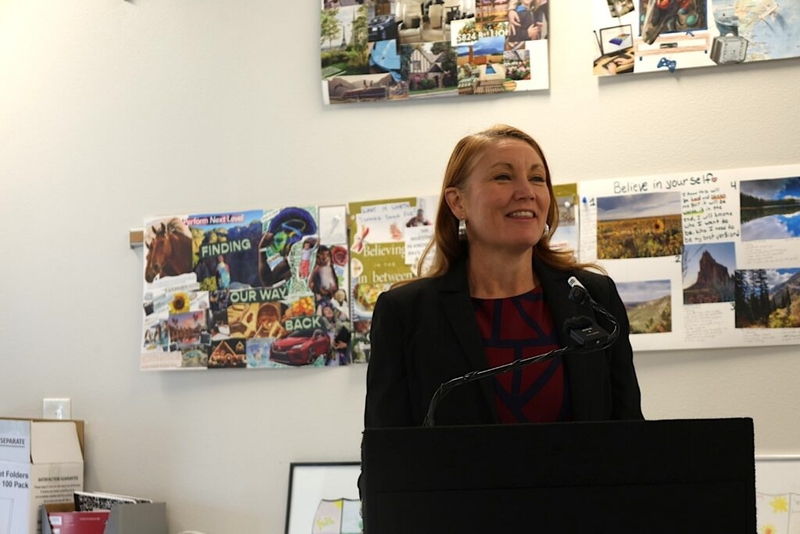
U.S. Rep. Melanie Stansbury (D-N.M.), pictured on Aug. 19, 2026, said she has “serious concerns” about transparency regarding water use for the Project Jupiter data center under construction in Doña Ana County. (Patrick Lohmann/Source NM)
U.S. Rep. Melanie Stansbury on Wednesday said new information about water usage at the Project Jupiter data center construction site raises “serious concerns” about transparency, and she intends to ask for additional investigation.
Stansbury, last week, asked several state agencies for a “clear public accounting” of the project’s water use. In response, State Engineer Elizabeth Anderson in a Friday letter wrote that Project Jupiter’s developers are buying water for construction from the owner of a well in southern New Mexico that has for years provided water to a local sod farm and various construction projects. Late last year, the owner drilled an emergency well after the existing one failed, Anderson wrote.
The Center for Biological Diversity, a national conservation organization, in an August filing with the New Mexico Supreme Court, argued that the Office of the State Engineer violated state law by neither providing public notice nor holding a hearing when it approved the emergency well and let water that had previously been used for irrigation support the data center’s construction.
Under the current water rights, Project Jupiter’s developers can use 2,400 acre feet of water from the well annually. An acre foot is a unit of measurement often used in water law that describes enough water to cover an acre of land with a depth of one foot. While measurements across the country vary, one acre foot of water typically supports the needs of two to three single-family homes per year.
By Stansbury’s math, the water allotted to Project Jupiter’s construction is enough to grow 2,000 to 3,000 acres of green chiles.
“We are calling for an immediate inquiry into the long-term usage of water by Project Jupiter and believe that this state needs to do its due diligence before this project continues to proceed,” Stansbury told reporters Wednesday.
New Mexico data center water use could soar in coming years, researcher tells state lawmakers
Stansbury noted that Anderson’s letter acknowledged more than 30 protests filed against the emergency well authorization. In the letter, Anderson wrote that the Office of the State Engineer Hearing Unit is working to schedule a hearing over whether the authorization complied with relevant state law.
That fact is “technical in nature, but it raises very serious concerns,” Stansbury said. “They’re operating without actually going through the process of determining whether or not that well is adversely affecting others in the region.”
In an email to Source NM, Office of the State Engineer General Counsel Nat Chakeres said the “processing time for that hearing is within the normal range” for a case with that many protests.
“With a large number of protests (and 30 is a large number), we have to individually confirm contact information for all of them, and that can get slowed down if some protestants don’t respond or can’t be reached. Now that we’ve completed that process, the administrative hearing has been docketed and the case will be proceeding towards a hearing,” he wrote, noting that the hearing has not yet been scheduled.
As for Project Jupiter’s long-term water use, he said that its developers have relayed that they intended to purchase existing water rights and that the Office of the State Engineer doesn’t anticipate future permit requests.
Stansbury acknowledged that state and local government officials have the most say in Project Jupiter-related issues but said she has gotten increasingly involved to ensure New Mexico residents have access to important information regarding the development.
She has previously cited the historic levels of dryness on the Rio Grande and questioned whether developments like Project Jupiter would make it difficult for the state to comply with the Texas v. New Mexico and Colorado settlement.
“We need the public to demand that the state follow the required process, that the due diligence is done on this project,” she said. “And that we continue to put pressure on the state to make sure that our water rights are protected.”
Santa Fe, NM