A Bow data center saga promises to be quite the page-turner
Sep 02, 2026 | 4:24 pm ET

Description
"The debate is bigger than the centers themselves. It’s also about the artificial intelligence that’s driving the construction boom." (Getty Images)
I loved “Choose Your Own Adventure” stories when I was a kid. Each book in the series began with a brief set-up and then the whole thing became a maze of decision-making.
In “The Mystery of Chimney Rock,” for example, the end of the introductory section reads: “On your right is a flight of steps leading from the kitchen upstairs. To the left is a swinging door, which you imagine leads to the dining room.”
At the bottom of the page, the author gives you two options: “If you go up the stairs, turn to page 8. If you go through the swinging door into the dining room, turn to page 10.”
And on it goes until you arrive at your happy, tragic, or indeterminate end.
I couldn’t help but think of those books when news dropped this week that a data center has come knocking in Bow, a town of about 8,200 just south of Concord. While it’s very early in the process, and with far more questions than answers about every aspect of the potential project, the town’s residents already have a decision to make: If you answer the door, turn to page 8. If you shout “Go away,” turn to page 10.
There’s no official confirmation of where the center would be located, but the tea leaves couldn’t be clearer: Granite Shore Power got the data center ball rolling with a Federal Energy Regulatory Commission filing, and Granite Shore happens to own Merrimack Station, Bow’s recently closed coal-fired power plant.
The move also tracks with what’s happening in other states. In Pennsylvania, for example, the former coal-fired Homer City Generating Station is under consideration for conversion to natural gas that could create “up to 4.7 GW of power” for data centers, Inside Climate News reports. That’s an enormous amount of power, which dwarfs even the “hyperscale” 350 MW project being kicked around in Bow. And, as Inside Climate News points out, that’s an enormous amount of greenhouse gases, too.
“Nationally, at least 74 gas-fired power plants, nearly all of them new, are planned to fuel the data-center industry, generating 662 million tons of greenhouse gases, equal to the annual emissions of Australia,” reporter John Hurdle writes.
But if New Hampshire’s existing natural gas infrastructure makes converting Merrimack Station a particularly tall order, and adding new strain to the grid is a deal-breaker, maybe Granite Shore will just jump back on the Trump administration’s beloved coal train.
So many questions in the Bow data center story, and that’s just the beginning of the power generation chapter.
Gov. Kelly Ayotte, as pro-business as she is, seems to understand that data centers are a different animal. In a statement to the Bulletin Tuesday in the wake of the Bow news, she said, “I will always advocate for our towns to decide what’s best for them, but with too many unknowns surrounding these facilities, I think it is best for us to institute a moratorium for the time being.”
Some of those unknowns are related to power generation and ratepayer impacts, as well as the potential for increased fossil fuel emissions in a state that also just eliminated annual vehicle emissions testing. But there are others, like the heat and noise they generate, the water they need, the neighborhoods they disrupt, and the precious land they swallow.
The Trump administration doesn’t want to hear the valid concerns of the people, however, and has moved to block communities from even raising them.
There’s a lot for towns to think about when it comes to these structures, including weighing the very real need to bolster the tax base against potential environmental, health, and quality-of-life consequences. There was a time, I’m sure, when Merrimack was thrilled to have Saint-Gobain Performance Plastics on the rolls, but what wouldn’t they give now for the chance at a do-over?
In other ways, though, the debate is bigger than the centers themselves. It’s also about the artificial intelligence that’s driving the construction boom.
Last week, more than 100 companies — OpenAI, Anthropic, and Google among them — signed a letter calling for a “collective action on cyber defense.”
“We have a limited window to strengthen cyber defenses,” the letter begins. “In the coming months, AI-enabled cyber attacks will become far more widespread and sophisticated as models around the world become increasingly capable.”
They could have saved some characters and just written: “The thing we created is already out of control and coming for all of us. Help.”
And if you want to get really nerdy, you can check out a recent incident recap from METR, a nonprofit AI research organization. It’s about the Hugging Face hack by swarms of AI agents earlier this summer — and rarely have I read something so technical that still manages to be terrifying.
But the thing that really troubles me is this: I am one of the least tech-savvy people I know. Most of this stuff is way over my head, and I stumble around wondering whether I’m too worried about AI or not worried enough.
I don’t have a good answer, but I’m not convinced anyone else does, either.
The best we can hope for now, it seems to me, is the pressing of the brakes — maybe a moratorium, or a data center blocked here and there, or a committed consumer and societal rebellion against AI’s sprawling and multiplying tentacles. That is not nothing, and every stand the people take will be meaningful in its own way. And collectively, maybe even powerful.
But I can’t shake the feeling that we’re well past the first decision in a “Choose Your Own Adventure” book and hurtling along this path we’ve chosen. Your guess is as good as mine about how it all ends, and when.
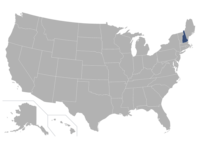
Concord, NH