ACLU can share execution records already made public, SC Supreme Court says
Sep 02, 2026 | 1:22 pm ET

Description
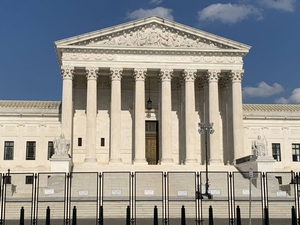
The South Carolina Supreme Court decided Wednesday, Sept. 2, that the American Civil Liberties Union couldn't face punishment for releasing information about executions that has already been made public. (File/Photo by Mary Ann Chastain / Special to the SC Daily Gazette)
COLUMBIA — A civil rights group can’t face punishment for releasing certain information about the execution process, the state Supreme Court said Wednesday.
The opinion from the state’s highest court answered questions that arose as part of a broader legal challenge to a secrecy law meant to keep most information about executions confidential, including who carries them out and where the lethal drugs come from.
That federal lawsuit is ongoing. The judge in that case will have to decide whether the Supreme Court’s decision ends the challenge altogether, as the attorney general’s office has said, or if other parts of it may continue, as lawyers for the American Civil Liberties Union said.
SC Supreme Court to decide how much stays secret about executions
The case was a rare one in which both sides agreed anyone sharing information that’s already publicly available shouldn’t face punishment.
At odds was whether the law explicitly protected that information or if sharing anything about the death penalty, including widely available information, might lead to a lawsuit or arrest.
As part of the federal challenge, the ACLU argued the law, especially as expanded in 2023, barred the release of information already made public in other ways.
The nonprofit has nearly 3,000 pages of information compiled from court documents, statements from prison officials and news reports, attorney Allen Chaney said during arguments in June.
ACLU leaders wanted to release that to give the public a fuller understanding of the execution process but worried about criminal charges. Anyone who violates the law faces up to three years in prison.
The punishment wouldn’t apply to what the ACLU said it had, attorneys for the state said in June. But the ACLU wanted to establish a precedent to be sure justices wouldn’t come in with a stricter interpretation than the sitting administration, the nonprofit’s attorneys said.
The ACLU and anyone else with information already made public through other means can publish what they have without fear of retribution, Supreme Court justices affirmed in Wednesday’s unanimous opinion.
Justices relied heavily on the use of the words “reveal” and “disclose” in the law, which says no one can reveal or disclose information about members of the execution team, the execution process or how officials got the lethal drugs used in executions.
By definition, to reveal or disclose information means making it available for the first time, wrote Justice Garrison Hill.
“Because one cannot reveal something that is already known to the public, it follows that to reveal identifying information one must release information that was confidential or private up to the moment it was released,” Hill wrote.
After someone puts that information in public for the first time, no one can face punishment for sharing it further, justices decided.
For instance, under hypothetical situations justices laid out during arguments, a reporter could use prison officials’ testimony during a court case because that’s already part of the public record. Or, a person could repost a social media post in which a member of the execution team identified themself.
“Once such information has been disclosed and becomes publicly available, the information ceases to be ‘identifying information’ covered by the statute because it is no longer confidential or private,” Hill wrote.
Answering those questions made clear the law is less broad than the ACLU initially understood it to be, Chaney said in a statement. Part of the ACLU’s concern was that the law might create a chilling effect on reporters and activists afraid publishing certain information could get them in legal trouble.
“Journalists and advocates can now rest assured that they can publish lawfully obtained information without wondering about criminal or civil penalties,” Chaney said.
The ACLU plans to release the information it has but doesn’t yet have a specific timeline, said spokesman Paul Bowers.
No executions are pending as inmates wait for answers to their appeals, including from the state Supreme Court.
The state resumed carrying out the death penalty in September 2024 after an unintended 13-year hiatus, caused in part by prison officials’ inability to get the drugs needed for lethal injection.
The secrecy law resolved that problem for the prison system. Seven men have been put to death since then, including four by lethal injection. The other three chose death by firing squad. No one has picked the third and default option, the electric chair.

Columbia