Louisiana’s new anti-homelessness law punishes people already living a sentence
Sep 02, 2026 | 12:47 pm ET
Description
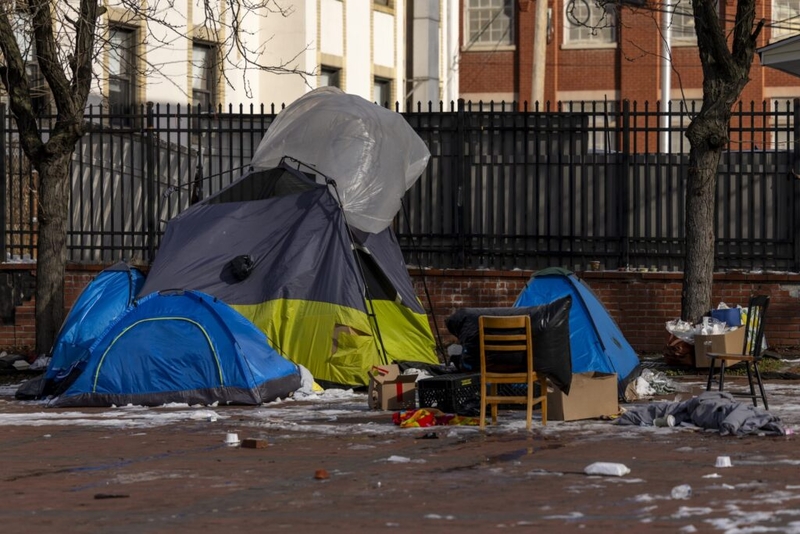
A homeless encampment in Paterson, N.J. (Photo by Anne-Marie Caruso/New Jersey Monitor)
Throughout my life, I have seen my share of homeless people. Some of my own relatives have been homeless, and it saddens me to see men, women and children without shelter.
On June 9, Act 788 went into effect in Louisiana. It creates a new crime, unauthorized camping, defined as intentionally using a tent, shelter or bedding overnight in a public space not designated for camping. It’s punishable by a fine of up to $500, up to six months in jail or both.
The law also allows local homelessness court programs, meant to steer people toward treatment instead of a cell. To be eligible, defendants must agree to waive their right to a trial, and their case may be dismissed if they complete the program. If they fail, they would go on to sentencing. If they cannot afford the cost of their own treatment, the court might order them to perform unpaid labor instead.
A homeless person could be fined money they don’t have. To have them serve time for the condition they are already in is absurd.
Research shows homelessness is already a psychological trauma similar to being in prison. A University of Kentucky study found that older homeless men described “feeling imprisoned by the systemic issues around homelessness,” the isolation, the mistreatment, the constant exposure to danger, long before any of them ever saw the inside of a jail cell.
For the homeless already enduring trauma, this legislation will serve only to intensify their suffering.
Many are former veterans. A Yale University study determined that those with a history of homelessness had significantly higher rates of post-traumatic stress disorder, depression and anxiety than veterans who were never homeless. More than 80% became homeless only after their military service ended.
A significant portion of the unhoused population consists of domestic violence survivors, specifically women and children. A University of Hawaii at Manoa review consistently labeled domestic violence as a leading cause of homelessness for women and children, not merely a contributing factor.
This is who Louisiana’s new law reaches: People who have escaped violence and now face punishment for having nowhere else to go.
Researchers from Columbia and Boston universities connected housing insecurity after a person is released from to lost earnings, and they tied lost earnings federal “one-strike” policies that can bar people with certain criminal records, drug convictions especially, from public housing.
Findings from the University of California at San Francisco put it plainly: Mass incarceration and homelessness are driven by the same structural factors, and they exacerbate one another in a feedback loop. People experiencing homelessness face a heightened risk of justice-system involvement simply for engaging in survival behaviors in public.
This is almost a direct description of what Louisiana’s new law does.
So the person coming out of jail, having served time or performed labor because they couldn’t pay a fine, goes back on the streets. They are still homeless. Now they also have a fine or a debt. They have no job, no income and are still without shelter.
Why does Louisiana always seem to be pushing to go in the opposite direction from other states? Why is incarceration always the first tool that our policymakers reach for in their toolbox when it comes to social problems in our community?
There is a proven alternative: A joint federal agency study examined the housing-first model, where the homeless are provided with permanent, independent housing without them first needing to stop using substances, complete treatment or show they are “ready.” Support services — including mental healthcare, addiction assistance and job support — are offered once they have housing, not used to block them from getting it.
Instead, our lawmakers chose the treatment-first model, one that requires someone to get sober or stabilize their mental health before they’re considered ready for housing.
Louisiana does not have to look far for a different path. Pennsylvania and Illinois have introduced bills that would make it illegal to enforce camping bans without adequate shelter available. California, even amid its struggles, passed legislation protecting people who help the unhoused.
Finland’s national housing program — offering permanent housing first with no requirement to be sober or “treatment ready” before receiving it — cut long-term homelessness 72% over a decade.
In Vancouver, Canada, housing-first approaches have reduced criminal sentences among people with mental illness who received housing instead of an ultimatum.
Louisiana keeps choosing everything that will bring it down rather than reaching for what has already been shown elsewhere to lift up people.
Baton Rouge, LA