Rio Grande in Albuquerque reaches historic dryness level
Sep 02, 2026 | 11:41 am ET
Description
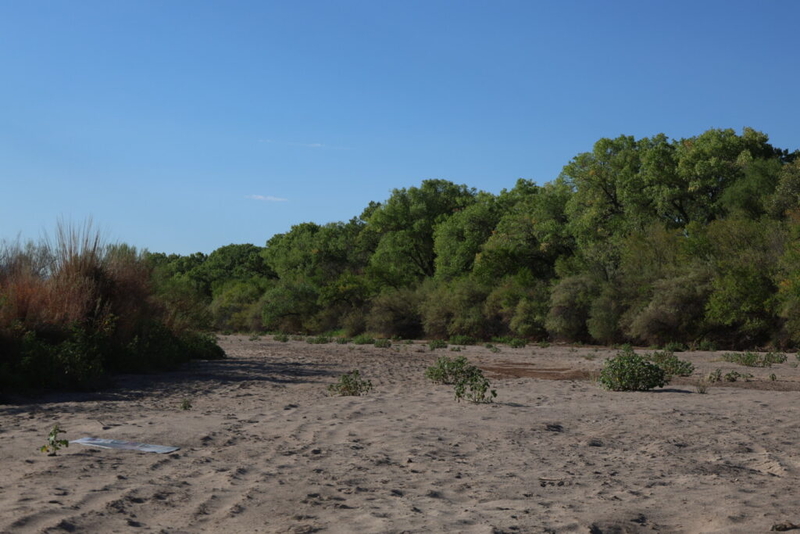
More than 112 miles of the Rio Grande in Albuquerque were dry as of Aug. 30, 2026, which marks the most dry miles in at least two decades. (Patrick Lohmann/Source NM)
Amid historic dryness, 615 million gallons of water will course through the Rio Grande in Albuquerque this week to help dying vegetation and also provide scientists with data about the ongoing drought.
As of Sunday, a total of 112.4 miles of Rio Grande between the Cochiti and Elephant Butte Reservoir was dry, Sharon Wirth, Middle Rio Grande bureau chief with the Interstate Stream Commission, told Source NM on Tuesday.
That’s the highest number of dry miles since at least 2007, according to the River Eyes Rio Grande Monitoring Program, and far more than the previous record of 78.9 miles set in 2025.
The Albuquerque-Bernalillo County Water Authority announced Tuesday that it had released the 615 million gallons of water Monday from the Abiquiu Reservoir and expects it to reach the city by Thursday.
“This one-time release will allow us to gather important data about how water flows through the river following a period of extended dryness, the relationship between the river and groundwater, and the effect of such a water release on plants and trees,” Water Authority Board Chair Barbara Baca said in a statement. “It’s also our hope that this will aid vegetation and wildlife affected by the ongoing drought.”
The pulse of 2,000 acre-feet of water down the river will also, at least temporarily, stop a drying pattern that has already reached historic levels.
The “temporary re-wetting,” as Baca called it, comes amid uncertain weather forecasts from meteorologists about the remainder of the monsoon season and upcoming winter. September is a notoriously difficult month to predict in New Mexico, National Weather Service meteorologist Matt Demaria told Source NM on Tuesday, and the impacts of a strengthening El Niño remain to be seen in the Southwest.
Still, even if the state experienced normal or slightly above normal precipitation the rest of this season, record low snowpack last winter means the river will likely remain mostly empty of water in Albuquerque this year, DeMaria said.
“It kind of doesn’t really matter what happens during the monsoon season when we have record-low snowpack,” he said, especially in the mountains in northern New Mexico and Colorado that feed the river’s headwaters.
The drying river has taken its toll on plants and wildlife. DeMaria reviewed satellite data Tuesday capturing what he described as “pretty significant degradation” of vegetation along the river.
“But most people can probably tell by just looking down in the bosque, how stressed it is with the lack of water,” he said.
The drying river has impacts beyond trees and wildlife. Middle Rio Grande water managers told lawmakers on the interim Water and Natural Resources Committee earlier this week that they need additional funding to help address the buildup of sediment from low or non-existent flows.
“We aren’t seeing those high flows pretty much anymore, and even when we do, it’s not able to do the work of scouring and cleaning the river channel,” the Interstate Stream Commission’s Wirth said. “So the river now requires us to take human mechanical intervention to help improve that.”
Santa Fe, NM