Data center project proposed on federal land gets sent back to square one
Oct 20, 2026 | 7:47 am ET
Description
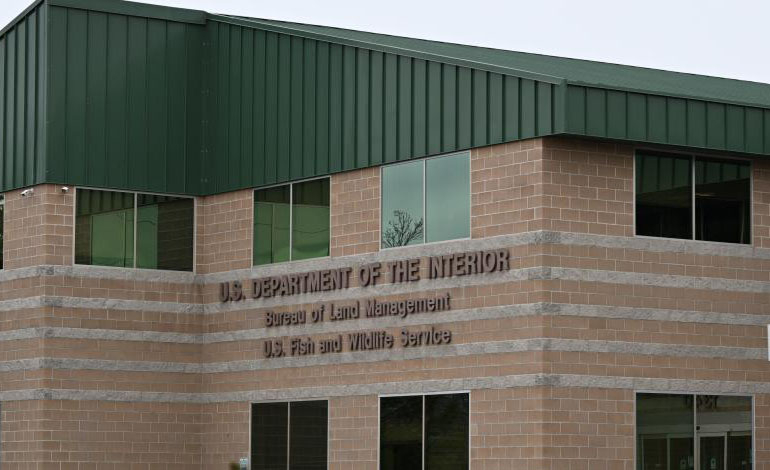
President Donald Trump's July 2025 executive order directs agencies to accelerate permitting for data centers and support energy infrastructure to make federal land available for development. (Bureau of Land Management photo)
Approval for the first-ever commercial data center on U.S. public lands was formally rejected on Thursday after a federal appeals board affirmed the Bureau of Land Management must conduct a separate environmental review, which in turn would have to be approved, before proceeding with the project.
In June, BLM approved the construction of the Townsite Data Center near Boulder City without preparing a new or revised environmental assessment after determining the data center project was “essentially like” a previously approved solar project proposed for the same site and would have “similar anticipated impacts.”
The agency relied on its 2023 review of the solar project to assess data center impacts, noting both projects would occupy the “exact same location, same acreage and same perimeter” and described both as industrial uses involving “predominantly electrical” technologies.
Boulder City, the Center for Biological Diversity and Sierra Club appealed the decision in July.
The Interior Board of Appeals temporarily halted construction of the data center in September after finding federal land managers likely violated the National Environmental Policy Act (NEPA) by using a previously approved but materially different project to authorize the new project.
That same month, BLM officials asked the federal appeals board to dismiss the agency’s approval of the data center in order “to allow the agency to conduct additional review of the application.”
Townsite Solar 2 LLC, the data center developer, did not oppose the motion and Center for Biological Diversity and Sierra Club took no position. Boulder City opposed the motion, requesting a ruling on whether BLM’s decision was lawful under environmental law.
Boulder City welcomed the appeals board decision to revoke approval for the data center and supports a comprehensive environmental review, said Lisa LaPlante, the communications manager for the city.
“It remains the City’s position that the BLM must follow federal law in approving of such a use and provide the City and the public with meaningful opportunity to be involved in if, how, when, where and why these facilities are authorized,” LaPlante said.
Townsite Solar 2 LLC did not respond to a request for comment.
Patrick Donnelly, the Great Basin Director for the Center for Biological Diversity, said they are now waiting on the BLM’s next move.
“We got the approval thrown out, so we feel pretty good about that,” Donnelly said. “We’re kind of waiting for next steps or what’s going to be happening from BLM or the developer, but we know they’re starting from ground zero.”
Donnelly said there’s no precedent for a data center on federal land, raising questions on how the federal government will analyze enviromental impacts, including noise, wildlife habitat, air quality, and socioeconomic issues.
“These are all pressing questions that we raised in our appeal that they’re going to have to answer if they expect to permit one of these projects,” Donnelly said.
As more local governments push back against data centers, public land will become more attractive to developers, said Donnelly. The Townsite Data Center could influence how future projects are permitted on public lands, he added.
“It’s actually getting kind of difficult to put data centers on private land because county commissions are getting swayed by their angry constituents. But meanwhile, this administration is taking a battering ram to all of our federal environmental statutes, paving the way for seemingly very easy development of data centers on public land,” Donnelly said.
President Donald Trump’s July 2025 executive order directs federal agencies to accelerate the construction of large data centers and supporting energy infrastructure on federal land.
BLM invoked the policy in its initial approval of Townsite, saying the development “supports federal efforts to accelerate permitting for data center infrastructure.”
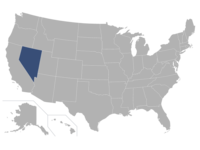
If implemented on BLM lands, the plan could have major implications for public lands throughout the West, and especially in Nevada where about 80% of the land is managed by the federal government.
Las Vegas, NV