Economic growth is stunted in Wyoming due to lack of electrons, industrial customers say
Sep 02, 2026 | 6:25 am ET

Description
Photo courtesy of WyoFile
Fed up with a slow-moving response to skyrocketing demand for electricity, industrial groups have loosely aligned with independent power producers and economic development shops to demand traditional utilities loosen their grip on monopolized service territories.
The groups — backed by Wyoming trona and soda ash producers, some local governments, AI computing and data center developers — argued in favor last week of two draft bills that would allow them to plug into “third-party,” or “non-utility” electric generation facilities apart from existing regulated utilities and member-owned co-ops.
The idea is to quickly add massive amounts of new electricity to power traditional industries like mining and refining processes, as well as new industrial endeavors, the data center boom and, in some cases, municipal growth. The direct electrical generator-to-industrial customer model, proponents say, would supposedly be isolated from existing utilities and their customers, bypassing the industry’s slow and risk-adverse response to unprecedented demand for additional megawatts.

“The solution is non-utility investment,” said Holland and Hart attorney Thor Nelson, who represents the Wyoming Industrial Energy Consumers group — a coalition of mines, refineries and other big power customers on Rocky Mountain Power’s system in the state. “The solution is have somebody else take that risk, have somebody else make that investment, because if a non-utility company invests, the native customers of the utility — the residential and commercial customers who we all care about — are not affected.”
The Wyoming Legislature’s Minerals, Business and Economic Development Committee heard several hours of testimony last week as it considered two draft bills: Utilities-regulation exception for electricity generators and Nonpublic utility generators. Though the panel declined to sponsor the bills — the former failed on a vote and the panel took no action on the latter — there was interest among committee members to nevertheless take up the issue in the upcoming legislative session.
While both bills were aimed at the same goal of allowing for and clarifying qualifications and conditions for third-party electric generation, the Utilities-regulation exception for electricity generators measure was a more direct route bypassing the Wyoming Public Service Commission, while the Nonpublic utility generators measure would have directed how the utility regulatory agency would weigh qualifications.
The commission last week independently amended its own rules to clarify the process for qualifying as a nonpublic utility generator, but muddying the picture for where the state might ultimately land on the issue. That’s a concern among traditional electric utilities, which generally don’t like the idea because it’s a major departure from their regulated business model.
Companies like Rocky Mountain Power and Cheyenne Light, Fuel and Power for example, are allowed to serve as a monopoly in a specified service region, and in return they’re obligated to serve every home, business and industrial customer there. The model helps support economies of scale that keep rates lower for smaller customers, utility officials have testified, and it provides assurances that their hefty investments in the system will be repaid.
‘We are here because of Rocky Mountain Power’
Though the model has served Wyoming well, proponents for change say the existing system is too cumbersome and risk-adverse to take advantage of major economic development growth opportunities. And it’s not just about AI computing and data centers.
Wyoming’s largest electric utility, Rocky Mountain Power — in addition to facing reliability complaints from some municipalities and agricultural irrigation customers — refuses to commit to providing extra megawatts in a timely fashion, according to critics. The state’s prolific trona and soda ash industry, for example, says the utility has answered at least one request with a seven-year wait time — effectively a “no,” according to an industry official.

Economic development officials in Wyoming’s southwest corner say they constantly field inquiries from industrial developers who first ask about the workforce and then about electrical power availability. They tell interested parties that power is a “maybe.”
“Are you aware that Sweetwater County and parts of Carbon County really are not open for business right now?” Rock Springs Republican Sen. Stacy Jones asked a Rocky Mountain Power official.
Several committee members noted that Cheyenne Light, Fuel and Power uses a special tariff to provide electricity purchased from the market to serve data center customers in its service territory while Rocky Mountain Power has not made use of a similar tariff that the state created for the utility.
“We are here because of Rocky Mountain Power,” Cheyenne Republican Sen. Tara Nethercott said. “At this point, the future of Wyoming is in jeopardy because we are unable to grow. Our current legacy industries are not able to meet their needs, let alone look to the future. And so, as a statewide lawmaker, how do I solve this problem today?”
Rocky Mountain Power, along with its parent company PacifiCorp, is majority owner of four coal-fired power plants in Wyoming, including the Jim Bridger plant near Rock Springs and the Dave Johnston plant near Glenrock. Part of the utility’s long-range plan to meet large electrical growth in Wyoming, Government Affairs Director Thom Carter said, is to shift more of the electrical flow from its Wyoming coal plants away from customers in Oregon and Washington and back to the Equality State.
Those West Coast states “are divorcing themselves of the thermal generation here in Wyoming, and because we will be keeping our thermal generation on in Wyoming, we do now have available capacity on the east side of our system,” Carter said.
But, there’s no guarantee the utility might spend the majority of those shifting electrons in Wyoming rather than Utah or Idaho, where Rocky Mountain Power also operates, lawmakers noted and utility officials conceded.
Though that shift of coal-based electricity may eventually find its way to Wyoming, the current outlook suggests a dire shortfall in meeting demand throughout PacifiCorp’s larger, multistate system, according to Nelson of the Wyoming Industrial Energy Consumers group. The group calculates that, without adding any new electrical generation facilities, a shortfall of about 992 megawatts of power in 2027 could grow to 1,718 megawatts by 2030.
One megawatt is enough electricity to power about 750 homes.

“Yeah, the private sector is able to get that stuff to market more quickly than the utilities,” Nelson said. “It’s not because the utilities are bad at their job. It’s because they are constrained to make sure that they don’t take a misstep that comes back and bites the residential and commercial customers on the butt. But you take those shackles off, you get more options and you get faster results.”
Rocky Mountain Power is embarking on a months-long study to determine how it might procure more electricity for growth in Wyoming, Carter said. Some of the same supply chain constraints that challenge Rocky Mountain Power will also challenge companies that step up to be third-party power generators. “I think there is this misunderstanding that there is some hidden supply chain that Rocky Mountain Power and our parent company is unaware of,” he said. “But we do recognize this concern.”
Lawmakers and industrial customers also criticized the utility for not running its Wyoming power plants at full capacity. Some said it’s common knowledge in southwest Wyoming that the two coal units at Jim Bridger often run at 20% capacity. Casper Republican Sen. Jim Anderson said he has direct knowledge that the company frequently dials back its Wyoming coal-power generation output to allow for more wind-generated power on the transmission system.
“They shut those coal-powered power plants down a lot, — 70% of the time,” Anderson said.
Those in-service operation figures are inaccurate, a Rocky Mountain Power official told WyoFile.
“The service factor for all [four] units last year was 74% — meaning the time the units were in service,” Vice President of Communications Tiffany Erickson told WyoFile via email. “In terms of capacity, last year the coal units 3 and 4 generated between 56% and 49.9% of their nameplate capacity over the year, with unit 4 being out of service for six weeks for a major overhaul.
“As an integrated utility, we operate our generation fleet in the most economical way possible to reliably serve customers while keeping costs as low,” Erickson added.
“It doesn’t seem like it’s fair,” Jones said, “that we can’t get the power that we need, and yet they aren’t producing the maximum amount that they could produce. So Sweetwater County is suffering [and] Carbon County is suffering. So it’s our duty to do something about this.”
UPDATE: This story was updated with Rocky Mountain Power’s own in-service capacity figures for the Jim Bridger power plant. —Ed.
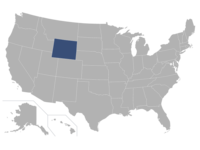
Cheyenne, WY