Proposed six-year transportation plan focuses on priorities, not new projects
Sep 01, 2026 | 12:00 pm ET
Description
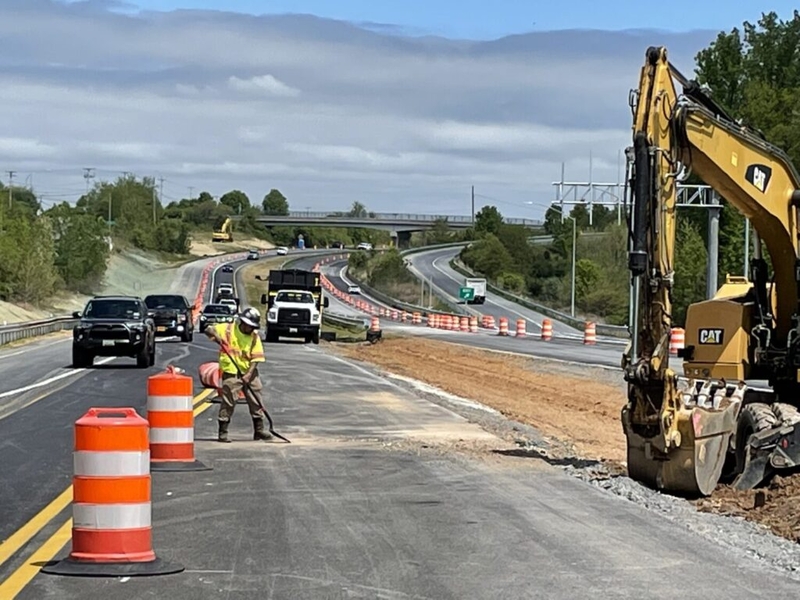
State transportation officials said an updated draft of the six-year plan for road and transit projects will focus on core areas of safety, maintenance and economic development and will include no new projects. (File photo Maryland Matters)
Maryland will spend marginally fewer dollars on roads and transit projects in the coming six years, when funds will be directed at existing projects as well as those in the pipeline prioritized for safety, maintenance and economic development.
A proposed $21.9 billion six-year transportation plan is $200 million less than the version of the plan released this time last year. The decrease in available funding — a drop of just under 1% — comes amid a growing backlog of maintenance projects and inflation that has increased the cost of some projects as much as 40%.
“It is essentially flat-funded,” Transportation Secretary Katie Thomson said during a Monday briefing with reporters. “We’re moving some of the dollars around where they’re most needed for safety or state of good repair.”
The result is a pared-down Consolidated Transportation Plan.
“There will be no new dollars for brand-new capital projects in this CTP,” Thomson said. “You will see us continuing to fund must-fund projects like completing the work on the Purple Line, which will largely include operational systems testing, so that we can put it up in operation soon. Cox Creek expansion and enterprise IT and cybersecurity investments that are needed to ensure the safety and continuity of operations here at the department.”
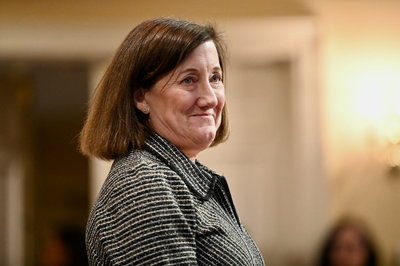
Thomson delivered a similar message to county officials two weeks ago at the Maryland Association of Counties conference in Ocean City.
“No one expressed surprise. I think we are all focused on how do we shore up the Transportation Trust Fund and ensure that we can continue to make those critical investments in safety, state of good repair, and capital projects that will lead to expansion of opportunities for individuals and attract business to the state,” she said.
Thomson met with reporters Monday and discussed “high level” details in advance of releasing the updated plan Tuesday afternoon. Full details of the six-year plan were not available to reporters at the time of the briefing.
The plan released Tuesday will be featured in a series of fall “road show” meetings with counties.
Despite the announcement of continued investments in the Port of Baltimore, the airport and updating the light-rail system, Thomson acknowledged financial challenges.
“We do … operate in a very constrained financial environment that is not unique to MDOT. That is not unique to transportation, and it’s not unique to Maryland,” Thomson said. “What it means is we will have to leverage every existing dollar and put it to the highest and best use.”
One signature project for Gov. Wes Moore (D) — the east-west Red Line transit project proposed for Baltimore — remains stalled.
Moore promised on the campaign trail and as he entered office to restart the project canceled in 2015 by Republican Gov. Larry Hogan.
The project was to connect Bayview Hospital in east Baltimore with Woodlawn in western Baltimore County over a 14.1-mile light rail line. But Hogan and others believed the cost of the project would exceed its original $2.9 billion price tag, while never meeting ridership projections. He called it a boondoggle.
In 2023, Moore announced he was reviving the same light-rail project with construction slated for 2026. But the project has stalled and paying for the project remains an open question.
As costs balloon, state officials pitch Key Bridge project to key federal lawmakers
Thomson said $150 million earmarked in the transportation plan “will get us fairly along in planning and design but would not be sufficient for long-term construction of the project.”
And the original rail project may be off the table with Moore and transportation officials looking at bus rapid transit as an option.
“We’re going to be taking a trip to Cleveland in October to visit their bus rapid transit with a number of different stakeholders, including some members from the Baltimore delegation and the General Assembly more broadly,” Thomson said. “We expect to be able to announce with the governor … a decision for moving forward in early 2027.”
Maryland faces a nearly $1.2 billion gap in the amount of money it needs to spend to keep its roads in a state of good repair, according to a July report from the Pew Center.
That amount is based on a 10-year report filed by Maryland and other states in 2022 — the most recent available. Maryland plans to spend about $4.7 billion over a decade for road maintenance. Pew’s review found the state is short 25% of what it should spend during that same period.
Projects are paid for out of Maryland Transportation Trust Fund, a dedicated account that pulls cash from several sources including the state’s 46.6 cents per gallon gas tax.
Federal funding along with titling and fuel taxes and vehicle registration fees make up about 65% of the revenue in the fund.
Motor fuel taxes were once the backbone of state transportation funding. That revenue source has been in decline for years.
Fuel taxes continue to decline. A Department of Legislative Services analysis in February projected that state titling taxes will overtake gas taxes as the largest state-sourced revenue in the fund in that 2026-2031 plan.
In 2023, the General Assembly created the Transportation Revenue and Infrastructure Needs Commission, a 31-member panel that was tasked with coming up with ways to modernize how the state pays for transportation projects as gas tax revenues decline. The panel made modest interim recommendations before the legislature effectively dissolved it.
Thomson said there are continued efforts to “shore up” the Transportation Trust Fund. That effort runs headlong into a projected $3 billion budget gap in the coming year as well as a continued challenging economy.
“I personally believe we should be open to all options that may be viable, but we also have to take into account the impact that it has on individual taxpayers,” she said. “So, all options that are viable should be on the table, but we need to be thoughtful about the short-term and long-term implications, both for Maryland taxpayers and for the general fund, and what it means for TTF.”
Inflation continues to exacerbate the problem.
“We have seen asphalt and diesel fuel prices increase by upwards of 38% even in the last six months,” Thomson said. “A project like the I-81 investment that has not changed in scope, you’re going to see more money being directed towards I-81 because of those cost increases and its labor, it’s across the board, but those are two examples.”
Thomson said the war with Iran over the last six months has also increased costs.
“Yes, absolutely,” Thomson said when asked about the conflict. “But the inflationary pressures predate that. That was focused obviously on oil-based petroleum products, but there are broader inflationary pressures that we’ve seen in transportation construction for, gosh, the last five plus years.”
— This story may be updated
Annapolis, MD