Mystery price tag: Utah can’t say how much it’s losing from data center tax break
Aug 31, 2026 | 7:01 am ET
Description
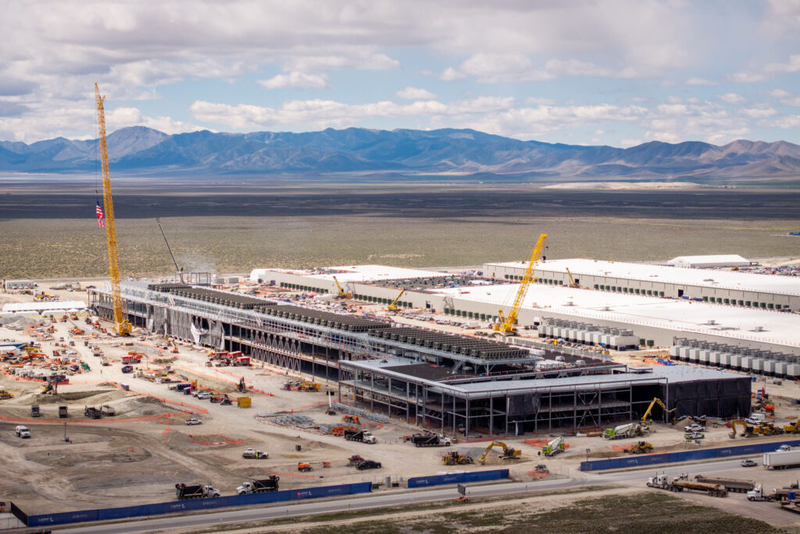
Construction continues on the new QTS data center in Eagle Mountain on Friday, April 17, 2026. (Photo by Spenser Heaps for Utah News Dispatch)
The following story was reported by The Utah Investigative Journalism Project in partnership with Utah News Dispatch.
States are forgoing millions and, in some cases, billions of dollars in revenue by allowing data centers to skip out on paying sales tax.
But Utah has no idea how much money it’s losing to these tax exemptions — the state simply doesn’t collect the data. That’s thanks to legislative action nearly two decades ago that repealed reporting requirements.
That gap in transparency is sparking doubts about whether policymakers can adequately evaluate the tax exemption program at a time of heightened public interest in data centers and their impacts on the state.
“The scale and rapid growth of data-center investment raise legitimate questions about whether our current framework, and the data available to evaluate it, remain adequate,” Rep. Jill Koford, R-Ogden, said in an email. Koford sponsored a bill passed by the Legislature earlier this year requiring transparency around data centers’ water usage.
Utah isn’t alone in its opaque approach to sales and use tax exemptions for data centers. A report from Good Jobs First, a nonprofit which focuses on corporate and government accountability, found that 14 of the 37 states with such exemptions don’t publish their official revenue losses in a timely manner. Those that do reported losing between $830,000 and $1.9 billion in 2025, with larger losses projected for this year and beyond.
In Utah, the higher end of that range would be nearly half of the total amount the state collected in sales and use tax last year. That amount is a drop in the bucket of the state’s $37 billion budget, but it’s still enough to pay for significant benefits. It would, for example, cover a sizable gap in the state’s Medicaid budget and quadruple the amount lawmakers allocated for a first-time home-owner program this year — and still have over $1.6 billion left over.
Meanwhile, the lower end of the spectrum, $830,000, would be enough to pay the governor’s annual wages and benefits for over three years.

Kristian Fors, an analyst with the Utah-based Libertarian think tank Libertas Institute, stressed the need for Utah to track these incentives.
“You can’t manage what you can’t measure,” he said. “For any government policy, transparency and accountability is of utmost importance.”
Kasia Tarczynska, who authored the Good Jobs First report, said many states created these sales and use tax exemptions based on the smaller-scale data centers that existed 10 to 15 years ago but that those programs have skyrocketed in the past few years due to artificial intelligence deployment.
“This program did not change at all, but the industry has changed to the point that it’s a very, very different industry,” Tarczynska said, adding that this mismatch calls for states to review these programs. “We’re seeing this explosion in subsidy costs. That’s why it’s extremely important for state governments and for state lawmakers to go back, pause these programs … and even figure out if it makes financial sense for the state to even provide these subsidies.”
Some states are doing just that. Governors in Nebraska, Ohio, Illinois and Massachusetts announced pauses on tax incentives for data centers.
Tarczynska stressed that these kinds of tax breaks don’t play a large role in where companies decide to locate data centers. Instead, she said, the focus is on electricity prices, fiber connectivity, cheap and available land, low regulations, water access and stable climate.
“Subsidies kind of come at the end of the site selection process, and they don’t really have a big impact on a location decision — they’re kind of like a bonus, like a cherry on top,” she said. “They’re already spending billions and billions of dollars — spending maybe 2% more on paying their fair share in taxes is not going to change their calculations.”
You can’t manage what you can’t measure. For any government policy, transparency and accountability is of utmost importance.
Khara Boender, a spokesperson for Data Center Coalition, the industry’s trade group, pushed back against that notion but said it’s difficult to say what the hierarchy of deciding factors is.
She pointed to Virginia, which is home to one of the largest data center markets in the world, as a counterpoint. The state’s legislative audit and review commission found in a 2019 review that the majority of data center investments in Virginia wouldn’t have occurred without tax exemptions.
“I think that’s one specific stat that pushes back on that notion that these are not being decisive factors in where data centers are locating,” Boender said. “One of the things to look towards is also the different economic contributions of the data center industry, especially if we’re looking at why a state might want to offer an exemption package to try to attract that type of investment.”
A decades-old decision playing into the AI boom
The framework for the Utah program was revamped in 2009 when the state Legislature passed a law doing away with the requirement for businesses, individuals and nonprofits to report transactions that are exempt from state and local sales taxes.
At the time, the Utah Tax Commission used those reports to compile the total amounts of those exemptions and turn them over to the Legislature to aid in policy decisions. However, reporting was hit or miss, making the data unreliable, according to Utah State Tax Commission Deputy Executive Director Jason Gardner.
“The focus at the time was traditional manufacturing and semiconductor-related equipment exemptions; modern hyperscale AI data centers were not contemplated in that discussion,” Koford said. “That history matters because the reporting change has left us with limited visibility into the actual fiscal impact of the equipment exemption as applied to today’s large data centers.”
The bill also directed the commission to produce annual estimates on sales and use tax exemptions, but Gardner said it is unable to do so for categories where a small number of companies are utilizing the exemption, including data center machinery and equipment.
Tarczynska said estimates from state agencies on how much the exemptions cost taxpayers are often far lower than the true value. She added that a handful of states that haven’t previously tracked the exemption costs conducted special studies focused on data centers and the subsidies. But those one-time reports raise their own red flags.
The lack of transparency, she said, is “a cautionary story.”
“There are other industries that have their own sales and use tax exemption. We don’t know what the future brings, right? So therefore, every subsidy program needs to have very smart, targeted requirements and company obligations, including not only in job creation, creating good quality jobs, but also in reporting.”
Fair treatment?
Utah’s sales and use tax exemption program covers a wide range of categories beyond just machinery, equipment or parts purchased by data centers. Other exemption categories include sales to or by churches and charities, aircraft manufactured in the state and certain construction products sold between related entities.
“This policy acknowledges the capital-intensive nature of data center investments and aligns data center tax treatment with that of manufacturing equipment, which enjoys similar exemptions in 41 states,” said Boender with the Data Center Coalition. She declined to comment on how a reporting requirement for the exemptions would impact the industry.
Koford said the goal of these kinds of exemptions is to prevent companies from being taxed more than once as goods move through the supply chain rather than bonus incentives for businesses.
Libertas Institute analyst Fors argued that “fair” tax policy is consistent across the board, regardless of industry.
“We shouldn’t have favoritism in government policy,” he said, adding, “We don’t want the government choosing winners and losers.”
Salt Lake City, UT