Alabama state library board creates sample policies to implement controversial rule changes
Aug 31, 2026 | 6:01 am ET
Description
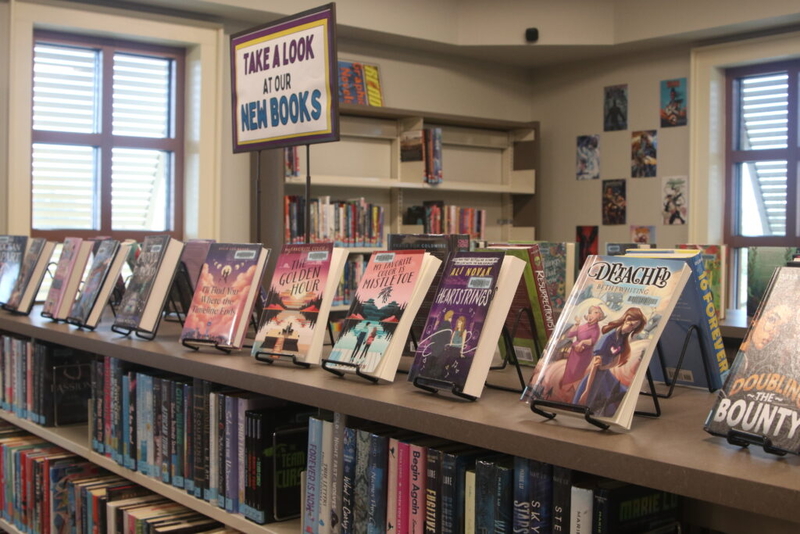
Books on display in the teen section of the Fairhope Public Library on March 2, 2026. The APLS created sample policies for local libraries to use that align with the recent changes to the administrative code. (Ralph Chapoco/Alabama Reflector)
The Alabama Public Library Service unveiled a set of sample policies earlier this summer that they say will allow local libraries to remain in compliance with controversial administrative code changes adopted in the past two years.
The set includes three examples, known as A, B and C, with different formats, but all contain the elements of changes approved by APLS in 2024 and 2025 that directed local libraries to restrict content or risk losing state aid.
“We wanted to make sure they had examples that they could use,” said John Wahl, chair of the APLS Board and Republican nominee for lieutenant governor, in an interview Thursday. “Nothing that was required, just ideas where they could take them to their local boards, make any edits they wanted to make and streamline their process, especially for libraries that didn’t have someone to draft policies for themselves.”
In 2024, board members ratified updates that required libraries to create policies restricting minors’ access to materials that are considered obscene, sexually explicit “or otherwise inappropriate.”
In 2025, members of the APLS Board updated the administrative code for a second time to prohibit library materials that dealt with gender ideology, but without defining the term.
“In the past we would have policy requirements that were much more broad and open, and allowed for individual library boards to tailor those policies to the specific needs of their communities,” said Mary Campbell, president of the Alabama Library Association. “These do not allow you to do that.”
The changes came after right-wing activists targeted libraries in Alabama and around the nation, claiming youth sections of libraries contained explicit or sexually suggestive materials. Some of the books targeted used inclusive pronouns, and critics said the books were being targeted for having LGBTQ+ themes or characters.
Read Freely Alabama, a group that organized to oppose the changes, criticized Wahl and board member Amy Minton in a statement, saying the policies “make clear that this was never about protecting children from explicit content.”
“Libraries are being compelled to treat books about transgender people and gender identity as inherently ‘sexually explicit,’ a vague term that seems to change to reflect whatever John Wahl and Amy Minton want it to regardless of actual sexual content,” the statement said.
Thus far, the Fairhope Public Library has been the lone library to forfeit state aid for refusing to move specific materials that the APLS board objected to.
Example policies have the same statement that bans discrimination, but with an added caveat to accommodate the administrative code changes.
“Exercising discretion in the location of sexually explicit material or other material deemed by the public library board to be inappropriate for children or youth does not constitute a denial of service on the basis of age,” the policies state. “Taking age into account when recommending, displaying or otherwise actively promoting library materials does not constitute a denial of service on the basis of age.”
The sample policies differ in their specificity. But all include sections that refer to specific elements within the administrative code and provide justification.
“Different libraries have different structures with their bylaws for the codes, and we wanted them to have options that fit well with the structure of their local protocols,” Wahl said.
The main changes that board members imposed on the administrative code dealt with library collections and reshelving materials, library cards, displays for content and membership with the American Library Association.
Example A appeared to be the least specific. The selection criteria section had bullet points for relevance, quality and demand, along with a statement that “These criteria safeguard minors from sexually explicit or other material deemed by the public library board to be inappropriate for children or youth.”
The section to reshelve library materials outlined the same criteria that restricted minors from having access to specific library materials and had a statement regarding the gender ideology ban.
“Under this rule, any materials regarding transgender procedures, gender ideology, or the concept of more than two biological genders shall be considered inappropriate for children and youth,” the example policy states.
Example C included more details. It had a section titled “Application and Purpose” that referred to “protecting minors from obscene, sexually explicit, or other material deemed by the public library board to be inappropriate for children or youth.”
The section for selection materials had a numbered list of rules that largely aligned with the paragraphs in Example A but had other particulars.
“All materials intended for minors must be reviewed and approved by designated library staff,” the policy states.
The physical location section in Example C laid out criteria for filing complaints related to library materials.
“Citizens may, upon furnishing proof of residency, initiate a Request of Reconsideration of any library material by filling out the applicable form,” the example policy states. “Requests for Reconsideration are reviewed according to established criteria and procedures, guaranteeing transparency in the decision-making and ensuring that every citizen has a voice in the process.”
Campbell said that the sample policies could help smaller and more rural libraries without adequate staffing to develop policies aligning with the administrative code. But she said it will not solve other issues.
“One of the main issues is the subjectiveness of some of some of the requirements, like what is ‘inappropriate for children,’” Campbell said.
The set of sample policies is one approach that APLS staff have tried to address issues that local libraries face to comply with the administrative code changes.
APLS Director Kelyn Ralya is still considering whether to fill a post that was created to coordinate with local libraries to comply with the administrative code changes. That decision remains pending.
Montgomery