Missouri activists want fewer cameras on citizens and more on politicians
Aug 31, 2026 | 6:50 am ET
Description
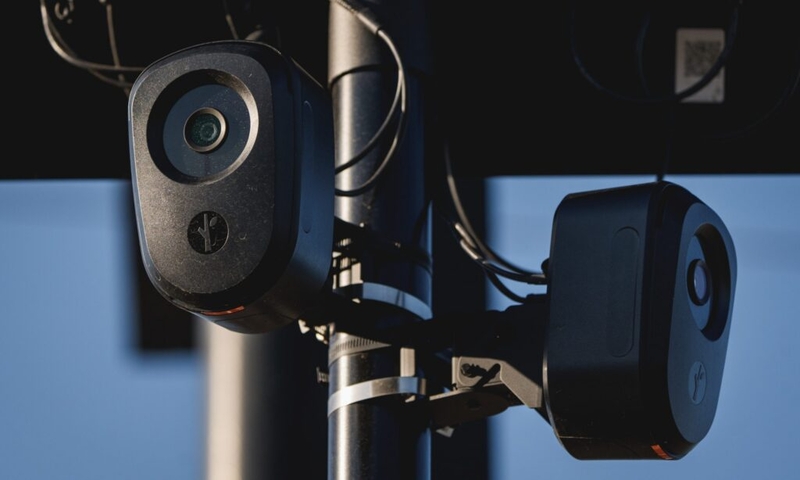
Flock Safety cameras are mounted on a pole in the parking lot of the Home Depot in Salt Lake City (Spenser Heaps for Utah News Dispatch).
Pulaski County Sheriff Stacy Ball thinks Flock cameras help his deputies fight crime.
But he also thinks they’re not worth keeping.
Ball recently announced his office was pulling the plug on Flock Safety, the network of cameras that photographs license plates and gives police a database they can search later — and which has come increasingly under bipartisan fire across the country.
As far as Ball knows, his deputies never abused the system. He believes they used it responsibly. But he’s been hearing from residents worried about privacy, government surveillance and what could happen if the technology fell into the wrong hands.
In the end, that mattered more.
“Your voice matters. Your rights matter. Your trust matters,” he wrote.
Elsewhere in Missouri, the concerns of Flock critics aren’t hypothetical.
The St. Charles County Police Department shut down its network this month after discovering a civilian employee had used the database for a personal, non-law-enforcement purpose. The employee was put on unpaid leave and resigned after being notified the department intended to fire them. The misuse was uncovered after Flock rolled out a tool that flags unusual search patterns.
In Joplin, an officer left the department in January after an investigation found the system had been improperly used. Activists who reviewed the records said the officer accounted for roughly a quarter of the department’s Flock searches and ran one license plate about 395 times, typically listing “DWI” or “Warrants” as the reason without attaching a case number.
That helps explain why Flock has found plenty of skeptics in Missouri, especially among grassroots conservatives.
And they’ve picked up influential allies along the way.
“Americans do not surrender their privacy rights when they drive to work, drop their kids off at school, or go to church,” U.S. Sen. Josh Hawley of Missouri said last week.
At the same time many of those conservatives are pushing back against Flock cameras in their communities, they’re demanding a camera be turned on in one particular place: the Missouri Senate.
For years, activists have wanted the Missouri Senate to livestream its proceedings. You can listen to the Senate online, but you can’t watch senators debate on the floor. It remains one of only two legislative chambers in the country where that’s true.
State Sen. Mike Moon, an Ash Grove Republican, has repeatedly tried to change it. This spring, his proposal died in circumstances that would have been a little too on the nose if someone had written them into a screenplay.
Senators voted 12-11 to table Moon’s proposal using a standing division. That’s when senators physically rise from their desks to be counted, so there was no roll call showing who voted which way.
The Senate does record video of its proceedings, though, mostly for internal use. The conservative group Act for Missouri filed a Sunshine Law request, paid $6 and got a copy.
And at the point in the video when senators stood up to vote on whether Missourians should be able to watch the Senate, the screen went black.
Perfect.
Moon, as it happens, is also among a bipartisan group of lawmakers who sponsored legislation this year restricting state and local governments from using automated license plate readers.
The two positions may look contradictory, but the argument isn’t really over whether cameras are good or bad. It’s over on which side of the lens government belongs.
Police argue Flock cameras help them find stolen cars, missing people and suspects. But the cameras don’t wait until police suspect you of something. They photograph the cars that pass by and keep the information so police can search it later.
The Missouri Senate works the other way around.
These are elected officials conducting public business in a public building. Yet the Senate keeps video of that work largely for itself. If citizens want to see it, they have to ask, wait and sometimes pay for it.
Put the two fights next to each other and the politics make more sense. The government should have to justify watching you. You shouldn’t have to justify watching the government.
Maybe Missouri doesn’t have a camera problem.
Maybe the cameras are just pointed the wrong way.

Jefferson City, MO