Tennessee slightly sheds jobs for 8th month in row, inflation at 3.4%
Aug 31, 2026 | 6:01 am ET

Description
Tennessee shed jobs for the eighth month in a row, according to federal data. (Photo: John Partipilo/Tennessee Lookout)
The state’s top economic advisor at the University of Tennessee isn’t concerned yet, even as job numbers show that, for the eighth month in a row, the number of people employed in the state has slightly dropped.
Tennessee’s economy has experienced year-over-year job growth since an initial spike in unemployment at the start of the coronavirus pandemic. Then in 2022, the state experienced a few months of job losses, but still managed to add more jobs over the course of the year.
But the latest economic data from the U.S. Bureau of Labor Statistics show that from December 2025 to July 2026, roughly 55,000 fewer Tennesseans have jobs. More than 3.42 million Tennesseans were employed in November 2025, and as of July, that number was 3.37 million.
Don Bruce, a professor with the University of Tennessee’s Boyd Center for Business and Economic Research, said that the short-term drop in employment numbers is not something he’s concerned about until it becomes a multi-year trend.
“We are still above where we were pre-pandemic,” Bruce said. “I’m comfortable that our state economy is strong enough to weather short-term fluctuations in employment.”
TN unemployment low, but sheds jobs for the 5th month in a row
Despite shedding jobs, Tennessee’s unemployment rate fell in July to 3.4%. Outside the early pandemic months, Tennessee’s unemployment rate has remained below 4% since April 2017.
Tennessee’s unemployment rate still remains low because fewer people are working. Economists at the University of Tennessee have attributed this to a steady increase in retirements, the rise of artificial intelligence and recent crackdowns on immigrant workers.
The other economic concern for state officials is inflation, which sits at about 3.4%. Typically, the U.S. Federal Reserve targets a yearly inflation rate of 2%.
Bruce said oil prices are driving inflation, which makes it less likely that the U.S. Federal Reserve will cut interest rates this year. The increase in oil prices reverberates throughout the economy, making almost every shipped product more expensive.
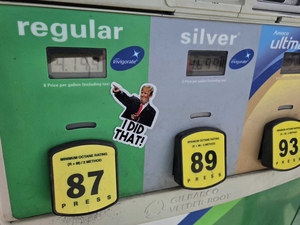
The price of oil spiked dramatically in February after President Donald Trump launched a war with Iran. Prices have fluctuated more widely over the past six months because of the war, and remain higher today than at any point in 2025.
Nashville, TN