ICE released man formerly detained in Aurora without his ID in unfamiliar state
Aug 31, 2026 | 6:00 am ET
Description
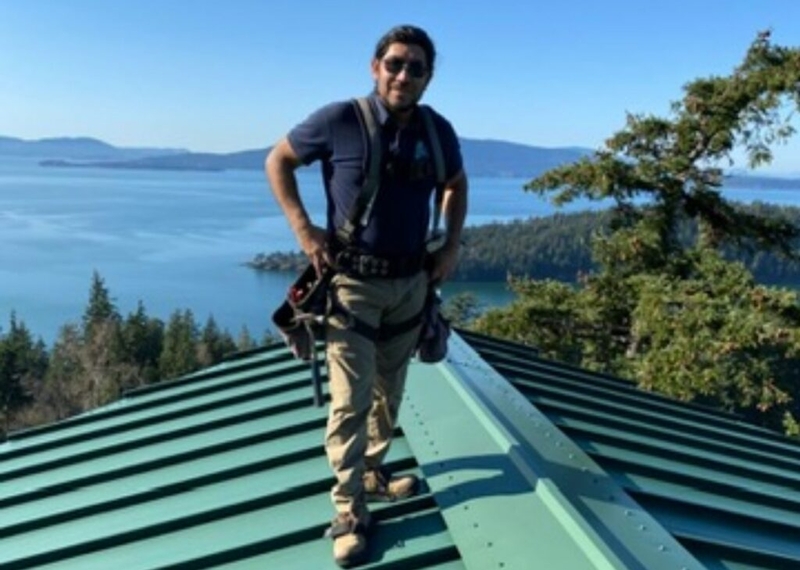
Rudy Villeda Mejía runs a roofing business in northern Washington that has struggled since U.S. Immigration and Customs Enforcement arrested him in March. (Photo courtesy of Mabel Shaffer)
Rudy Villeda Mejía, who spent just over four months in immigration detention in Aurora, is home with his family in northern Washington state.
His journey home was drawn out, as his family and attorney struggled to locate him when U.S. Immigration and Customs Enforcement released him in a state more than 2,000 miles from home after the agency nearly deported him.
A judge ordered on Aug. 3 that ICE release Villeda Mejía, 47, from detention because he has a pending application for a T visa, which is designated for victims of human trafficking. That makes him part of a protected class under a May court order from California that blocked ICE from detaining immigrants with pending T visa applications, along with other visas for crime victims.
Villeda Mejía is adjusting after his return home and is back to work at his roofing business, which suffered financial losses while Villeda Mejía was detained, struggling to repay debts for new equipment the company purchased.
“Now he’s just trying to catch up with work,” Genaro Shaffer, Villeda Mejía’s stepson, said. “We have all these roofs that we’re doing, and he’s just constantly working, working, working every day. It’s got to be exhausting after going straight from detention to work.”
Villeda Mejía, originally from Honduras, has lived in the U.S. since he entered without authorization in 2010, when he was kidnapped by a violent cartel in Mexico that brought him over the border, according to a notarized personal statement Villeda Mejía submitted with his visa application.
He fled gang violence. Now this ICE detainee in Aurora tries to avoid deportation.
ICE arrested Villeda Mejía at Denver International Airport on March 30. He was detained at the ICE detention center in Aurora until early August, when ICE moved him across the country to a “staging facility” in Louisiana — the final stop before ICE deports someone, according to Henry Hollithron, Villeda Mejía’s Denver-based attorney.
Shortly after he arrived in Louisiana, Judge Regina Rodriguez of U.S. District Court in Colorado ordered his release. Her order prohibits ICE from re-detaining Villeda Mejía unless it demonstrates at a hearing that he is a flight risk or danger to the community.
Stripped of passport
Villeda Mejía’s wife flew to Louisiana, where the couple rented a car to drive back to Washington, according to Shaffer. That was only after the family and Hollithron scrambled to narrow down exactly where ICE released Villeda Mejía.
ICE told one family member he was still in Aurora. Another person detained in Aurora told a different family member he was no longer in Aurora. Hollithron’s office heard he was in Oakdale, Louisiana. Then that changed to Alexandria, Louisiana, and again to Winnfield, Louisiana.
“We’re sure he’s in Louisiana somewhere. We just don’t know where in Louisiana he actually is, because the left hand doesn’t know what the right hand is doing,” Hollithron said. “This is the reality of families dealing with immigration detention. You can’t even find your relatives half the time.”
Shaffer said he ultimately learned that ICE flew Villeda Mejía to Arizona and then to Texas, and he was driven from Texas to Louisiana.
ICE has arrested and deported thousands of immigrants across the U.S. since President Donald Trump returned to office in January 2025 as part of his mass deportation scheme, which ensnares immigrants who lack permanent legal status. While the Trump administration has said those efforts target criminals, many of those arrested do not have criminal records, only civil immigration violations.
The latest hurdle was getting back Villeda Mejía’s passport and work permit, which remained in Colorado after ICE transported him to Louisiana. Without an ID, Villeda Mejía couldn’t fly home from Louisiana, Hollithron said, and even if he had his ID, his family feared that ICE would attempt to detain him at the airport again.
ICE’s Denver Field Office declined to answer Newsline’s questions about Villeda Mejía’s transport out of Colorado, plans for his deportation or its retention of his personal documents.
This is the reality of families dealing with immigration detention. You can't even find your relatives half the time.
Shaffer said Villeda Mejía has now received back his passport and work permit with support from U.S. Rep. Rick Larsen’s office. Larsen is a Democrat who represents the district in Washington where Villeda Mejía’s family lives.
“My office stands ready to help people detained by ICE access legal services and help loved ones locate their family members in ICE custody,” Larsen said in a statement, which included a link to his visas and immigration page. “After an individual or their family member fills out a privacy release form, my staff can advocate on their behalf to federal agencies like ICE and (U.S. Citizenship and Immigration Services).”
‘Imagine the worst day of your life’
While the immediate legal hurdles have ceased, Shaffer said his stepfather is now regaining strength after months in detention led to new difficulties with back pain. Hollithron said some of Villeda Mejía’s Bell’s palsy symptoms also flared up after he didn’t receive medication while detained. Shaffer said Villeda Mejía’s hair has started to turn gray, too.
“The conditions that he lived in were like, imagine the worst day of your life, and then imagine living that … for 120 days straight,” Shaffer said. “Worst sleep, worst food, people threatening to beat you up, it’s horrible.”
He said what his family has gone through with ICE can happen to anyone.
“Rudy had perfect records, like, you couldn’t be more clean,” Shaffer said. Villeda Mejía attended every check-in scheduled at the Seattle Field Office until he was detained this spring.
Shaffer said hiring a good lawyer and asking members of Congress for help are the best ways to get movement from ICE.
“ICE will do everything against you possible unless they are personally liable for their actions,” Shaffer said. “The only thing that matters to them is a (judge’s) order.”

Denver, CO