WV Supreme Court dismisses ethics charges against Judge Akers stemming from foster care comments
Aug 28, 2026 | 1:40 pm ET
Description
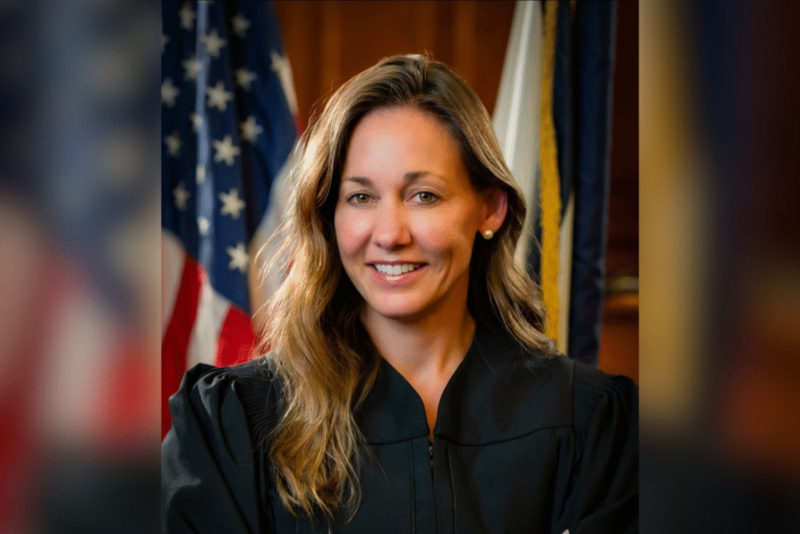
Judge Maryclaire Akers (West Virginia Judiciary photo)
The West Virginia Supreme Court of Appeals has dismissed ethics charges against Kanawha County Circuit Court Judge Maryclaire Akers stemming from a radio interview where she spoke about the state’s foster care system.
In a dismissal order issued this week, the Supreme Court adopted a Judicial Hearing Board recommendation that “insufficient evidence exists” to establish Akers violated five judicial-conduct rules.
The order comes after the Judicial Investigation Commission filed a complaint last summer, alleging Akers violated the Code of Judicial Conduct through comments made during a 2025 media interview.
During an appearance on WV MetroNews Talkline program, Akers explained a hearing and order in her courtroom that involved the attempted suicide of a 12-year-old foster child living in a hotel along with information about foster children living at the Kanawha County 4-H camp. Akers ordered a court monitor to oversee and possibly improve the state’s overreliance on hotels for housing foster children.
Akers contended that she tried to stay within what she understood were her ethical limits while commenting on the hotel monitoring arrangement. She has faced no prior discipline as a lawyer or judge.
No one from the state Department of Human Services raised concerns about her comments, Akers said. Department officials shared more information with state lawmakers about the child’s attempted suicide during a public meeting soon after the radio interview.
The complaint by the Judicial Investigation Commission instigated formal disciplinary proceedings before the Judicial Hearing Board. The board thought some of Akers’ statements could potentially be interpreted as criticism of executive branch agencies responsible for child welfare services.
Formal charges included an alleged violation by Akers of impartiality and fairness.
A special judicial disciplinary prosecutor assigned to examine the case against Akers said in April that the ethics case against the judge should be dismissed because her comments in the interview didn’t violate the Code of Judicial Conduct.
In June, the Judicial Hearing Board concluded that Akers did not violate the judicial ethics code and shared their findings with the state Supreme Court, who has the final say in judicial discipline matters.
Akers had already asked the state Supreme Court to intervene and force the dismissal of judicial ethics charges given the Judicial Hearing Board’s findings.
The state Supreme Court accepted the Judicial Hearing Board’s recommendation, dismissing the charges against Akers. The court also ruled she is entitled to attorney fees.
The American Center for Law and Justice, based in Washington, D.C., had weighed in on the legal saga in May, saying a punishment of Akers could violate First Amendment principles.
“Any admonishment of Judge Akers runs the danger of unconstitutionally chilling the speech of all West Virginia judges and depriving the public of information on the legal system which is of great public interest,” the group wrote.
Third Judiciary Circuit Court Judge Tim Sweeney is facing admonishment from the West Virginia Judicial Investigation Commission after he raised concerns about shortages of Child Protective Service workers in 2024 media interviews.
Like Akers, Sweeney formally objected to the admonishment.
“As I said in my interview, the buck stops with me when child welfare issues come before me,” Sweeney told The Intelligencer and Wheeling News Register. “If I am not willing to speak out to protect our children, I cannot expect other judges to do the same when necessary and appropriate.”
Charleston, WV