Service will memorialize site of Emmett Till’s slaying
Aug 28, 2026 | 10:00 am ET
Description
Photo courtesy of Mississippi Today
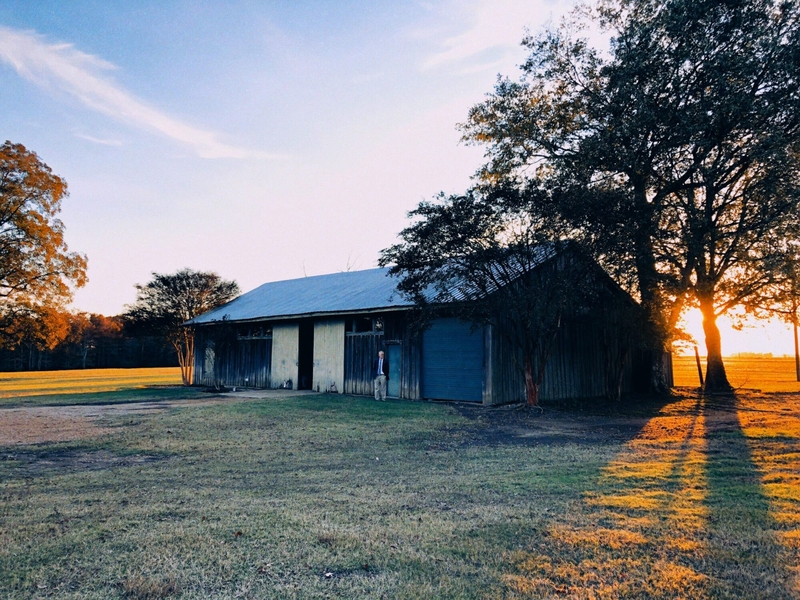
On Saturday, the barn where Emmett Till was tortured and killed will take its first step toward becoming a public memorial.
“For the first time since his lynching, this site is no longer someone’s shed, where they kept their personal belongings, but it will be used as a reverent memorial for Till’s life and legacy,” said Patrick Weems, executive director of the Emmett Till Interpretive Center.
Since the 2024 publishing of Wright Thompson’s best-selling book, “The Barn,” about the site, center attendance has nearly doubled from 2,000 or 3,000 a year to about 5,000 people. Another 25,000 a year are seeing the center’s traveling exhibits on Till.
Although the barn is not open to the public, several hundred people have visited it informally since the center purchased the barn in November, resulting in far more traffic than before, Weems said.
“People go out of their way to find us. We don’t advertise. It’s word of mouth.”
A mob of white men killed Till, a Black teenager visiting from Chicago, on Aug. 28, 1955. His mother, Mamie, insisted on opening his casket “so that the world could see what they did to my boy.” That act helped spark the modern Civil Rights Movement.
Saturday’s memorial service will honor the mother and son. Visitors will gather at 9 a.m. at the Mound Bayou Museum of African-American Culture & History and ride in a caravan to the barn for a wreath laying and concert by the Mississippi Mass Choir, followed by the service.

“Preserving this barn where Emmett Till was murdered is as important as preserving the balcony of the Lorraine Motel where Martin Luther King stood when he was shot,” said Devery Anderson, who is updating his book, “Emmett Till: The Murder That Shocked the World and Propelled the Civil Rights Movement,” to include the memorial.
Now that the barn is in the center’s hands, he said, people can go beyond reading about this history — they can touch it.
The first time he stood there, Anderson said he thought about “the beating, screams and bloodshed that happened in that very spot, the killers crouching over Till as he took his final breath.”
Tears flowed from Anderson’s eyes. “I knew I was on sacred ground.”
In recent decades, the barn in the Mississippi Delta belonged to a local dentist. Television producer Shonda Rhimes donated $1.5 million needed to buy the property and the barn — a purchase that drew some criticism.
“Of all the Emmett Till sites, this was the hardest to decide whether to purchase it or not,” Weems said. “We landed on yes. If we’re going to tell the truth about what happened to him, you have to have the barn. It’s ground zero.”

Since its purchase in November, officials have built a privacy wall to separate the barn from the previous owner’s property. They are now working on transforming it into a place of memory, Weems said.
“We not only want to honor Emmett Till and Mamie Till-Mobley, but the witnesses who testified against the killers,” he said. “Willie Reed knew full well the consequences he would suffer for telling the truth, and he did it anyway.”
On the day Till was killed, Reed was walking down the road when he saw a truck drive past and head to the barn. There were four white men and three Black men as well as someone hunkered down in the truck.
At the 1955 murder trial of Roy Bryant and J.W. Milam, Reed testified that he heard screams and “licks like somebody was whipping somebody,” coming from the barn. He also identified Milam as the one who emerged from the barn to get a drink.
After torturing Till, who had just turned 14, the killers shot him dead and dumped his body into the Tallahatchie River, where he was found three days later.
In spite of Reed’s testimony, the all-white jury acquitted the killers, who justified their torture and murder of Till because he reportedly whistled at Bryant’s wife.
Reed fled to Chicago, changed his name and died in 2013 without fanfare.
The center has purchased adjacent property near where Reed’s home was located and plans to honor him there as well as turning the barn into a memorial space, Weems said.
The dream is to create parking spaces on the adjacent property and have visitors cross on a bridge over the cypress bayou to the barn, he said. Plans also include the restoration of the barn to the way it looked in 1955, he said. “We’re hoping to raise the resources to do that.”

Overall plans are still in progress, he said. “How do you honor Emmett Till? How do you honor Willie Reed?”
Darryl Johnson Jr., former mayor of Mound Bayou and pastor of the Walk of Faith Covenant Church, said after starting the Mound Bayou museum, he saw the importance of Mamie Till-Mobley’s courage. She wouldn’t let the injustice done to her son die with him, he said.
“People who support the justification given to kill that young man are still hiding the truth,” he said. “We have to face the truth so that we can receive the love of God, and the way we participate in his love is by loving our fellow man.”
Ashley Nelson, a writer who formerly worked for the International Coalition of Sites of Conscience, visited the site for the first time in July.
“I don’t think anyone stands untouched at Auschwitz,” she said. “The same is true at the barn.”
Gloria Dickerson, who leads the Emmett Till Academy in Drew, grew up hearing her mother talk about the barn where Till was killed, but she didn’t visit it until six or seven years ago. The barn brought back memories of her mother and reminders of what “African Americans have gone through in Mississippi,” she said. “It was emotional.”

Making the barn a memorial preserves history and provides a place for reflection and healing. “We’re going to heal ourselves and move forward,” she said. “The fight is not over.”
Vonkerius Jackson, program facilitator for Carrying Our Voices, took several Indianola High School students to visit the barn. “You forget that he was barely 14, and the barn is so dark and lonely,” he said. “To hear the history of it was just, ‘Wow.’”
The hate that led to Till’s slaying, though, has never vanished, he said. “It’s crazy how quiet racism can be and how bold it can be at other times.”
He pointed to the sign memorializing Till, which was shot hundreds of times and had to be replaced with one that was bullet-proof, he said.
After visiting the barn and the center, Jackson learned how much Till loved to joke and laugh. “Nobody talks about how he brought so much joy to the world,” he said.
The visit made Till come alive, he said. “It humanizes his history and inspires me. We have to keep his history alive. The truth is, Mississippi’s history never dies; it just keeps on going in a circle.”

Jackson, MS