Kansas City groups band together in wake of surprise storm’s severe damage, slow government response
Aug 28, 2026 | 9:34 am ET
Description
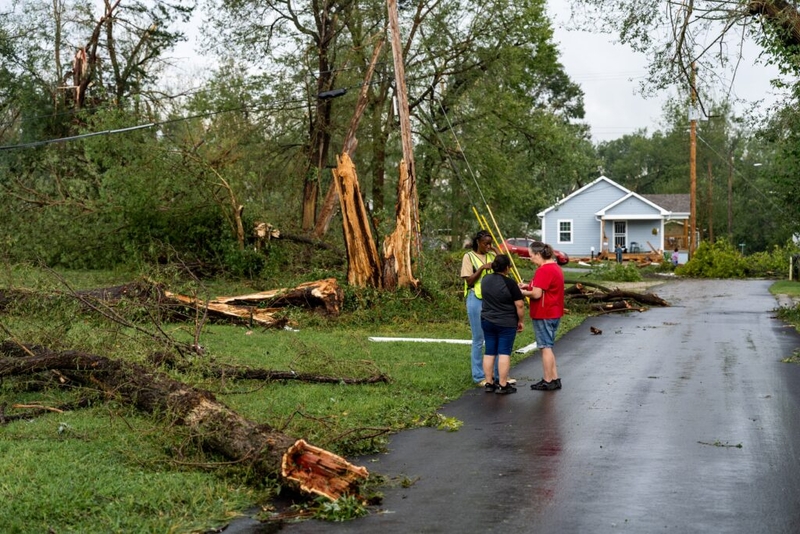
Nikki Richardson-Iwegbu on Aug. 19, 2026 speaks with Kansas City, Kansas, community members in the wake of a destructive storm that likely caused millions in damage to homes, infrastructure and possessions. (Photo by Matt Kleinmann)
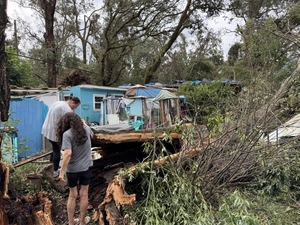
KANSAS CITY, Kan. — In the absence of immediate government response, community organizations in Kansas City, Kansas, banded together to help each other reckon with the effects of a tornado-like storm that damaged homes, trees and power lines without much warning.
It wasn’t until later that government agencies arrived to help the predominantly Black community.
When storms began rolling through northeast Kansas the night of Aug. 18, Nikki Richardson-Iwegbu said “it felt as though I did something wrong and somebody was attacking me.”
Violent hail woke her up at 1:36 a.m. Aug. 19, and she moved into her bathroom for shelter, waiting for a tornado siren.
“I just waited,” she said, “and then you hear destruction. Power goes out, and I’m just sitting there waiting, just waiting, just to see what’s going to happen.”
A siren never sounded.
“Then the storm goes away, and I instinctively know, OK, in the morning you’re going to get in your car, and you’re going to see, what was that?” she said.
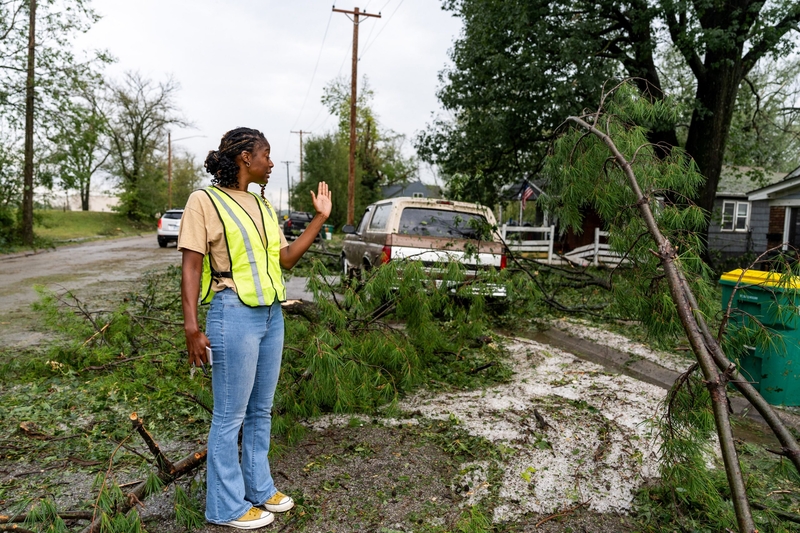
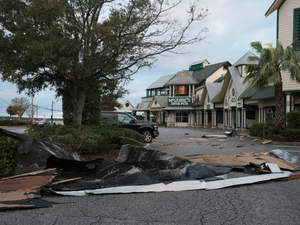
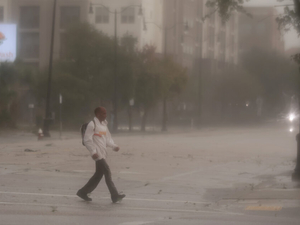
A storm cell brought downburst winds, horizontal hail and tornado-like gusts of 70-80 mph, inflicting millions of dollars in damage and knocking out power for nearly 25,000 homes, but meteorologists have refrained from calling it a tornado.
“The big difference is that tornadoes are going to result in a different type of damage path,” said Alex Krull, a meteorologist with the National Weather Service Forecast Office in Kansas City, Missouri.
Tornadoes cause damage by shifting inward and then upward, but this storm involved strong east-west and downward winds.
Krull said the storm that hit Kansas City, Kansas, was most akin to the type of damage an EF0 tornado might cause, which involves wind gusts from 65-85 mph.
The first severe thunderstorm warning was issued in northeast Kansas at 12:38 a.m. Aug. 19, Krull said. The second warning, which overlapped eastern parts of Wyandotte County, including where some of the most extensive damage occurred, was issued at 1 a.m. and was set to expire at 1:45 a.m.
The third and final warning issued before the last storm cell containing the downburst was issued at 1:40 a.m. The heaviest damage occurred between 1:40 and 1:50 a.m., Krull said.
On Thursday, kids scaled a pile of chainsawed tree limbs like it was playground equipment while utility trucks and tree removal service trucks made their rounds in northeast and northwest Kansas City, Kansas.
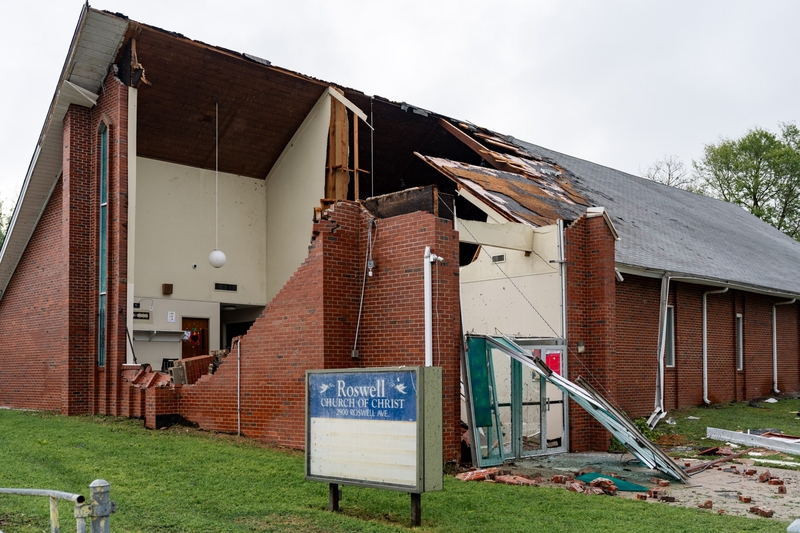
Roswell Church of Christ had covered the gaping hole left in its roof, and residential streets were lined with piles of debris. On Wednesday, 10 volunteer electricians crisscrossed the area providing free repairs.
Richardson-Iwegbu, executive director of the nonprofit Justice for Wyandotte, created a plan of action with two other community organizers — Matt Kleinmann and Randy George, co-founder of the Village Initiative — the morning after the storm to respond to the emergency needs left in the wake.
It made sense to them that a social justice organization born out of police accountability work was the one to mobilize volunteers to respond to a natural disaster. Justice for Wyandotte has built trust in Kansas City, Kansas, where the government has lost it.
“Instinctively, our organization is not designed to immediately rely on local government,” Richardson-Iwegbu said.
Its mission is to help communities sustain themselves so they don’t need to rely on the government for help, she said, because many people in northeast Kansas City, Kansas, feel harmed by local government systems, including law enforcement agencies.
“It’s hard for you to ask them to rely on a system that they feel has failed them, so we oftentimes try to be that conduit,” she said.
For the first five days after the storm, the group was in survival mode, Richardson-Iwegbu said.
She said she didn’t recall seeing emergency responders that morning.
“I’ve never been in a storm response before, so I don’t know what was supposed to happen,” she said, “but I just knew that I still was not seeing the government presence that I expected to see that matched the destruction that I knew just happened. There still felt like a disconnect.”
Kleinmann, a former Democratic candidate for state and federal office, doesn’t attribute the disconnect to negligence. Some people didn’t know they needed to have home insurance to protect against a destructive storm, and the government, he said, didn’t appear to know initially how to respond.
Even though the storm disconnected the neighborhood’s power, Kleinmann said, it connected community members “more than it had in a really long time.”
In an interview Thursday, Richardson-Iwegbu said the Resiliency Hub that volunteers had set up as a command center was the calmest it had been in the past week. Music played, tinfoil crinkled as volunteers wrapped hot meals and people took turns answering phones almost constantly.

The group coordinated more than 250 volunteers, raised more than $22,500, and received more than 300 requests, which community members could fill out and submit to volunteers for help with food, debris and medical assistance.
The Unified Government of Wyandotte County and the National Weather Service confirmed Wednesday that no one died or suffered major injuries as a result of the storm.
One day after the storm, the Unified Government of Wyandotte County released resources for community members needing assistance with damage, power outages, debris disposal, overnight shelter, food and medical issues.
Two days after the storm, Kansas Gov. Laura Kelly issued a state of disaster emergency proclamation, unlocking state resources to help local agencies.
“We know the people of Wyandotte County are facing a long road to recovery after these devastating storms,” Kelly said. “Our priority is making sure residents have the support and resources they need to safely clean up, restore power, and begin rebuilding. The state of Kansas will continue working closely with local officials and emergency responders to help this community recover.”
Nearly one week after the storm, the Kansas National Guard began assisting with debris removal Wednesday in Wyandotte County, according to the Adjutant General’s Office, bringing three dump trucks, two front-end loaders, 15 chainsaws, and 43 Army and Air Guard personnel.
On Wednesday, Kansas Adjutant General Paul Schneider, the state’s senior military administrative officer, praised the community organizations’ efforts, saying they were doing an “outstanding job” of helping residents and small businesses. He said roughly 200 homes remained without power.
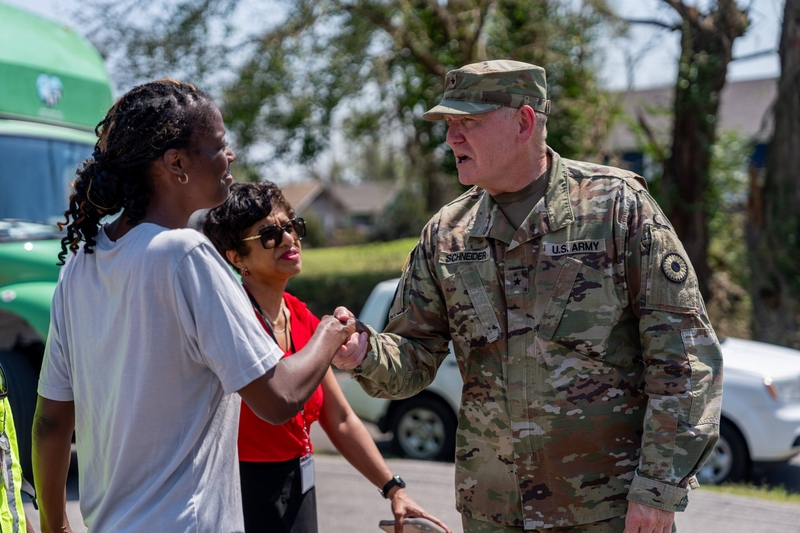
He told a committee of state legislative leaders that debris removal will be “the long pole in the tent,” predicting it could take up to 60 days to fully clear the neighborhoods’ streets of tree logs and limbs, rubble from houses and buildings and other damage.
“They have a long way to go,” he said.
Richardson-Iwegbu said volunteers were doing everything they could to shorten that timeline.
Since Saturday, teams have removed about 7,500 cubic yards of debris, Schneider said.
Early indications point to the possibility of the storm’s damage exceeding the threshold for making federal disaster declaration requests, he said, which could permit assistance from the Federal Emergency Management Agency.
Schneider also requested $10 million in emergency disaster funding to address a “critical disaster fund resourcing shortfall,” which state officials approved unanimously.
Kansas currently has eight open state of disaster emergencies and 17 open major presidential disaster declarations. Roughly $5.6 million of the request will go toward reimbursing local jurisdictions and agencies that deployed under the state’s official policy group when responding to a disaster. Only about 50% of entities have submitted reimbursement packages, but the Kansas Department of Emergency Management already incurred the costs of reimbursement, making immediate funding critical, Schneider said.
Initial assessments show that the storm in north Kansas City, Kansas, caused the second-most expensive amount of damage this year with nearly $1.5 million in reimbursement requests, according to records from the Kansas Adjutant General’s Office. The most expensive natural disaster damage this year came from wildland fires in May in western Kansas,
Schneider said the emergency management department never truly leaves the disaster response and recovery phase anymore.
“Over the last six to seven years, disaster response has become our operational norm,” Schneider said.
The increasing frequency and intensity of natural disasters is one of the major reasons why Richardson-Iwegbu emphasized the importance of education and preparedness as the community moves forward from the storm.
The next steps are crucial, said Shelley Coulter, a volunteer at the Resiliency Hub and the executive director of neighborhood revitalization nonprofit Groundwork NRG.
She and Richardson-Iwegbu agree that equipping community members with the know-how and resources necessary to survive the next surprise storm will be the only way to sustain their community long-term.
“How are we going to ensure environmental and human justice without education?” Coulter said.

Topeka, KS