Judge rules Strong Town’s Charles Marohn can legally call himself a professional engineer
Aug 27, 2026 | 7:00 am ET
Description
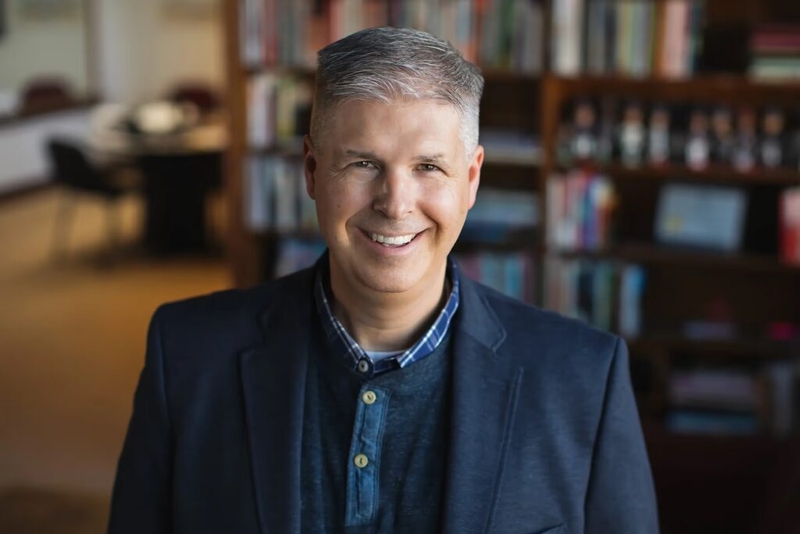
Charles Marohn (Photo courtesy of Strong Towns)
Charles Marohn, founder of the urban planning advocacy organization Strong Towns, can legally call himself a “professional engineer” despite the objections of the state of Minnesota, a federal judge ruled.
The ruling from earlier this month could be a decisive victory for Marohn, who’s been embroiled in a yearslong battle with the Minnesota Board of Architecture, Engineering, Land Surveying, Landscape Architecture, Geoscience and Interior Design — known as AELSLAGID.
It may also set a precedent that restrains state boards from overzealously regulating the use of professional titles.
Marohn says he believes he was targeted because of Strong Towns’ sharp criticism of expensive, car-centric suburban sprawl, and the engineers who promote it.
“That this board has expanded their mandate to go after people for what they say, when that speech is not comfortable to other engineers, is just an abuse of power,” Marohn said.
Kate Van Etta-Olson, executive director of AELSLAGID, declined to comment on the case given pending litigation but signaled that the fight is not over. She said in an email that more would be shared publicly “as the matter moves forward.”
Marohn’s trouble with AELSLAGID began in 2020 after a fellow engineer reported him for calling himself a licensed professional engineer in his speaking engagements and published works after his state license had expired.
Professional engineers — like doctors and lawyers — must be licensed by the state to perform certain engineering work, which requires graduating from an accredited program, passing a state exam and completing professional training.
The state enforces these standards in the interest of public safety. Just like the person performing open heart surgery needs to understand human anatomy, the person designing bridges needs to be able to calculate load capacity.
Marohn, who was first licensed in Minnesota in 2000, says he accidentally let his license lapse in 2018 after missing a renewal notice. When he realized his mistake, he renewed it. A month later, in July 2020, the board told him he was under investigation because of the complaint.
By then, Marohn hadn’t been practicing engineering for years and was focused full-time on his advocacy with Strong Towns. He had written half a dozen books, traveled around the country promoting his vision of economically sustainable development and coined the term “stroad” — a multi-lane road design despised by many urbanists for being expensive for cities, inefficient for cars and unsafe for pedestrians.
He explained to the board that while he called himself a professional engineer in his talks and author biographies, he hadn’t solicited or performed any technical engineering work during the time his license was expired.
The board was unmoved and proposed a $1,500 fine and additional ethics education. Marohn initially tried to settle with them but said the members seemed hostile toward him and his work.
“All their questions were about my speech,” Marohn said. “They were not, ‘What plans did you sign? What projects did you work on?’ Because there were none.”
Over the next several years, Marohn fought the board in federal court, state court and before an administrative law judge.
He argued that the board only had the authority to regulate his use of the title for the purposes of engineering work. The board held that under state law anyone who holds themselves out as being able to perform professional engineering must have a license. They also accused him of lying on his license renewal application when he said he hadn’t represented himself as a professional engineer while unlicensed.
Marohn was unsuccessful, but after failing to overturn the board’s decision at the state Court of Appeals, he filed a lawsuit in federal court in 2023 asserting his First Amendment rights.
U.S. District Judge Nancy Brasel ruled in his favor on Aug. 19, finding the state overstepped its regulatory authority by policing his speech outside of the professional practice of engineering.
It is a bit of a hollow victory in that the court didn’t side with Marohn because of his substantial experience working as a professional engineer. Rather, the First Amendment guaranteed him the right to call himself a professional engineer even if it wasn’t true so long as he wasn’t practicing engineering.
The engineer who reported Marohn to the board in 2020, David Dixon, said in an interview he actually agrees with the court’s ruling affirming Marohn’s First Amendment rights.
His complaint centered on Marohn explicitly calling himself a licensed engineer to elevate his opinions and solicit paid speaking engagements. (State law doesn’t distinguish between the terms professional and licensed.) Dixon said he also didn’t know why Marohn’s license lapsed — believing it could be for misconduct — and felt he had an ethical obligation to report it to the board.
“My complaint wasn’t based on the substance of his talks,” Dixon said, adding he even agrees with some of Marohn’s ideas though he wouldn’t call himself a fan.
Marohn, who has moved his license into retirement status, said the entire ordeal has shattered his trust in the state to appropriately police professional titles.
“It never occurred to me that a state board would look at the advocacy I was doing and say, ‘We can regulate that,’” Marohn said.

Saint Paul, MN