Why on Earth are so many data centers being built?
Aug 27, 2026 | 7:00 am ET
Description
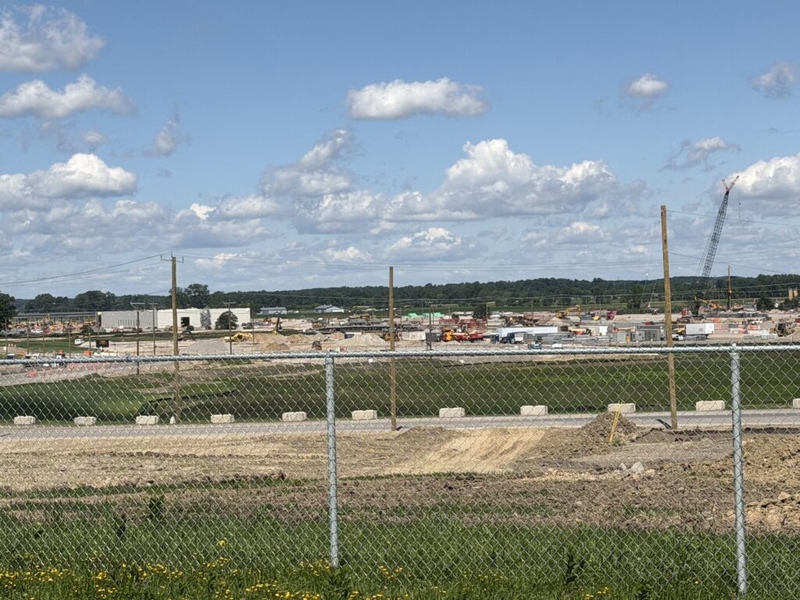
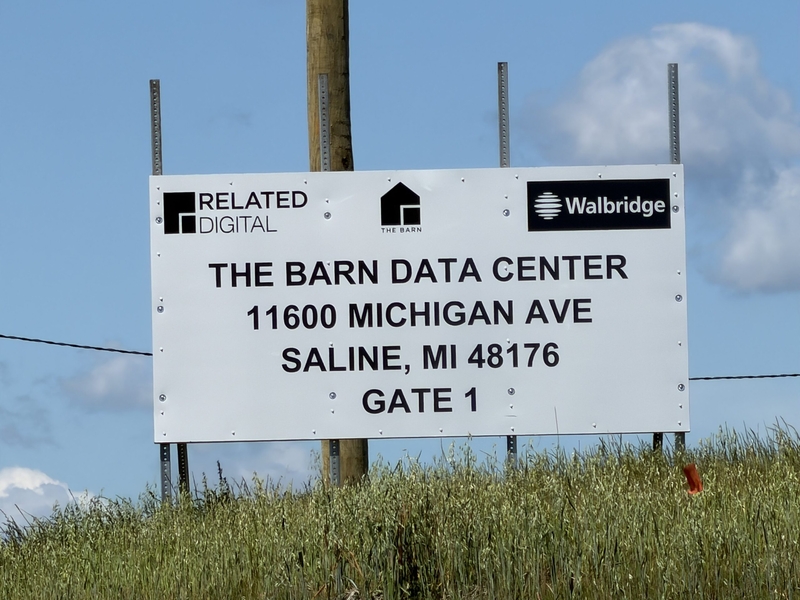
Construction underway on Related Digital's hyperscale data center in Saline Township, Michigan. June 20, 2026. | Photo by Jon King/Michigan Advance
The topic of new ‘data centers’ is emerging as a major issue in the current election cycle, including most recently in the U.S. Senate campaign in Michigan.
Many very legitimate concerns have been raised about the rush to construct these huge AI data centers, including environmental impacts from their enormous energy and water use; their impact on raising utility costs; local noise pollution; and even the potential threat of AI displacing existing jobs. My personal concern is especially based on the fact that their huge need for additional electricity generation could very well ruin our ability to reduce carbon emissions and avoid a climate crisis.
Each of those negative aspects have received at least some media coverage and public discussion. But there is one other aspect of all this that I have not really seen publicly discussed, and that is: What is the actual business case for all these big new data centers? Why are so many of these being pursued in such a rush?
These new data centers are enormously expensive. Construction costs alone for a typical 100 MW data center would be in the neighborhood of $1 billion or more. The cost of servers, networking gear, and the thousands of specialized AI chips can easily add another $2.5 billion to $4 billion or more. At the high end, reported costs for the huge 1.4 GW data center recently approved for DTE in Michigan are estimated to be $7 billion.
In addition, the operating costs of a major data center are also enormous. A typical 100 MW data center is estimated to use nearly 900 million kWh per year, which at typical electricity rates, would result in an annual operating cost of about $120 million. Add to that a few more tens of millions of dollars for various other equipment maintenance and operating costs. Note, however, that the estimated costs for all staffing and human resources for the data center operation are relatively tiny (perhaps $5-10 million/yr.), indicating that these huge projects actually produce very few permanent jobs.
The bottom line is that these new large data centers are extremely expensive, which leads to this fundamental question: Why the heck is such an enormous amount of money being invested into this effort?
A common explanation is that there is a fierce competition between three tech giants (Amazon, Google, and Microsoft) to achieve dominance in this industry. But that still leaves the crucial question of how does the winner intend to recoup that massive investment (not to mention, what happens to all those huge data centers built by the “losers”)?
More specifically: What are the projected products/services from these data centers that are expected to provide the revenue to cover those enormous costs?
If you Google the question: What products and services will these new data centers provide? … you frankly get a bunch of nebulous buzzwords like “cloud computing”; “artificial intelligence”; “high-performance computing”; and “edge services”.
Given the huge direct costs of these new data centers, not to mention the previously cited important social costs (e.g., energy use and costs, water use, noise, etc.), it would seem appropriate to ask a few more specific questions about the actual intended ‘business model’ for any proposed new data center.
What exactly are the intended products/services that will be sold to provide the revenue to pay the costs of this data center? Will there really be enough demand for those products/services to pay all those enormous costs?
To what extent will this revenue be from new and unique products/services not currently being offered elsewhere, versus funds that previously went elsewhere to acquire products/services that will no longer be purchased there? (e.g., one example of the latter might be that the data center would offer AI services that replace existing actual employees in the community)
It is certainly true that the tech bros at the top of the pyramid are making additional fortunes with this rush to build data centers. There is a lot of circular financing (buying from and between themselves) among the tech titans, and certainly a stock market bubble. But for the small investors at the bottom, one has to wonder whether this is a 21st Century ‘tulip mania’. What is the fundamental driving business model behind all of this? Inquiring minds want to know.

We’ll leave aside for now the fact that this huge buildout of datacenter infrastructure would also be crucial to meeting the immense computing power needed for enabling the mass AI surveillance ambitions by tech giants like Palantir Technologies. So some of the underlying motivation may go beyond just direct economic returns. If it turns out that there is more to the motivation for these data centers than just economic return, then further action is urgently warranted.
The essential issue here is that before local communities (and indeed, we as a society) grant approval for construction of these huge new data centers…with all of their associated direct and societal costs… it should behoove us to learn more about what benefits we will be receiving in exchange. At present, that seems to all be just the proverbial ‘black box’… being foisted upon us by the titans of tech.
There are over 2,000 new data centers planned or under construction nationally, with nearly 1,300 major facilities already in operation. The costs for this are simply staggering, running into the trillions of dollars. This has the potential to have profound impacts on our economy, and ultimately on how our society functions.
Given all of the above, there have been many efforts to put a moratorium on the approval of new data centers. At the national level, we have the proposal by U.S. Sen. Bernie Sanders (I-Vermont) and U.S. Rep. Alexandria Ocasio Cortez (D-New York) and others to create a moratorium, and there are numerous state and local efforts underway. The National Conference on State Legislatures (NCSL) is tracking state efforts for moratoriums, which currently identifies 15 states working on the issue. In Michigan, a statewide moratorium was proposed in the Legislature earlier this year (HB5594 and HB5596), and over 50 communities have adopted local moratoriums on new data centers.
The consequences of continuing on the current path of massive and unfettered development of these huge data centers could be tragic…for the environment, the economy, and perhaps our personal liberty. It would seem indeed prudent to support efforts to put a moratorium on the approval of new data centers until some of these essential questions can be explored and satisfactorily answered.
Lansing, MI