How did data center skepticism impact elections in southeastern Wyoming?
Aug 27, 2026 | 6:25 am ET

Description
Photo courtesy of WyoFile
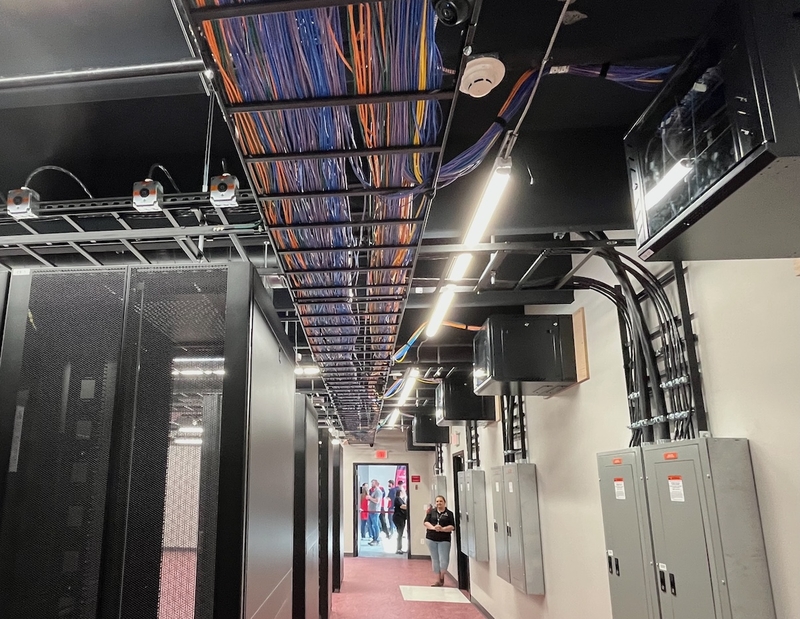
A growing concern throughout the state, proliferating AI computing and data center development is especially prominent in and around Cheyenne. Whether to accommodate or heavily regulate — even place a moratorium — on what some estimate could be 40 to 70 new facilities in the southeast region of the state was a prominent campaign issue in the lead-up to last week’s primary election.
Granted, there are multiple reasons candidates win or lose elections, but the results suggest that anti-data center positions did not win the day.
None of the top two vote-getters in each of three city council seats up for grabs were expressly against data center development, according to WyoFile’s analysis, while several candidates who favored a moratorium — including Travis French and J.C. Manalo — fell short of the votes needed to advance to the general election in November.
In a field of 10 GOP candidates vying for three open seats on the Laramie County Board of Commissioners, incumbents Troy Thompson and Gunnar Malm, and challenger Jess Ketcham, advanced to the general election to face two Democratic candidates. None of the GOP finalists were seen as anti-data center development. Moses Hasenauer, a candidate adamantly opposed to data centers, got the fifth-most votes — not enough to advance.
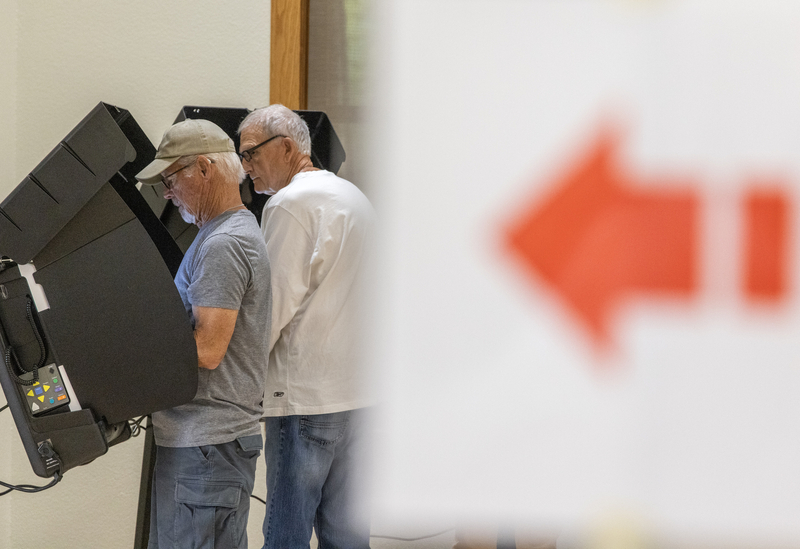
Among legislative races in the region, Cheyenne Republican Rep. Steve Johnson (House District 8), Cheyenne Republican Rep. Gary Brown (House District 41), Cheyenne Republican Rep. Ann Lucas (House District 43) and Cheyenne Republican Rep. Daniel Singh (House District 61) all lost their bids for the GOP nomination. All were either opposed to or in favor of tighter regulations for data centers.
“You could certainly make an argument that being opposed to data centers was not a winning position,” Cheyenne Councilman Larry Wolfe, who is not seeking reelection, told WyoFile. Although every campaign and every race was full of nuance beyond being for, against or somewhere in between on data centers, he added, “I can’t point to any of the races where being opposed to data centers was a productive view.”
Zooming out to statewide and congressional primary results, the picture becomes less clear.
Gubernatorial candidates Brent Bein, who promised to place a moratorium on data centers, and Reid Rasner, who upped the ante with a 5-year moratorium, lost their bids for the GOP nomination. Conversely, Secretary of State Chuck Gray, who railed against AI and data centers during his bid for Wyoming’s lone U.S. House seat, won in the crowded GOP race.
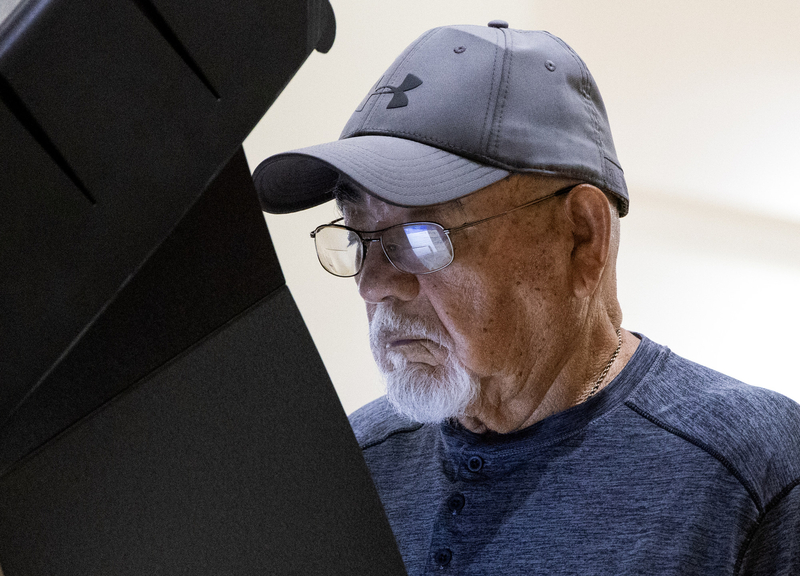
Beyond data centers, hot-button industrial developments like wind farms and nuclear energy manufacturing were also a big part of the primary campaign discussion in certain regions of the state. Midwest Republican Rep. Bill Allemand, for example, narrowly defeated challenger Peter Boyer for the GOP nomination in House District 58. The two spent the past year clashing over Radiant Industries’ plan to build a nuclear microreactor manufacturing facility outside Bar Nunn, which Allemand adamantly opposed.
And despite fueling community contention throughout central- and southeast Wyoming for years, there was precious little indication of how wind development might have tipped the scales in primary races, according to Cheyenne-area resident Wendy Volk, who has advocated for more intentional planning and oversight over the industry.
“It produced some mixed signals,” she told WyoFile. “I think, depending on the community, the results just showed that voters might be willing to support essential public infrastructure, but they’re starting to be more skeptical about government spending priorities and whether development is moving faster than our public planning.”
There’s certainly a message from voters — not just in southeast Wyoming — to be read in the primary election results, said Betsey Hale, CEO of the economic development group Cheyenne LEADS.
Not only did anti-data center campaigns not win the day, but voters passed tax initiatives to support local infrastructure and services, including a 0.75% optional sales tax in Fremont County. In Laramie County, voters approved 13 of 14 “sixth-penny” sales and use tax initiatives.
“I think it’s a broader picture. I think it’s actually [pro-] economic development,” Hale said. “I don’t think the outcomes of the primary were solely focused on wind or solar or data centers — some of the hot issues. I think it was fundamentally, in Wyoming, ‘Are we open for business? And if we are, how are we going to do that?'”
Data center, and industrial development sentiment
Attitudes toward AI computing and data center buildout in the U.S. — along with its perceived associations with negative human health and natural resource implications, replacing jobs, spiking electric rates and enabling surveillance — are increasingly sour. Seventy percent of Americans oppose data centers in their communities, a Gallup poll published in May suggests. Only 7% were strongly in favor.
An Annenberg Public Policy Center report published this month suggests opposition is quickly growing.
Though he wouldn’t speculate on what primary election results in Wyoming might say about how voters here feel about data centers, Jacob Hochard said it’s likely less rooted in political ideology and more about whether they can trust there will be tangible protections and benefits in their communities.
That comes down to whether communities can assure robust regulatory sideboards and negotiate for significant company investments in local resources — investments that meet specific needs beyond promised job numbers and built-in tax revenue, said Hochard, the Knobloch Associate Professor of Conservation Economics at the University of Wyoming.
“I think there are a lot of small towns in America that were a little starstruck by, you know, one of the top-seven largest companies in the world knocking on their door and saying, ‘We’d like to invest $10 billion, $50 billion in your community,'” he told WyoFile.
Hochard recently co-authored an article in Issues in Science and Technology examining public attitudes toward the industry and suggesting public policy approaches that communities might use to respond.
Instead of responding with intuitive offers like, “How do we make this happen?,” and, “What incentives do you need?,” he said, the smarter approach that’s likely to gain more buy-in from residents is for local officials to use their authority to advocate for what their constituents want and don’t want. After all, he said, Wyoming is not outrightly opposed to economic development.
Plus, Hochard added, local officials in Wyoming have more negotiating power than they might think.
“We’re a really attractive place for data center investment,” he said. “We have a cool climate that reduces cooling costs. We have a history of siting industrial projects. We have fiber. We have an energy heritage that can support these data centers and support energy expansion. So we’re a pretty desirable place.”
There’s a growing frustration among residents, Volk said, that elected officials are not driving a bargain for their constituents when it comes to industrial development.
“I heard voters saying they believe industry should be required to pay for its fair share of its costs — and they want to have a meaningful voice before [local] decisions become irreversible,” she said. “When these industrial players come to look at Wyoming as a prospective site, I would hope that our elected officials — who are wooing them to come — are also saying, ‘By the way, we could use some help in these 10 areas.'”
That’s what astute tech companies — which are increasingly anxious about negative public sentiment — are looking for, according to Hochard.
“They’re not looking for the community that’s just going to roll out the red carpet and offer them everything,” he said. “They want a community that’s going to negotiate a durable bargain. They want a community that’s intentional with their asks and their needs, because it’s going to increase that community sentiment and support for the data center being there.”
Ideally, Hochard added, “It should be a nonpartisan issue.”
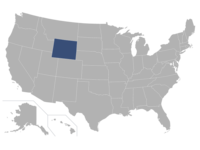
Cheyenne, WY