A popular Vermont housing rehab program puts down roots
Aug 27, 2026 | 5:00 am ET
Description
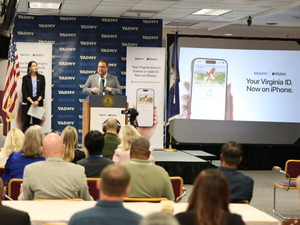
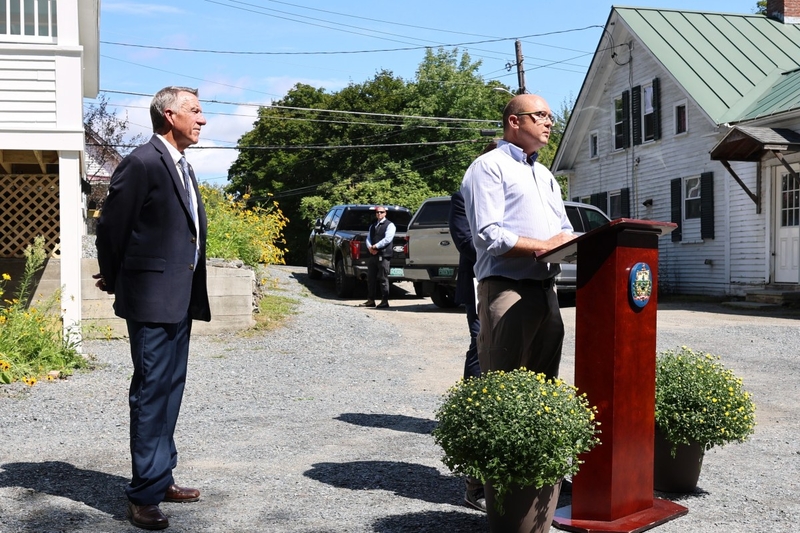
Gov. Phil Scott listens to Noah Ponzio, a developer of a rehabbed fourplex in Bradford, at a press conference on Aug. 26, 2026. Carly Berlin/Vermont Public
Carly Berlin covers housing and infrastructure for Vermont Public, in partnership with VTDigger.
BRADFORD – Vermont’s main program for rehabbing apartments and funding small-scale housing developments is sticking around.
The first iteration of the Vermont Housing Improvement Program launched during the Covid-19 pandemic, when state leaders funneled federal cash into boosting Vermont’s housing stock. Since then, the program has doled out nearly $49 million in grants and forgivable loans, which have helped renovate or construct 1,229 units.
Steady funding for the popular initiative has been uncertain, however. State lawmakers had sustained VHIP through one-year appropriations each budget cycle, a pattern that Gov. Phil Scott’s administration said made it difficult to plan for the future and maintain staffing.
That changed this past legislative session, however. Lawmakers gave VHIP “base funding,” set at $4 million, which means administrators can bank on yearly financing for the foreseeable future.
Scott, a champion of the program since its inception, marked the milestone at a newly finished VHIP project in Bradford on Wednesday.
“I’m a contractor by trade, spent 35 years in the business, grew up in Barre, and I thought about all of the infrastructure there, the beautiful old Victorian houses that were dilapidated,” said Scott, a Republican. He gestured to the freshly rehabbed fourplex behind him. “This is, again, what we should be seeing across the state. We proved ourselves.”
VHIP has at times proven controversial because it has a different philosophy than most large-scale affordable housing developments in Vermont. Rather than require that the homes stay affordable permanently — like most publicly funded housing development in the state — VHIP sets a rent cap for a fixed amount of time. The program also requires a subset of funding recipients to prioritize vulnerable tenants, like people exiting homelessness and refugees.
Those first affordability requirements began to sunset last year. But officials say property owners aren’t jacking up rents.
“No one has been kicked to the curb,” said Nate Formalarie, deputy commissioner of the Department of Housing and Community Development, basing his assessment on exit surveys taken by officials. “They’re keeping their tenants, and rents are staying stable at this point,” he said.
VHIP funds can go toward fixing up existing vacant rentals that need repairs and adding new units onto existing buildings. The money can also go to new small-scale apartment projects and accessory dwelling units. Officials tout it as a way to bring housing units online quickly and for a relatively low cost — while also revitalizing buildings and neighborhoods.
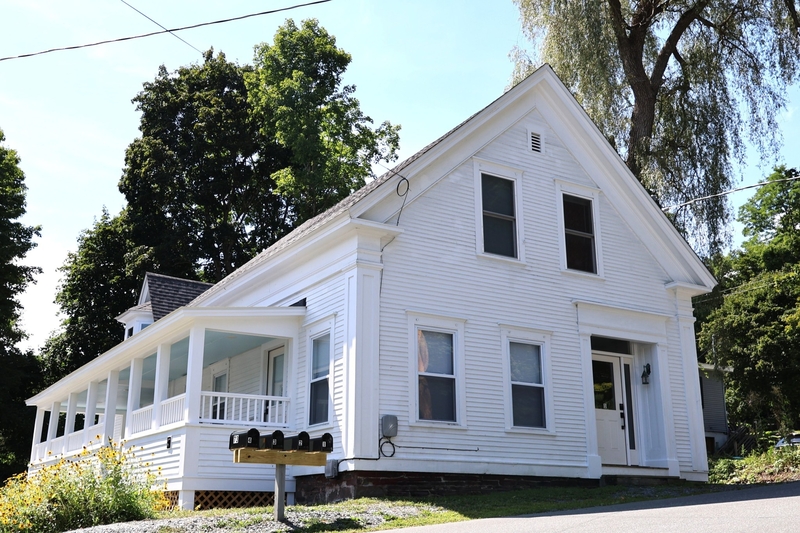
The site of Wednesday’s press conference, a fourplex in Bradford about a block off the Orange County town’s main road, was rehabilitated by entrepreneur and nursing instructor Noah Ponzio. Ponzio grew up nearby but now lives in Colchester. When he and his wife, an educator, purchased the building two years ago, it was “uninhabited and uninhabitable,” he said.
The couple learned about VHIP through reporting by Vermont Public and VTDigger, he said. They ultimately received a grant of $180,000 to aid in the building’s renovation, paired with energy efficiency funding and equity from contractors and community members. The project ultimately cost upwards of $600,000.
The apartments opened up this spring, Ponzio said, and house people who work in education, manufacturing and the auto industry. Rents for the two- and three-bedroom units are set at the “fair market” standard, between $1,300 and $1,800.
“We need the grants to do this, because there’s no way that you could charge an affordable rent if you had to come up with the amount of money that it was,” Ponzio said.
The average VHIP funding award is $40,000 per unit, and property owners are required to match at least 20% of their grant or loan with their own money.
Read the story on VTDigger here: A popular Vermont housing rehab program puts down roots.
Montpelier, VT