Childcare crisis leaves Arizona families ‘just subsisting,’ parents say
Aug 26, 2026 | 8:41 pm ET

Description
(Photo credit Getty Images)
Affordability is top of mind for voters going into the November election, and early childhood advocates hope that will be enough to fuel support for investments in Arizona’s backlogged childcare assistance program.
“Everybody is talking about affordability, and childcare should be part of this affordability agenda,” said Georgina Monsalvo, the campaigns director for Stand for Children Arizona.
There are 14,343 kids from eligible low-income families stuck on a waiting list to get help paying for childcare. That number has been growing since federal grants approved during the COVID-19 pandemic expired two years ago, and it’s only expected to worsen without hefty investments.
Advocates estimate that $160 million is needed to wipe out the waitlist. This year, the legislature approved a $45 million injection into the fund, but Monsalvo said that’s not nearly enough to fix the problem.
“We need to find a permanent solution,” she said. “We are thankful that we got the $45 million but that is not getting any kids off the waitlist.”
A bill backed by Democrats that would have set aside that $160 million for the Arizona Department of Economic Security to fund the families on the waitlist was never heard in the state legislature, where Republicans decide which bills move forward.
Stand for Children Arizona is working to channel concern over the state’s childcare crisis into electoral changes that could lead to a better funding opportunity next year, when the new legislature takes up the issue. The organization has hosted multiple public listening sessions throughout the state this year to highlight the struggles of working families and plans to hold several more. The goal is to mobilize Arizonans affected by the lack of affordable childcare to connect with state lawmakers before the start of the legislative session and spread the word about what voters should look for in candidates.
“We’re trying to make it front and center because it should be for everyone that is on the ballot this year,” Monsalvo said. “It’s a workforce issue.”
The majority of Arizona parents work, but the lack of affordable childcare is a drain on the state’s economy. While 62% of all children in Arizona have two working parents, the state is still hemorrhaging 3.3 billion in lost earnings and productivity every year because of insufficient or unaffordable childcare options.
During a Wednesday discussion about childcare, Phoenix parents stressed the importance of affordable care to be able to work and set aside money for household needs. Sulem Escobar, a 28-year-old mother of three, said that she’s had a difficult time juggling the demands of a job while at the same time ensuring her children are properly cared for. School breaks, she said, are particularly tricky to handle. Once, she started a new job just days before her children went on a week-long break, forcing her to look for last-minute care rather than risk being fired for requesting time off too soon.
“Everything I earned went to paying the childcare center,” she said. “It was frustrating because I worked but the only thing I was left with was exhaustion.”
Without government assistance, families like Escobar’s shoulder thousands of dollars in childcare costs. The average cost of care for one child for a year in Arizona is $15,964. And while some might turn to home-based care instead of a childcare center, that only drops the annual cost down to about $9,000, according to estimates from Stand for Children Arizona.
Julissa Machado added that low-income families who are forced to pay for childcare out of pocket have a harder time making ends meet and are more likely to rely on public assistance programs.
“If you work and at the same time pay for childcare, you’re only left with a small percentage of what you earned. You’re in a loop, unable to improve your family’s economic situation because you’re just subsisting on what’s absolutely necessary,” she said.
Luisa Cruz called for the prioritization of quality childcare and early education programs, to ensure children don’t fall behind academically. Cruz noted that Head Start was a boon for her as a young mother.
“Head Start has been like a salvation for working moms,” she said.
But the federally funded preschool program for families at or below the poverty line is on the chopping block. In Arizona, more than 16,000 children attend a Head Start. The Trump administration has proposed funding cuts and regulation changes that include increased class sizes, less background checks and more lax educational requirements, which critics say will make it more difficult to provide services.
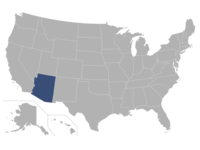
Phoenix, AZ