New Hampshire is one of a kind — and that cuts both ways
Aug 26, 2026 | 5:07 pm ET
Description
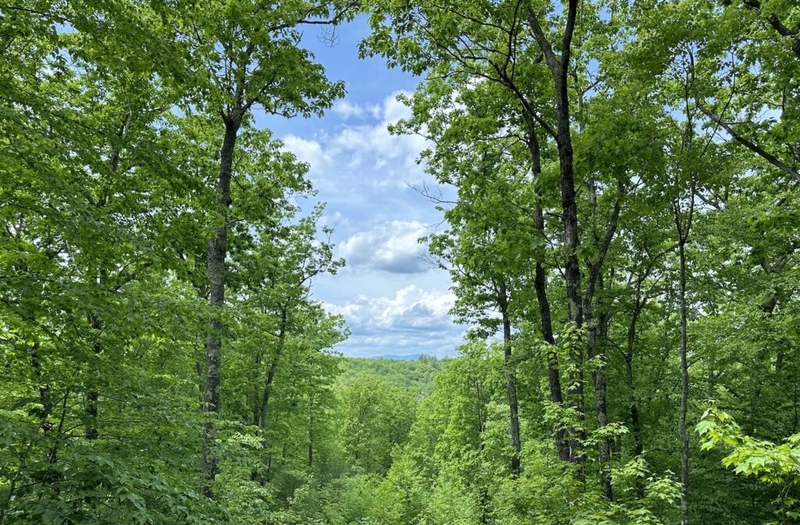
Why do so many people love New Hampshire? Just look around. (Photo by Dana Wormald/New Hampshire Bulletin)
There are a lot of things that make New Hampshire special, and many who call the Granite State home wouldn’t have it any other way.
It begins with our geography, which includes New England’s tallest mountain, its third-largest lake (or second, behind only Maine’s Moosehead Lake if you don’t count the border-crossing Lake Champlain), a petite stretch of coastline, and centrality that allows easy access to the natural treasures of neighboring Maine to the east and Vermont to the west, and the cultural treasures of Boston to the south and Montreal to the north. There’s no sales tax here, which is a good thing if you’re not a fan of regressive taxes, and no state income tax, which makes New Hampshire a little piece of heaven for those opposed to public services and supports, and fiscal equity.
Our form of government is unique, too. No other state has an Executive Council quite like New Hampshire’s, which hasn’t really changed since the 18th century, and we have the third-largest legislative body in the English-speaking world. New Hampshire is one of only two states whose governor serves for two years rather than four (the other is Vermont). And, up until recently, New Hampshire held the first presidential primary elections for both the Democratic and Republican contests.
But there are plenty of outlier positions that give this purple state its deep-red tint, and elicit intended insults like “New Hampshire is the Texas (or Mississippi, or Alabama) of New England.”
We’re the only state in the region, for example, that defaults to the $7.25 pittance that is the federal minimum wage (along with, you guessed it, Texas, Mississippi, and Alabama, among others). The common defense for the position is twofold: raising the wage would hurt small businesses and nobody pays the federal minimum wage anyway. I wonder though, if everybody is already paying more than $7.25, how would raising the wage harm small businesses?
And when 10 Northeastern states banded together last year as a counterweight to the Trump administration’s assault on vaccines, which continues to this day, New Hampshire said, “No thanks, we’re good.” The Granite State was, however, happy to be the only New England state to join another coalition: President Donald Trump’s not-so-united “Great American State Fair.”
Despite New Hampshire’s full embrace of booze and gambling (and the sin tax revenue they generate), it remains the only New England state that hasn’t legalized cannabis for recreational use. So much for “Live Free or Die” — and that goes for the state ban on true bars, too.
New Hampshire is also the only state in New England without a state or federally recognized Native American tribe, despite the 12,000-year presence of Abenaki people, but it does recognize ICE: We’re the only state in the region, according to the ACLU, “where local police have entered formal agreements to engage in immigration enforcement.”
Despite the state’s love for and reliance on the natural environment, New Hampshire is also the only New England state without a moratorium on nuclear energy development or a 100% clean energy goal. To punctuate that aversion to clean energy, it is also the only coastal New England state to stand in opposition to offshore wind.
With its state-run school voucher program now free of income limits, New Hampshire has also become the only New England state to opt into the Trump administration’s new voucher program, which provides a $1,700 federal tax break for “individuals who donate to organizations that provide private and religious school scholarships.” While some blue states outside of New England have recently opted in, citing what they see as a potential boon for public schools in addition to private and religious schools, the ultimate aim of the tax credit is not lost on many public school advocates, like New York teachers union leader Melinda Person.
“I expect that public school kids are going to get crumbs, and the biggest winners are going to be those that are trying to privatize public education,” she told Education Week.
Many of these outlier positions are likely cause for celebration for the state’s right-leaning residents — a testament to that “Live Free or Die” spirit of living — but others are primarily reflective of self-inflicted revenue limitations.
For example, I’m not sure how being one of only six states in the country, and the only one in the Northeast, without publicly funded preschool can be touted as credit to the New Hampshire Way. This month, Florida International University announced the results of a 20-year study that found, as described in an FIU news release, that “students who attended public school pre-K performed better on standardized tests and earned higher grades throughout their academic careers, and that these benefits persisted into adolescence.”
For years, study after study has reached the same conclusion.
But New Hampshire remains an island, in part because the state’s overreliance on property taxes to fund public education means we can’t even cover the cost of an adequate education for the students we do have, never mind the pre-K kids. That, and all of the other ways New Hampshire resists investing in its future, make the New Hampshire Way read as “I’ve got mine, so you’re on your own.”
Despite all of this, and I know the list could be much longer, New Hampshire is the place I want to be. It’s where my grandparents wanted to be, my mom, dad, and siblings, too. It’s where my children want to be, if the state will have them, but their generation is getting priced out. Whatever the “New Hampshire Advantage” once promised to its people, the only ones with an advantage now are high-income transplants (including the seasonal variety) drawn to this place because of its natural beauty, great location, and, it seems, the “every man for himself” philosophy reflected in its policies.
What you can feel in the air now, though, is perhaps the dawning realization that too many full-time and longtime New Hampshire residents, regardless of political affiliation, are being left behind or financially chased to more affordable states. “Good riddance” doesn’t seem quite as fashionable on the right as it did even a year or two ago, and that shift was evident during this month’s Veto Day: Lawmakers in both parties overruled Gov. Kelly Ayotte’s rejection of toll and state park fee increases for out-of-state visitors.
Maybe a stubborn fiscal fog is lifting, slowly.
And when enough of the people who call New Hampshire home stop buying the cynical political argument that we don’t owe each other anything, watch out.
Concord, NH