USDA announces ‘Harvest to Hallways’ program to increase local food in schools
Aug 24, 2026 | 5:38 pm ET
Description
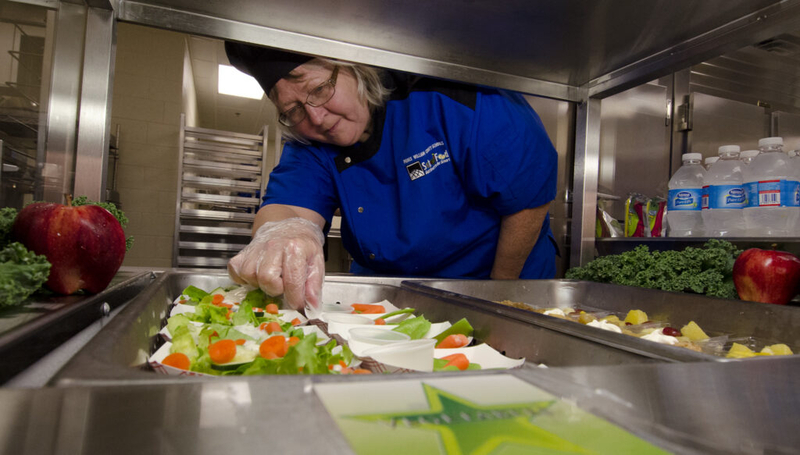
USDA announced an initiative and funding to promote farm to school programs and more nutritions school lunches. (Photo by Lance Cheung/USDA)
The U.S. Department of Agriculture announced Monday efforts to increase the nutritional value of school lunches, including a push for more locally grown foods at school.
The announcement, made in conjunction with the U.S. Department of Health and Human Services, noted funding packages to improve school kitchen infrastructure, farm to school grants and research into school meal nutrition.
A news release from USDA said the Harvest to Hallways initiative was the “next phase” of the Trump administration’s Make America Healthy Again objective.
U.S. Secretary of Agriculture Brooke Rollins said the program is about “bringing more American agriculture into the school cafeteria.”
“If we want to Make America Healthy Again, we have to start with our children, and that means improving what we put on their lunch trays every single day,” Rollins said in the release. “ … When we strengthen the connection between the farm and the lunchroom, everybody wins: our children eat better, our farmers gain new markets, and our communities grow stronger.”
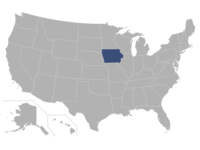
As part of the announcement, USDA pledged an additional $25 million for Patrick Leahy Farm to School Grants for fiscal year 2026. USDA has already awarded nearly $20 million to support farm to school programs for fiscal year 2026 in 37 states. Two programs in Iowa received a combined total of more than $700,000 for the fiscal year.
Iowa groups have championed farm to school programs, especially the COVID-era Local Food for Schools program that resulted in nearly $2 million to Iowa schools to purchase from local farmers, but was terminated March 2025.
Aaron Lehman, president of Iowa Farmers Union, said farmers are “still reeling” from the 2025 decision to cut the program that had a national investment of more than $1 billion in 2024 for local food for schools and a program that helped food banks and nonprofits purchase local food.
Lehman said the programs had “long demonstrated success” for farmers, classrooms and other institutions. Its cancellation, he said, was a “betrayal of farmers investing in a public-private partnership to feed those most in need in our communities.”
“Our farmers choose to farm because they want to grow things to feed people,” Lehman said in a statement. “Connecting farmers with children and other consumers is vitally important now more than ever, and we recognize the need for new efforts to make these connections.”
Lehman said the investments in the Harvest to Hallways initiative “fall far short” of the “damage” done to farmers from previous USDA cuts. He pushed for Congress to reinstate the Local Food for Schools and Local Food Purchasing Agreement programs as it deliberates on a new farm bill.
In addition to the farm to school grants, USDA’s Harvest to Hallways initiative included a new investment of $50 million to help school cafeterias purchase equipment such as cold storage and stoves that will allow them to better use the food products they source locally.
Tommy Hexter, executive director with Iowa Food System Coalition, said this type of funding for school kitchens is “especially important” as the lack of proper equipment has been a “major barrier” for schools trying to utilize local food.
USDA said it would also launch a “major” education and outreach program with webinars to promote the “local option” available to schools under USDA’s school procurement program.
Hexter said the coalition was “particularly interested” in the ability to direct existing USDA Foods entitlement dollars to “minimally processed, locally sourced food”, which he said is something farm to school groups have been working toward.
“Farm to school advocates are pushing for that flexibility to be included in the Farm Bill so it becomes a permanent part of federal policy,” Hexter said in a statement.
He also noted that the canceled Local Food for Schools program was a “substantially larger investment” than the recent USDA announcement. Hexter said he hopes future programs can scale to the same size, and be codified in the federal farm bill.
“That loss of funding has had real consequences for farmers and the local food markets that had grown around the program,” Hexter said. “Schools and farmers need programs they can count on long enough to build purchasing relationships, invest in infrastructure and plan production.”
Nutrition
As part of the MAHA movement, the recently announced initiative also encourages states to adopt nutrition pledges that align with the administration’s update to the food pyramid.
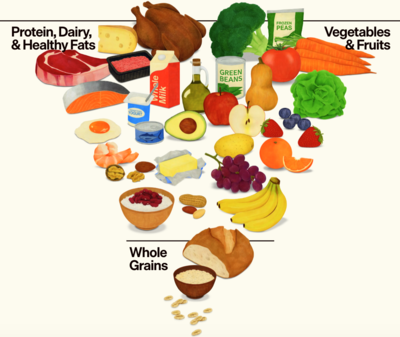
The Dietary Guidelines for Americans 2025-2030 features an upside down food pyramid with protein, vegetables and fruits at the top, grains at the point of the nose-down pyramid and healthy fats – including butter – running down the middle. According to the document, the updated guidelines prioritize “real food” and call for a “dramatic reduction in highly processed foods.”
Iowa saw several legislative efforts this year to align Iowa’s schools with the movement, including Gov. Kim Reynolds’ “MAHA bill” that restricted certain food dyes and additives from school meals and vending machines.
According to the news release, HHS is investing $30 million to research that will identify “practical, cost-effective ways” to “help schools put healthier meals on students’ trays.”
Hexter also celebrated this funding initiative and said updated research will “go a long way toward modernizing and improving the nutritional quality of meals on students’ plates.”
HHS Secretary Robert F. Kennedy Jr. said in a statement that “Every school meal should make a child healthier.”
“Under President Trump’s leadership, we are putting the updated Dietary Guidelines into action by bringing real, nutrient-dense food back to school cafeterias and giving schools the tools to serve it affordably,” Kennedy said.
Des Moines, IA