Washoe County asking voters to signal support for higher fees on electric vehicles
Aug 24, 2026 | 8:50 am ET
Description
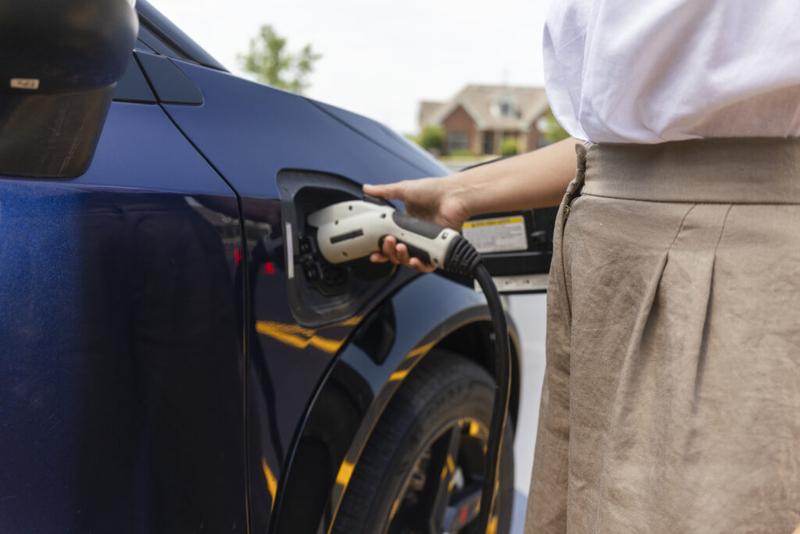
(Photo: iStock / Getty Images Plus)
Washoe County voters this November will have the opportunity to weigh in on whether electric vehicle owners are “paying their fair share” toward filling potholes and adding new streetlights.
The Regional Transportation Commission of Northern Nevada, which pushed for the non-binding advisory question, is hoping voters will say “yes” and signal support for charging electric and hybrid vehicles an annual road use fee on top of the registration fees they already pay.
“Probably nobody wants to pay” for road maintenance and improvement, conceded RTC Executive Director Bill Thomas during a presentation to the Washoe County Commission in June. “But it’s about fairness. Is there a subset of people who shouldn’t be paying their fair share?”
The primary funding source for the county’s road projects is the voter-approved fuel tax, known as RTC-5. Voters approved that tax in 2008, and it automatically adjusts for inflation each year.
Washoe County’s fuel tax brought in $110 million in 2025. It funded major roadway improvement and maintenance projects.
Thomas told commissioners conversations about how to reconcile the increase in roadway maintenance needs with the reality of declines in taxable gallons of fuel has been going on for “many years.”
Electric vehicle registrations in Washoe County increased 562% between 2020 and 2025, according to Thomas. Hybrid vehicle registrations increased 159%.
If those EVs and hybrids had paid an equivalent in county fuel tax, it would have brought in $15.5 million over the past five years, according to Thomas.
EVs and hybrids still make up a small fraction of vehicle registrations in Washoe County — 5.3% as of June 2024, according to the Guinn Center. But their adoption, combined with better fuel efficiency in gas cars, has created funding challenges that need to be addressed.
The Guinn Center in an August 2025 report commissioned by Washoe County recommended an enhanced registration fee.
Nevada is currently 1 of 10 states that do not have one.
Other options making EVs contribute to roadway projects were seen as less ideal for the county.
A vehicle miles traveled tax is seen by many as the most equitable because it considers road use rather than power source. But getting such a system in place would be complicated and costly.
It is “not a near-term solution,” said Thomas.
Similarly, charging EVs per kilowatt would also be difficult to implement.
Drivers pay county fuel tax incrementally — each time they fill up at the pump.
According to Thomas, RTC of Northern Nevada commissioned two polls of registered voters in Washoe County — first in December 2025, then in June 2026. The results suggested a majority — 6 in 10 — support an additional fee on EVs and hybrids. Their survey asked about a potential $250 annual fee on EVs and $125 on hybrid vehicles.
Washoe County Commission and RTC do not have the authority to implement a new EV fee or tax. If the advisory question passes this November, lobbyists for the agency and county will take the results to the Nevada State Legislature along with a bill to allow the county to take action.
“We’ll have the sentiment of the public and a specific bill on what our needs are,” Thomas said.
The RTC’s board in February unanimously supported putting the advisory question on the ballot. Washoe County commissioners in late June voted 4-1 in support, with Commissioner Jeanne Herman casting the sole vote in opposition.
Commissioner Alexis Hill, who on the gubernatorial campaign trail earlier this year said she wanted commercial electric vehicles to contribute to highway and roadway maintenance, said she would be voting yes on the advisory question.
“We have been waiting for action from the Legislature on this issue,” she said, “and due to inaction we have got to advocate for our community. We have studies … that show that we need to invest in our infrastructure.”
Commission Chair Clara Andriola also supports the advisory question and noted that she is an EV owner.
“My vehicle is heavier than most other vehicles that are comparable to its size,” she said. “Everyday I’m going around and traveling, I am not paying my fair share.”
Las Vegas, NV