West Virginia Folklife Apprenticeship program accepting applications
Aug 24, 2026 | 6:00 am ET
Description
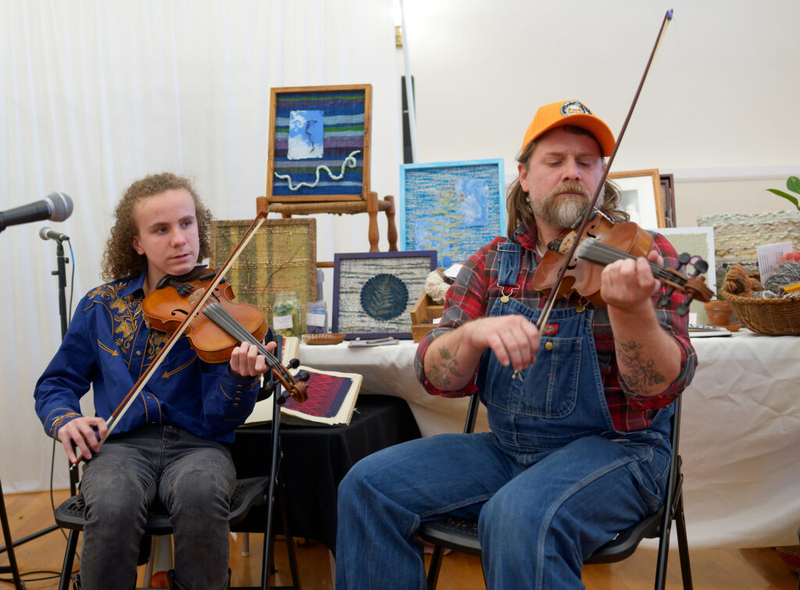
Old-time fiddler Ben Townsend (right) leads his apprentice Bodhi Gibbons-Guinn on a tune performed at Arthurdale Heritage for a West Virginia Folklife Apprenticeship Showcase hosted in November 2025. (Photo by Michael Keller)
Despite federal funding cuts affecting state humanities councils across the country, the Folklife Apprenticeship program by the West Virginia Humanities Council will go on this year.
The program — which awards stipends to mentors and mentee pairs for a year of learning traditional Appalachian skills — is accepting applications through Sept. 18.
“I’m really grateful that we can still do the program,” state folklorist Jennie Williams told West Virginia Watch.
The program is funded by the National Endowment for the Arts, which is separate from funding through the National Endowment for the Humanities that President Donald Trump cut last year, said Eric Waggoner, executive director of the West Virginia Humanities Council.
The Folklife Apprenticeship program supports expert traditional artists who take on an apprentice in their own communities for one year. Teacher artists receive $3,000 while their apprentices get $800 for the year. Pairs can also receive $400 in reimbursement for expenses related to the program.
Participants design their own work plans, participate in a public presentation, recorded interview, virtual meetings as a cohort with other pairs and a final public showcase.
People won’t learn to be a master artist within a year, so the program is more focused on the ongoing relationship between the mentor and the person they train, Williams said.
“When we think about apprenticeships, they can last a lifetime,” Williams said. “So the idea is, we’re hoping that this relationship really kind of launches into something that’s long term and kind of benefits the community as a whole, rather than just the pair.”

Apprenticeships focus on traditional art forms with roots in West Virginia. People tend to think of art forms like old time music and dance, but Williams said the program can focus on a wide range of crafts. In past years, participants have learned urban farming and gardening, mushroom foraging, fiddle repair, Appalachian storytelling and soul food cooking, to name a few.
Last year, Charleston chef K.D. Jones learned from his aunt how to make a candy that his family had been making for as long as he could remember, she said.
“That one was really cool because, as a professional chef, he was learning really hyper-local family candy traditions, which is tricky and requires really concentrated time,” she said. “So he was learning family stories all while learning how to make candy.”
Many of the pairs are focused on music skills like clawhammer banjo, square dance calling, old time fiddle and others.
“A lot of these art forms are things that people can take for granted, for sure,” Williams said. “And so another kind of goal of this program is to get people to think about what’s important to their community, what might they have grown up with that they may not have known that they’re overlooking, and how important those things are to carry on and keep learning and practicing together.”
Last year, the program supported 10 pairs, the most it has done in a given year, Williams said. This year, the program will likely support seven, as it had in previous years, she said.
Waggoner said the program represents the best kind of work the humanities council does.
“The West Virginia Folklife Program is one of the clearest examples of how our statewide work supports, preserves, and celebrates the Mountain State’s many living cultural traditions — everything from music to food preparation, from storytelling to textile work, and much more,” he said. “That work deserves to be documented and shared, especially in a state with such a vibrant and rich heritage, much of which is centered in our small and rural communities everywhere in West Virginia.”

Applications are open every other year, she said.
Williams encourages those interested in applying to watch a video about the program and to read more about it on the Humanities Council’s website. People should use the examples there as guides to think about whether their ideas are a good fit for the program. She said she’d also be happy to talk with people about how to submit a strong application.
People can also sign up to participate in a Zoom call about the program.
For more information, visit wvfolklife.org or contact Williams at [email protected] or 304-346-8500.
Charleston, WV