Consultant to evaluate UL System teams leaving Division I to save money
Oct 01, 2026 | 10:00 am ET

Description
Louisiana Tech’s Trey Baldwin and Levi Bell play against Southeastern Louisiana University at Joe Aillet Stadium on Sept. 11, 2021. Tech won 45-42. (Photo by Emerald McIntyre/Louisiana Tech University)
The University of Louisiana System has hired a consulting firm to examine its athletics budget problems and recommend solutions, including whether its member schools should leave the NCAA Division I ranks.
UL System President Rick Gallot said the accounting and consulting firm Deloitte has been hired to study athletics financing at its eight schools, which compete at the Division I level, the highest of the three NCAA tiers, and recommend solutions to ensure fiscal stability.
Gallot said nothing has been taken off the table, including whether the schools should retain their current NCAA status, move to a lower Division I subdivision or even drop to Division II or III.
“We really want an objective set of recommendations that will help us make sound decisions,” Gallot said. “ … They have no limitations on their findings and recommendations.”
The study, which Gallot said will cost $150,000, was first announced at a Louisiana Board of Regents budget hearing last week, when Gallot foreshadowed “difficult decisions” ahead for the system.
“We’re going to need support from all levels in order to really make some of the decisions that we’re going to make … We’re not going to shy away from them,” Gallot added.
Members of the Board of Regents, which oversees all of higher education in Louisiana, seemed in agreement that changes are necessary.
Regents member Wilbert Pryor suggested some schools drop from the Football Bowl Subdivision, the highest tier within Division I, to the Football Championship Subdivision, the next highest tier. Louisiana Tech, UL Lafayette and UL Monroe compete at the FBS level, while Grambling, McNeese, Nicholls, Northwestern State and Southeastern are FCS programs.
Pryor, the chief deputy district attorney in Caddo Parish, graduated from Vanderbilt University, where he also played football.
“I think the duties of the coach at Louisiana Tech are the same duties of the coach at Nicholls State,” Pryor said. “Football coach does the same thing. One is getting paid $250,000, and one’s getting paid a million dollars.”
Nicholls is currently the only athletics program at a state university that breaks even financially.
Dropping to FCS would likely not help the financial situation for Louisiana Tech, UL Lafayette or UL Monroe much, as they would still face significant scholarship costs but with less broadcast revenue.
Gallot said Deloitte might ultimately recommend solutions other than dropping to a lower tier or division. They could include capping coaches’ salaries or switching conferences, which Louisiana Tech recently did with its move from Conference USA to the Sunbelt Conference, where UL Lafayette and UL Monroe are already members.
Though Gallot seems ready to tackle the problem, athletics administrators and university leaders have expressed reluctance to leave Division I in interviews with the Illuminator this summer about the financial difficulties they face.
Louisiana’s college sports programs are losing money. Can sales taxes save them?
While competing at the highest level has some advantages, namely better media rights revenue, dropping to a lower division could significantly reduce travel and scholarships costs, the top culprits behind their fiscal problems.
A move to NCAA Division II would lower schools’ scholarship and travel costs, while dropping to Division III could eliminate scholarship costs entirely.
Like most athletics departments, the UL System’s eight schools have struggled financially, at times carrying deficits totalling in the tens of millions of dollars. The budget shortfalls have many in Louisiana on edge as schools struggle to make ends meet, impacting campus employment and students.
The issue is not unique to Louisiana. A recent report from the U.S. Government Accountability Office found 94% of the roughly 365 Division I athletic programs spend more money than they make. Their athletics deficits have grown by more than $10 million over the previous decade.
The report found universities cover the gap with student tuition and fee revenue, and in some cases federal student financial aid. Students at non-power conference schools, which includes the entire UL System, contribute on average between $1,700 and $2,700 annually to their athletic departments, the report found. Some schools levy a student fee to directly support athletics.
Regardless of the source, reliance on student support is likely to become an issue for athletic departments as colleges approach an enrollment cliff.
Louisiana’s population is shrinking and its birth rate is declining. The state is projected to see a 7.5% to 15% decrease in students who attend college by 2029, the Public Affairs Research Council noted in a 2023 report on falling enrollment in Louisiana.
While the UL System is taking a proactive approach to studying their athletics programs, they are not the only ones looking at the issue.
The legislature has ordered a report from the Board of Regents examining athletics financing across the state and forecasting the potential impact of spending. The report is due to lawmakers no later than Feb. 15.
LSU, which has historically brought in a profit with its athletics department, has recently struggled with severe deficits and is looking for avenues to increase revenue.
The LSU System is separate from the UL System and will not fall under the scope of the Deloitte study.
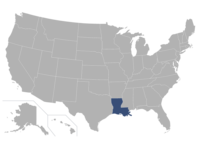
Baton Rouge, LA