As Meta faces trial for hooking kids on social media, NC’s attorney general offers parents advice
Aug 19, 2026 | 3:30 pm ET

Description
A bipartisan group of 29 attorneys general allege the tech giant Meta deceived the public about the addictive nature and the harms of their product.
(Photo: Getty Images)
“This is the big one.”
That’s how North Carolina Attorney General Jeff Jackson described the landmark federal trial that got underway Tuesday, in which Meta is accused of designing its platforms to be addictive to children.
Jackson and a bipartisan group of 28 other attorneys general allege the tech giant deceived the public about the harms of their product.
“I know [parents] have seen headlines of Meta in the news and litigation before, but this is very different,” said Jackson. “This is about children, their mental health, and the deliberate ways that Meta engineered Facebook and Instagram to be addictive to children and then misled parents about it.”
North Carolina and other states filed suit against Meta in 2023. The social media behemoth has tried repeatedly to have the case thrown out but has failed.
Meta has rejected the states’ claims, pointing to efforts to improve safety and be more transparent. Meta says its “teen” accounts can filter out topics like dieting and body image that may be triggering for some youth, and daily time limits can be used to reduce screen time. More recently, Meta says it added a parental alert feature to notify a parent or guardian if the teen mentions suicide or self-harm to Meta AI. However, some parents and observers have said the safety features don’t work for them.
The technology giant says it doesn’t allow children under 13 to create accounts. But Meta attorney Paul Schmidt said during his opening statement that it’s an unfortunate reality that some children who are under 13 can and do lie about their age to get on the social media platform.
The trial, being heard in U.S. District Court in Oakland, California, is expected to last six weeks. The attorneys general are asking the court to force Meta to follow laws designed to protect children, pay penalties, and give up profits it gained from breaking the law.

Jackson said the money they are seeking isn’t meant to be a remedy, but rather a deterrent and punishment for bad behavior.
Regardless of the outcome, Jackson said, parents have a critical role in deciding how much time on social media is suitable and enforcing boundaries.
“One of the core questions here is, how much time can children really spend on these platforms in a healthy way?” said Jackson in an interview with NC Newsline.
“I’m a dad, and to be honest with you, we fight this fight on a daily basis,” said Jackson.
In his own home, North Carolina’s attorney general said he has limits on social media usage, allowing his kids to earn more screen time based on doing chores or other things around the house.
“There is no world in which we don’t need parents to be involved in how much screen time their kids are getting,” said Jackson.
From algorithms to AI chatbots, child advocates push for greater protection for NC youth
Social media safety at the statehouse
Mick Tobin is co-founder and advocacy director for the Young People’s Alliance, a youth-led nonprofit advocacy group. He said he’s hopeful that Meta is held accountable.

“This case shows that manipulating young people has not only financial consequences, but social ramifications as well,” said Tobin, a recent Duke graduate.
Tobin said this and other cases brought against Meta underscore the urgency of passing stronger legislation to protect youth.
North Carolina legislators are considering a bill that would prohibit children under age 14 from signing up for social media accounts, with parental consent required for 14- and 15-year-old users. House Bill 301 would also impose a fine of $50,000 per violation against tech companies that fail to use age-verification for their account holders. A conference committee was appointed in late June to hammer out a final agreement between the state House and Senate’s versions of the measure.
Tobin wants to see legislators go farther than age limits.
“We hope lawmakers begin to pass legislation that limits social media’s dangerous designs, including addictive feeds, infinite scroll, and autoplay, as many states have already done,” said Tobin in a statement to NC Newsline. “We stand ready to work with lawmakers and mobilize our generation to pass that legislation.”
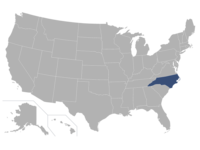
Raleigh, NC