Stockard on the Stump: Special session talk on tax appraisals rears its head
Aug 14, 2026 | 6:03 am ET
Description
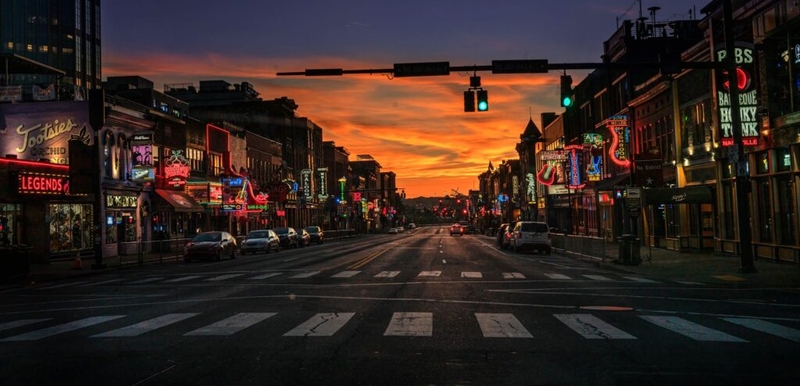
Tennessee lawmakers are considering holding a special legislative session to reassess taxes in Nashville's Lower Broadway bar district. (Photo: John Partipilo/Tennessee Lookout)
Spurred by claims that Lower Broadway bars will shut their Nashville doors and stop selling $10 domestics, Tennessee lawmakers are mulling the idea for a special session to remake the state’s property appraisal laws.
Republican legislative leaders broached the idea in radio interviews this week.
But while they talk about a looming emergency for Nashville honky tonks, none of which are in their districts, the chances of a special session this year are slim to none.
“I think everybody in Nashville is upset about their tax bill,” Lt. Gov. Randy McNally said Thursday.
McNally, though, didn’t appear to be jumping at the chance to call lawmakers back to town, saying the matter could be handled in a regular session.
It would be up to Gov. Bill Lee – one for the road – to call a special session, or a majority of the House and Senate could decide to return to Nashville.
That seems highly unlikely. With elections approaching in early November, followed by the holidays, luring lawmakers back to the Capitol to rewrite the state’s tax laws would be a logistical nightmare.
Still, one of the ideas focuses on setting property values — and ultimately taxes paid — based on the amount someone paid for their property rather than the current value of the property. In other words, if you bought a honky tonk building for $25 million, its government-appraised value would remain there until you sold it, even if someone down the street built a $200 million building and increased your value.
Some lawmakers started looking at changes a couple of years ago, but that went nowhere. Legislators have also discussed property tax caps, running into opposition from county and city governments.
During this year’s session, honky tonk owners grabbed the ear of House Speaker Cameron Sexton, who passed legislation for the tourism development zone, not only creating a new state-controlled board to oversee $30 million in excess revenue and tap into a $300 million in surplus funds held by the Nashville Convention Center Authority but allowing the board to divert some of that money to Lower Broad businesses to pay property taxes. A big chunk is expected to go toward Nashville’s bid for the 2030 Super Bowl.
Honky tonk owners’ situation was worsened by leases in which they agreed to pay property taxes, which was fine as long as they were a lot lower.
Giving them a “Broadway bailout” could prove problematic constitutionally.
First, city and county governments are entitled to collect as much as they did the previous year, and, second, the state Constitution doesn’t allow properties to be treated differently for tax purposes. Everything has to be “equal and uniform.”
The state Comptroller’s Office looked at Metro Nashville’s property appraisal system last year and found no anomalies. What might have happened is that values were depressed in the COVID years but skyrocketed in 2025 when commercial activity ramped up again.
Another factor is that Metro Council raised property taxes even after the certified tax rate dropped because values increased.
One of our favorite haunts, 12 South Taproom, closed this year because its property tax bill jumped dramatically as upscale businesses started replacing older, locally-owned places in the 12th Avenue South area.
Nashville tourism zone bill moves through Tennessee Legislature
With wealthy business owners breathing down its neck, Metro Nashville is caught in a conundrum between attracting major events such as the Super Bowl to the splendiferous $2.2 billion Titans stadium under construction and maintaining the old guard that built the city.
The question is whether the state will come riding a fine Arab charger to someone’s emotional — or financial — rescue, crashing headlong into once-treasured capitalism.
This ain’t over
Sen. Charlane Oliver, whom McNally penalized for standing on her desk and singing out against the legislature’s congressional gerrymandering in May, is not going quietly into the good night.
The Nashville Democrat sent a letter to the lieutenant governor and Chief Senate Clerk Russell Humphrey in early July asking for an official response to her claims that the punishment he meted out is illegal. She wanted a response by the end of July but got none.
Her attorneys contend that McNally cut her remarks short on the Senate floor when she spoke out against racial disenfranchisement as the Senate diced up a majority-minority district in Memphis. She held a banner reading “No Jim Crow 2.0” and sang “Life Every Voice and Sing,” known as the Negro National Anthem, as Humphrey and a sergeant at arms tried to pull the banner from her. Nor was her vote counted, after McNally told protesting Democrats they had to return to their desks to vote.
Three weeks later, McNally stripped Oliver of per diem pay outside regular session days, denied her reimbursement for out-of-state legislative travel and took her off the Senate Government Operations Committee, which meets all year. Her letter contends all three violate the state Constitution, which gives only the full Senate authority to discipline members; break the First Amendment by retaliating against Oliver for protected political speech; and violate the Equal Protection and Guarantee Clauses by denying Senate District 19 constituents representation in the legislature.
The letter also requests Oliver’s “no” vote be entered into the legislative record to correct it.
Because her travel reimbursement was stripped, Oliver canceled trips to legislative conferences, turned down constituent events and declined to go to town hall meetings with the Tennessee Black Caucus of State Legislators, according to her attorneys.
She blames the Republican supermajority for trying to silence her.
“The history behind this protest matters. Black Tennesseans fought, marched, were beaten, jailed and killed for the right to have their voices counted in our democracy,” Oliver said in a statement. “That history cannot be honored by remaining silent when those rights are undermined today.”
McNally has defended his decisions, saying he gave Oliver extra time to speak. He was highly peeved when she stood on the desk and waved the banner and called it a “clear violation of Senate decorum and centuries of tradition.”


If the punishments aren’t revoked, though, her attorneys’ letter says Oliver will consider “any and all avenues for seeking legal redress.”
In response, McNally spokesman Adam Kleinheider said Thursday, “Instead of accepting what was an entirely legal and appropriate sanction, as one would expect of someone in her position, Senator Oliver has chosen to threaten legal action. Following an embarrassing and performative display with an equally performative threat should perhaps come as no surprise — but it is disappointing nonetheless.”
Kleinheider said Oliver’s decision to violate Senate decorum came with consequences and that her claim she was prevented from voting “is simply false.” He added that after the vote concluded, she could have asked the clerk to record her vote before adjournment and added that every action McNally took was “entirely legal.”
In that unprecedented chaos, though, when people in the gallery flipped birds at McNally and other Republican lawmakers for redistricting in mid-term, she was probably too mad to think straight. We’ve all been there.
Two jobs at once
U.S. Sen. Marsha Blackburn says she’ll stay in office — even if elected governor in November — and then appoint a replacement to the federal post, according to a Nashville Banner report.
Is this a sign she doesn’t trust Gov. Bill Lee to make the right choice?
The gubernatorial swearing-in is slated for mid-January, raising the question about whether Blackburn would be violating laws against holding two elected positions simultaneously. Can we get an attorney general opinion? And who would ask for it? What happens if a tree falls in the forest and the sound waves hit nothing?
While Lee has the authority to appoint a replacement to the U.S. Senate seat, if he abdicates that responsibility, then who’s going to challenge Blackburn for taking on federal and state elected jobs at once.
Somebody could sue. But under a law passed this year, they’d have to crawl through a mile of crap — think “Shawshank Redemption” — to show they suffered enough injury to go to court. Can anyone stand the stench?
Whose endorsement?
Lee came out with a mighty endorsement of his former Agriculture Commissioner Charlie Hatcher in the waning moments of the recent election, just days before the Williamson County veterinarian and dairy farmer toppled U.S. Rep. Andy Ogles in the Republican primary.
President Donald Trump had already given Ogles an endorsement, then doubled down with a tepid town hall radio show, but relented afterward and said Ogles really didn’t have a chance to win.
This begs the question: Does Lee have more influence than Trump in Tennessee’s newly-drawn 5th Congressional District. It’s highly unlikely, but considering Trump called Lee a RINO (Republican In Name Only) in 2024, at least we saw a bit of a beating heart from the lame-duck governor. But is there enough balm in Gilead to ease the president’s pain?
“Quoth the raven – Nevermore.” *
* “The Raven,” Edgar Allen Poe
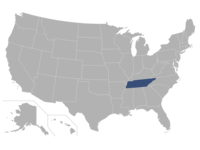
Nashville, TN