Will Shrinking Spinner Dolphin Populations Spur More Protections?
Aug 12, 2026 | 6:01 am ET
Description
Photo courtesy of Honolulu Civil Beat
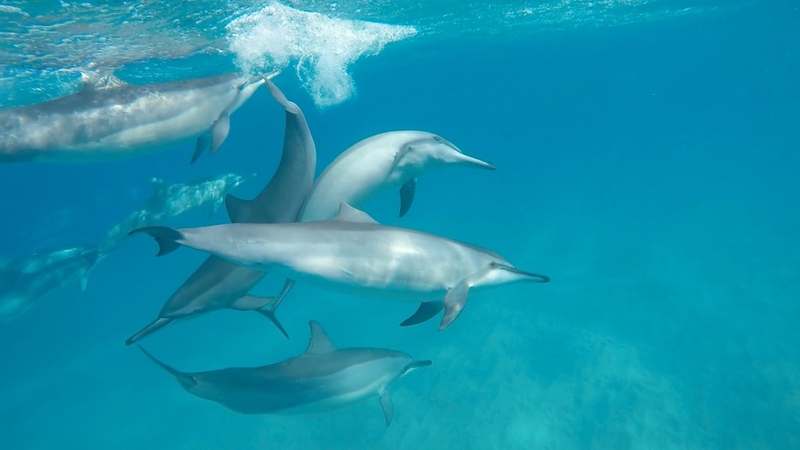
A new study from the Hawai'i Institute of Marine Biology at the University of Hawaiʻi Mānoa has found that the population of spinner dolphins off the Kona Coast is in decline. And disruption caused by people is likely to blame.
The study used 3D digital models created using drone photography taken in 2021 and 2022 to determine the ages of the dolphins that live along the coast. It found that the number of calves was just 9% of the total — a notable drop from 17%, the number that scientists expect to see under stable conditions.
“This study is really eye-opening,” said Lars Bejder, director of HIMB's Marine Mammal Research Program. “Over the last 25 to 30 years there's been a lot of concern from NOAA, from the general community, from Hawaiian practitioners and from some commercial operators that the pressure on these animals is pretty severe.”
Spinner dolphins live for 20 to 25 years and reproduce slowly; getting a clear population count has long been a challenge. But this study adds a new form of evidence to the existing science. Fewer calves will most likely lead to fewer mature dolphins over time, and that “raises concerns about the long-term viability” of the dolphins off the Big Island, the scientists said.
The researchers added that the evidence is a clear call for further protection for the dolphins at a time when the existing protection may be lacking enforcement.
Dolphins Need Rest
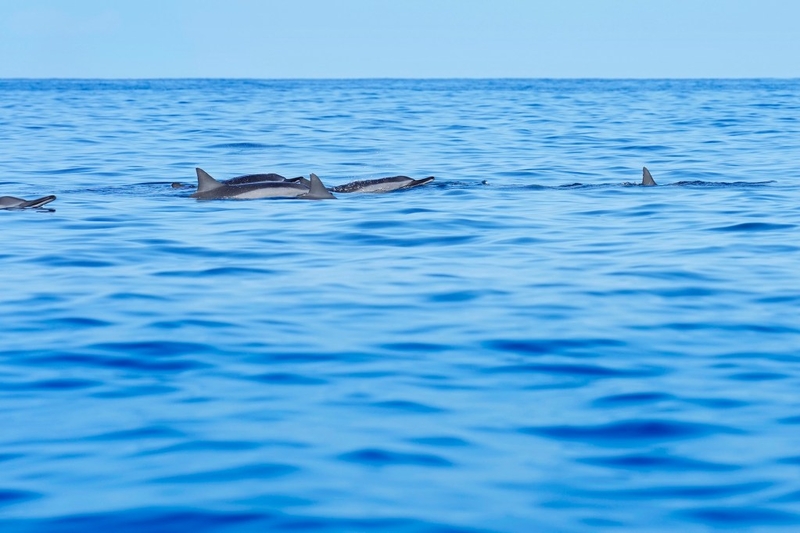
Spinner dolphins are naturally nocturnal. They feed in deep waters at night, and rest in bays and inlets during the day. In Kona, a fairly constant stream of tour boats, snorkelers and other human activity tends to disrupt that rest. A 2018 study by UH researchers found that dolphins were exposed to human activities within 100 meters during an average of 83% of their resting daylight hours. Other research found that the dolphins changed their behavior due to that disruption and rested less.
Bejder said he has never heard of another population of dolphins with so much exposure to human activity.
Taking all this into account, the National Oceanic and Atmospheric Administration passed a regulation under the Marine Mammal Protection Act in 2021, banning humans from getting within 50 yards of the dolphins. But the area where the rule applies is enormous, and while the administration has worked with the Coast Guard and the Department of Land and Natural Resources Division of Conservation and Resource Enforcement to enforce the rule, it’s not clear how effective it has been at helping the dolphins get more rest.
By 2024 the agency had issued roughly 135 tickets and 76 penalties, which ranged from $100 to $4,500.
DLNR spokesperson Andrew Laurence said spinner dolphin violations may be reported to the agency, but “officers can only respond, investigate and refer the matter to the NOAA Office of Law Enforcement.”
DLNR’s Division of Conservation and Resources Enforcement is active on O‘ahu, Hawai‘i island, Maui and Kaua‘i. On its website, NOAA Fisheries said it completed 614 patrols of the entire Pacific Islands region between 2021 and 2024.
Tour boats off West Oʻahu have also been a concern when it comes to human activity. Roadsides have been packed in recent years with tour guides and hundreds of swimmers ready to jump in the water with the dolphins as they rest.
In 2021, a tour operator was fined $2,500 for harassing spinner dolphins by driving his boat in circles around a pod and dropping his passengers off in the midst of the animals. In another case, a group of 33 swimmers were accused of harassing dolphins off the coast of the Big Island in 2023.
Are Closures Necessary?
In addition to the current 50-yard rule, the researchers recommended that the federal agency turn its focus back to a second set of regulations it proposed back in 2021 — mandatory closures for portions of the bays where the dolphins rest between 6 a.m. and 3 p.m. daily at four Hawaiʻi island sites — Kealakekua Bay, Hōnaunau Bay, Kauhakō Bay (Ho‘okena) and Makako Bay — and La Perouse Bay on Maui.
At the time, the proposed rule was controversial and over 700 people and groups filed comments for and against it in the federal registry.
The agency counted 47 different spiritual retreats, including dolphin-assisted therapy and organized programs centered on dolphin encounters, on Hawaiʻi island in 2017. It also counted 47 commercial boat tours that facilitated close, in-water dolphin interactions at the time.
Many critics pointed to the fact that dolphins would approach people in the water nearby. There was a lack of clear evidence that human activity was impacting the dolphins negatively, they added.
The Hawaiʻi Fishing and Boating Association opposed the regulation, as did Jack’s Diving Locker in Kona. A group called Hawaii Dolphin Educators’ Association wrote to say that such limits shouldn’t be necessary. “If NOAA’s Office of Law Enforcement just enforced the MMPA as written, there would not be any need for enhanced protections for Hawaiian spinner dolphins,” the group wrote.
The Maryland-based Marine Mammal Commission supported the rule, but commented to propose that the authors of the closure rule build in buffer zones to prevent a vessel from positioning itself just outside of the closed area to get close to dolphins resting at the edge of the space.
In its letter, the commission, anticipating the blowback, emphasized the need to educate local residents about the fact that other recreational activities, such as spearfishing and freediving, would largely not be restricted.
A group called the Kauhakō ʻOhana Association submitted dozens of signatures in support of the proposed regulation and several people acknowledged that the rule allowed for Native Hawaiian cultural practitioners to engage in their customary practices in the bays in question.
Uʻilani Naipo, a descendent of a Native Hawaiian fishing family in Miloliʻi wrote, “the time-area closure allows lawaiʻa and hoe waʻa to transit through the closed area to carry out traditional practices. This proposed rule responsibly addresses the priority order for protection – first, the naiʻa (spinner dolphin) and secondly, the subsistence and traditional practices of kanaka ʻōiwi.”
However, Roxane Keliʻikipikāneokolohaka, a Native Hawaiian scientist from a fishing family, opposed the proposed rule and referred to it as “heavy-handed.”
In the last five years since collecting comments from the public, NOAA has gone quiet on the proposed regulation.
Stefanie Gutierrez, communications specialist for the Pacific Islands Regional Office at NOAA Fisheries, told Civil Beat that Hawaiian spinner dolphins “rely on shallow, nearshore bays during the day to rest, socialize, and care for their young. These daytime hours are a critical recovery period, and disrupting these essential behaviors can negatively impact their long-term survival.”
The time-area closures rule is “still in the deliberative process,” Gutierrez said. She did not share a timetable, however.
Mendy Dant, president of Fair Wind Cruises — a tour boat company that was founded in 1971 and takes two trips to Bay nearly every day — said she and her staff have seen the number of dolphin calves increase since the 50-yard rule went into effect. But she hasn’t seen much enforcement from DOCARE since 2021.
As Dant understands it, bay closures would not impact Fair Wind’s business because it would only be focused on the center of Kealakekua Bay — an area they already avoid to allow the dolphins to rest.
She added that many of the tour boat operators she observes follow the 50-yard rule. “Most operators head toward the dolphins, then stop and let the wind drift them closer. Additionally, the dolphins are curious and often approach the boats themselves, so I do not feel the operators are harassing them.”
People who are out in kayaks on their own are a different story. Dant said they aren’t typically aware of the rule. “That is one of our biggest challenges with safety and environmental concerns: these unguided, unaware people on their own exploring the islands,” she said.
Bejder stressed that while tourism is a factor, all recreational activity that takes place too close to where the dolphins rest is ultimately a threat to their wellbeing. “It’s death by 1,000 cuts,” he said.
“Marine tourism is an incredible industry, but you have to do it sustainably,” Bejder said. “If you shoot the goose that lays the golden egg,” he added, that industry stands to suffer as well.
Honolulu, HI