RI judge tosses Trump’s latest attempt to reconfigure federal homelessness programs
Aug 10, 2026 | 3:00 pm ET
Description
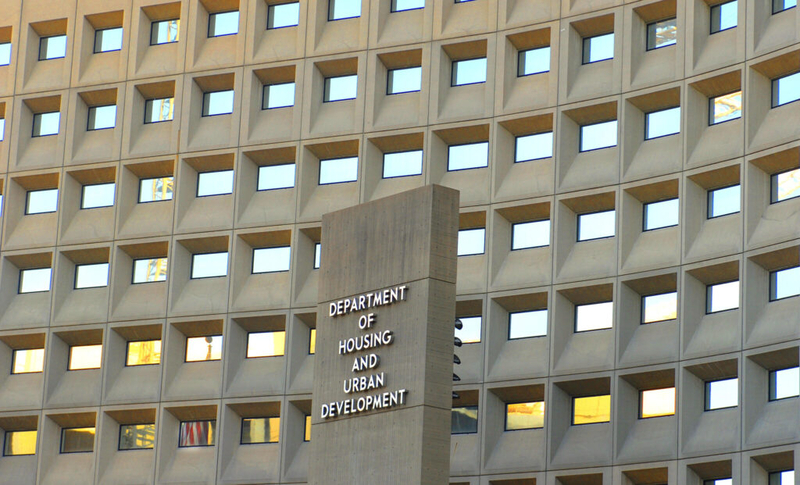
The U.S. Department of Housing and Urban Development headquarters in Washington D.C. (Photo by HUD Office of Public Affairs)
A Rhode Island federal judge has again blocked the Trump administration from siphoning federal funds from no-strings-attached housing for formerly homeless individuals.
In a pair of identical, 10-page orders issued Friday, U.S. District Court Judge Mary S. McElroy wrote that the U.S. Department of Housing and Urban Development (HUD) violated the federal Administrative Procedure Act by attempting to divert $4 billion in federal fiscal 2026 grants from “Housing First” programs. As the name suggests, the model prioritizes providing a stable living environment for people who have lived on the streets or experienced mental illness before addressing their health, education and social services needs.
Twice in the last seven months, federal housing officials have sought to reallocate federal grant funds, shifting money away from permanent supportive housing programs to transitional housing and other short-term programs. The original, November 2025 federal memo prompted a pair of lawsuits by community advocates and state officials, also heard separately before McElroy who determined the Trump administration overstepped its authority and struck down the proposed funding restrictions.
On June 1, HUD released a new funding memo for federal fiscal 2026 grants, again attempting to cut money for permanent housing programs. The directive would have put 97,000 people back on the streets, according to estimates by the National Alliance to End Homelessness. Rhode Island would stand to lose $5 million in permanent supportive housing, risking instability for 441 people, according to the national nonprofit’s estimates.
The fiscal 2026 directive prompted two more legal challenges by states and community advocates, filed in U.S. District Court in Rhode Island five days apart. Plaintiffs in both cases asked McElroy to toss the latest federal funding memo and issue a permanent injunction, which would have barred federal administrators from pulling a similar maneuver.
McElroy’s ruling stops the reallocation of federal grant funds in fiscal 2026, determining the agency violated its own procedures and other constitutional protections requiring public notice and input before making changes to longstanding funding allocations.
But McElroy declined to issue a permanent injunction barring HUD from replicating the same move in the future. A permanent ban would be a “drastic remedy” that relies on the “speculative nature” of future actions,” McElroy wrote.
Rhode Island Attorney General Peter Neronha, who co-led the 22-state lawsuit against HUD, pledged to continue to fight Trump’s administration to protect homelessness programs and services.
“Those experiencing homelessness are in dire need of support, and slashing funding for permanent housing would have caused tens of thousands of people to lose their homes,” Neronha said in a statement. “We will continue to check this Administration’s overreach and to fight for all Americans, especially those who can’t fight for themselves.”
Community advocates celebrated McElory’s identical decision in their own lawsuit as a win, stopping an effort to “politicize homelessness funding grants.”
“We are pleased the court has once again decided to rule with the organizations and municipalities that are providing the resources and housing for everyday people when they need it the most,” Steven Brown, executive director of the ACLU of RI, which represented the coalition of advocates, said in a statement. “This is another win against an unnecessarily cruel and convoluted attempt at undermining the ability of organizations like Crossroads and Youth Pride in Rhode Island to adequately provide their services.”
The U.S. Department of Justice, representing the Trump administration, did not immediately respond to requests for comment Monday.
The states’ lawsuit includes attorneys general from Arizona, California, Colorado, Connecticut, Delaware, Illinois, Maine, Maryland, Massachusetts, Michigan, Minnesota, New Jersey, New Mexico, New York, Oregon, Vermont, Virginia, Washington, Wisconsin, and the District of Columbia. The governors of Kentucky and Pennsylvania also filed on behalf of their states.
The coalition’s lawsuit is led by the National Alliance to End Homelessness and the National Low Income Housing Coalition, along with Providence-based nonprofits Crossroads Rhode Island and Youth Pride Inc. Plaintiffs are represented by Democracy Forward, National Homelessness Law Center, Lawyers’ Committee for Rhode Island, and the ACLU of Rhode Island.
Providence, RI