How volunteers and researchers at URI work together to better understand our environment
Aug 10, 2026 | 5:15 am ET
Description
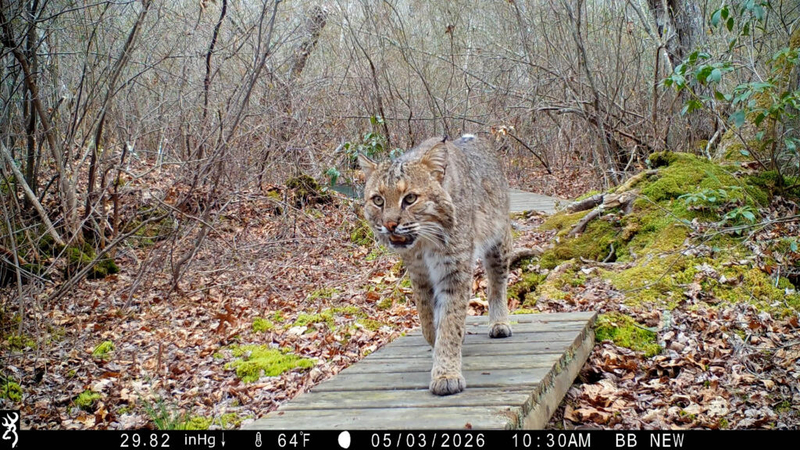
Elise Torello captured a photo of a bobcat on her trail camera. Over 1,000 sightings have now been reported to the Rhode Island Bobcat Project from all over the state.
Across Rhode Island, volunteers are helping scientists answer big environmental questions, from tracking water quality in local ponds and streams to uncovering the secret lives of bobcats. These “community scientists” collect or analyze data that supports scientific research.
They include Veronica Berounsky and Elise Torello, whose time and commitment helped researchers at the University of Rhode Island better understand our state’s unique environments.
For Berounsky, the work began nearly two decades ago with a mysterious event in the Narrow River, a tidal inlet that forms a natural boundary between Narragansett, South Kingstown and North Kingstown. In 2007, Upper Pond at the northern end of the river experienced a natural but rare “overturn” event. Layers of water that typically stay separated became mixed, bringing sulfur-rich bottom water to the surface. Fish died, the pond smelled like rotten eggs, and Berounsky, a coastal ecologist by training, was intrigued.
“It was like a Ghostbusters moment … who ya gonna call?” Berounsky recalled.
She called URI Watershed Watch, a volunteer-based monitoring program that has tracked the health of Rhode Island water bodies for over 35 years. Armed with water quality equipment, Berounsky began measuring dissolved oxygen, salinity, temperature, chlorophyll, and nutrients in Upper Pond. She’s been regularly monitoring the site ever since. Her persistence was rewarded when she documented water quality conditions leading up to and during another overturn event in November 2024.
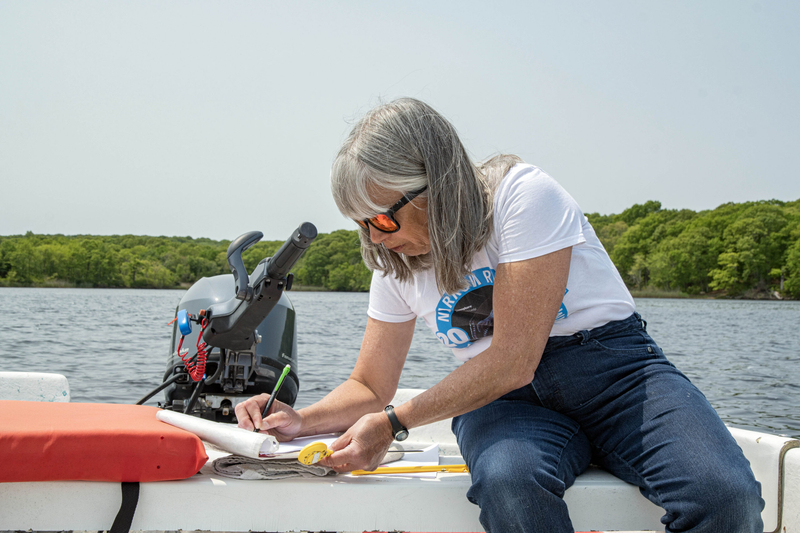
In 2019, Berounsky and three of her colleagues began coordinating Watershed Watch monitoring at South Ferry Road. The beach is adjacent to URI’s Graduate School of Oceanography, where she is the alumni relations and communications coordinator. Now in its seventh year, this initiative grew out of a desire of GSO’s students, faculty and staff to be better neighbors by partnering with the local community. Although many people swim at the beach, no one had been regularly monitoring bacteria levels until Berounsky began recruiting local residents, alongside GSO faculty, staff, and students, to participate in the program.
“It’s a great way to meet neighbors,” Berounsky said. “People want to get off their screens and do something meaningful.”
After almost 20 years of volunteering with Watershed Watch, Berounsky has collected a lot of data. The importance of long-term datasets cannot be overstated because they show changes in the system over years and decades, she said. Those changes include warming waters linked to climate change, and improvements in water quality following infrastructure upgrades.
“It’s rewarding to finally identify the source of a problem and help resolve it,” Berounsky reflected.
Out of the water and into the woods, another URI project is relying on community observations to better understand one of Rhode Island’s most elusive predators.
In the fall of 2025, the Rhode Island Bobcat Project put out a call for members of the public to report bobcat sightings. These reports, in combination with traditional approaches to study carnivores like camera traps and GPS collars, are helping researchers learn about where bobcats live, how they move through human-impacted habitats, and how populations may be changing over time. Most sightings have come through the user-friendly online reporting form. But Torello, who had already been collecting trail camera footage for nearly 10 years, shared a 100-gigabyte folder instead.
“Be careful what you wish for,” she said with a laugh.
The power of community science lies in the mutually beneficial relationship between researchers and participants.
Having studied wildlife biology at URI, Torello has always been curious about what creatures she shares her home with. In 2016, she set up a trail camera, and soon spotted her first bobcat.
“It was a foggy morning,” she recalled, “but I could see what looked almost like a ghost crossing the screen.”
Torello now has six trail cameras in the woods near her home, and has been documenting more and more bobcats over the years. She is now familiar with three individual bobcats that regularly visit her back yard, including one radio-collared female cat named Loon. She can distinguish the cats by size, color, markings, and even personality.
“The big male has a swagger, and the younger cat’s movements are more timid,” she said.
Participating in the Rhode Island Bobcat Project has deepened Torello’s appreciation for her local environment. She’s seen an immense amount of wildlife activity on her property, including a three-legged coyote. “The resilience of nature is amazing,” she said.
She has also become an enthusiastic advocate for community science, giving talks at local events and teaching people how to set up their own trail cameras. “When people are involved, it fosters a sense of stewardship,” Torello said. “They want to help take care of what they’re observing.”
The power of community science lies in the mutually beneficial relationship between researchers and participants. Researchers can only be in so many places at once, and so volunteers who live, work, and play throughout the state help them collect much more data than they could alone. In turn, members of the public gain valuable skills in scientific data collection, learn about their local environment, and have the opportunity to bring community concerns to the attention of scientists and decision makers.
At their core, community science projects help to strengthen our community, and break down barriers between academia and our everyday lives. As Berounsky pointed out, “You don’t need to be a scientist to contribute towards meaningful research.”
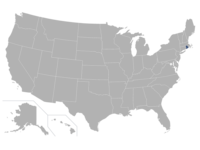
Providence, RI