Health officials warn of harmful bacteria in North Idaho’s Fernan Lake, north end of Hayden Lake
Aug 07, 2026 | 5:36 pm ET
Description
Idaho public health agencies have issued
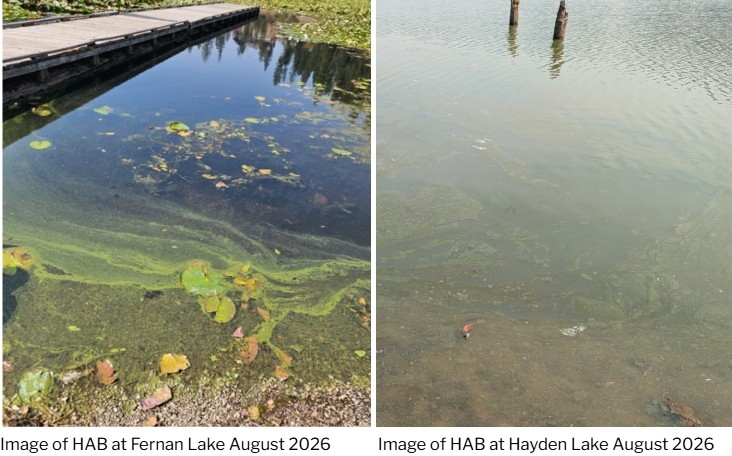
public health advisories for North Idaho's Fernan Lake and the upper end of Hayden Lake. (Photos courtesy of the Panhandle Health District)
Officials from the Panhandle Health District, alongside the Idaho Department of Health and Welfare and the Idaho Department of Environmental Quality, issued public health advisories Aug. 6 warning of harmful cyanobacteria bloom in Fernan Lake and the upper end of Hayden Lake.
Cyanobacteria, referred to as harmful algae bloom and normally a natural part of Idaho’s water bodies, can multiply and release toxic chemical compounds – known as cyanotoxins – in response to increases in temperature, according to the press release.
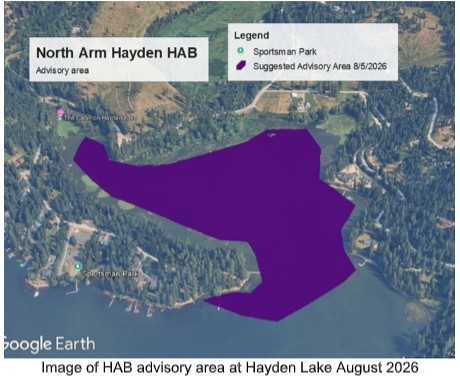
known as a harmful algae bloom, in the north end of Hayden Lake. (Map courtesy of the Panhandle Health District)
Officials recommend avoiding contact with discolored water, surface scums, or areas with visible green streaks or mats; and to keep pets and children away from affected water, as they are most at-risk of harmful exposure. The elderly and those with compromised immune systems should also avoid contact with affected water.
Symptoms of contact with cyanobacteria vary according to exposure time and may include: rashes, hives, diarrhea, vomiting, coughing and/or wheezing.
If contact has been made with water containing cyanobacteria, officials recommend washing off with fresh water.
Drinking affected water can result in more severe symptoms impacting the liver and nervous system, according to the press release.
Officials warn those using the lake as a drinking source that cyanobacteria cannot be removed by boiling or filtering the water.
If choosing to eat fish from the lake, officials also recommend removing all fat, skin and organs before cooking, as toxins can accumulate in those tissues, the press release said.
If exhibiting the persistent presence of cyanotoxin-related symptoms, consult with your health care provider or veterinarian in case of pet exposure.
For more information, and a list of active Idaho harmful algae bloom advisories, visit: https://www.gethealthy.dhw.idaho.gov/recreational-water-health-advisories.
Boise, ID