New DMACC President Lori Suddick starts path to understanding college’s core aim
Aug 07, 2026 | 4:49 pm ET
Description
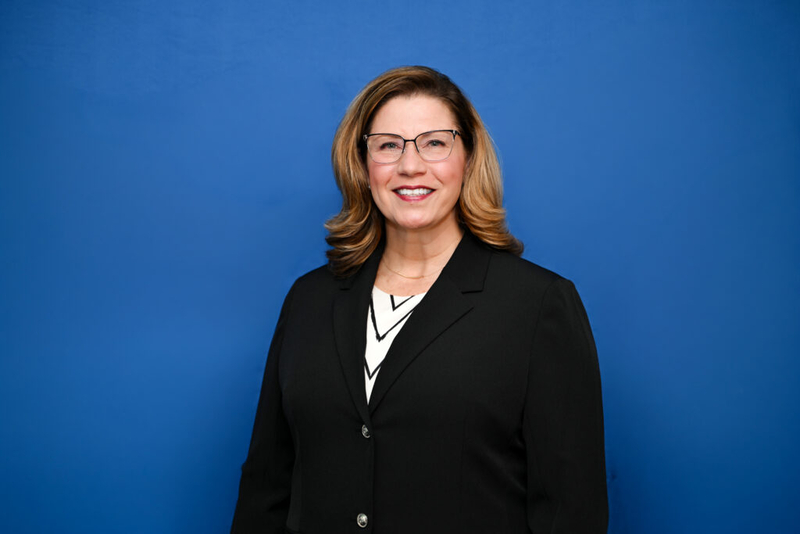
Lori Suddick started her tenure as president of DMACC on June 15. (Photo courtesy of DMACC)
With 26 years of service in community and technical colleges, Lori Suddick said there isn’t much she hasn’t seen already. The new president of Des Moines Area Community College is reminded of Wisconsin roads when traveling between different DMACC locations in Iowa, and she’s been responsible for a similar number of campuses in the past.
Prior to her selection as DMACC’s new president after Rob Denson’s retirement, Suddick held faculty and leadership roles at technical and community colleges in Wisconsin and Illinois. Suddick has spent the weeks since her June 15 start at DMACC getting to know the spaces and people that make up her new community and those who influence it, while “trying to enculturate” herself in all things Iowa and DMACC.
“The common fact is these are community colleges. We all have an open access mission, and we’re here to help our students succeed and make an impact on our community,” Suddick said. “The differences are learning, where are we making that impact, and where are opportunities?”
Establishing communication, priorities
As Suddick sets up meet-and-greets and prepares for the upcoming fall semester, she said she’s making early observations of where DMACC is succeeding and where it could grow.
DMACC is “thriving” in its concurrent enrollment opportunities for students still in high school, Suddick said. That’s important, she said, because she knows that students who have participated in those programs are more likely to complete their community college education, whether that leads to credentials or transfer to a four-year institution.
However, adult learning is one area where she believes DMACC could pay more “intentional attention to.” She said it’s important to take a diversified approach to ensuring Iowans already past their primary education have access to furthering their education, just like with student supports and other areas of college operation.
When it comes to business partnerships, Suddick said Iowa’s Industrial New Jobs Training (260E) Program is unlike any she’s seen in her career, and one she’s “been extremely impressed by.” She wants to expand 260E contracts, as well as business partnerships in general.
“I know it was a big point of debate in the last (legislative) session,” Suddick said, “but it is so important to the partnerships and local workforce needs, and community colleges and employers really have a great design, and so we want to make sure we’re continuing that.”
The new DMACC president gave kudos to Iowa Central Community College for its EMT program’s selection as the first in the U.S. to become eligible for Workforce Pell Grants, saying DMACC programs are in the process of seeking their own federal approval. Suddick said she sees Workforce Pell as a “specific program that taps a specific population” rather than a cure-all solution to improving access to training. She said DMACC will enact Workforce Pell once it has been approved for the college and measure its pros and cons.
DMACC also needs to take a look at community engagement beyond concurrent enrollment at all of its locations across central Iowa, she said, to make sure local workforce needs are being met and to create strategic partnerships that draw in and support targeted populations, like people aged 24-54 who need a college access point.
“I feel like we have good bones around it, but I feel like there’s some spots where we are needing to expand the reach of the pathways that we are offering at different locations,” Suddick said. “That’s top of mind eight weeks in.”
Anchored to mission
Suddick is also spending time learning more about one “stark difference” she’s identified between her job in Iowa and those in other states — state code, budgets and the Iowa Legislature. She said she’s leaning on other community college leaders in the state during this process, as she doesn’t want to “disrupt” but add to the good work they’re already doing.
Anchoring to DMACC’s mission is Suddick’s central approach to working with state government and she focuses her conversations with lawmakers on ways to positively impact communities, something she believes everyone wants but can differ in their opinions on how to fund those efforts.
“There’s a lot to do in terms of just building relationships and understanding where everyone’s at, so I can figure out … where my leadership can help plug DMACC in, whether that’s enhancing good things we’re already doing or taking a new look at how we approach some things.”
When Suddick spoke to DMACC community members in her candidate forum for the presidency, she told them “belonging is the key” to ensuring every student sees success in their goals. When asked how she would navigate this belief with laws passed by the Legislature banning diversity, equity and inclusion offices and activities in public higher education, Suddick said “nothing in law changed the mission of community colleges,” which is to serve everyone, regardless of demographics or background.
Suddick said she’s trying not to let words get in the way of good work occurring at DMACC. One challenge the community college and others face, however, is when funding changes have an impact on certain populations more than others, and the question they have to answer is how to “ensure we’re living to our purpose” and connecting students to the resources and opportunities they need amid funding and policy shifts.
“My job is to make sure that the institution I lead is prepared under its mission to meet every student where they are and get them where they want to go,” Suddick said. “And ideally, we know that people thrive best when they can be their own authentic selves and are in environments where they feel valued and respected and included.”
Looking to the fall
Before Suddick can really tackle the big goals of moving DMACC forward and showing the public its areas of impact, she said she still needs to “launch a college community,” which she plans to do this fall through a college community gathering. This will be a chance for Suddick to share back what she heard from the listening tour, she said.
“There’s a need for us to envision and co-create together, and that’s what I’ll be engaging the college community in,” Suddick said. “It is unclear to me what our core aim is right now, and I came to, like everyone else that’s here, to help support student outcomes, but we need to get some clarity on what that is, and so that is where we’ll begin as a team.”
In order to hear directly from other stakeholders and bring their voices to the institution’s strategic planning process, Suddick said she’ll undertake another listening tour during the fall and spring semesters for students, workforce partners and K-12 school and university officials.
While DMACC will still keep its present focus on already-established priorities, like a visit from an accreditor scheduled for the spring, Suddick said she needs to better understand people’s perception of the college and where it can improve before she can move ahead with the college’s vision.
“We’re wrapping up on that 60th anniversary, so now we have a chance to question, how do we use this time to position this institution for its next 60-year climb,” Suddick said.

Des Moines, IA