Baltimore City Community College leader defends school against audit
Sep 09, 2026 | 10:48 pm ET
Description
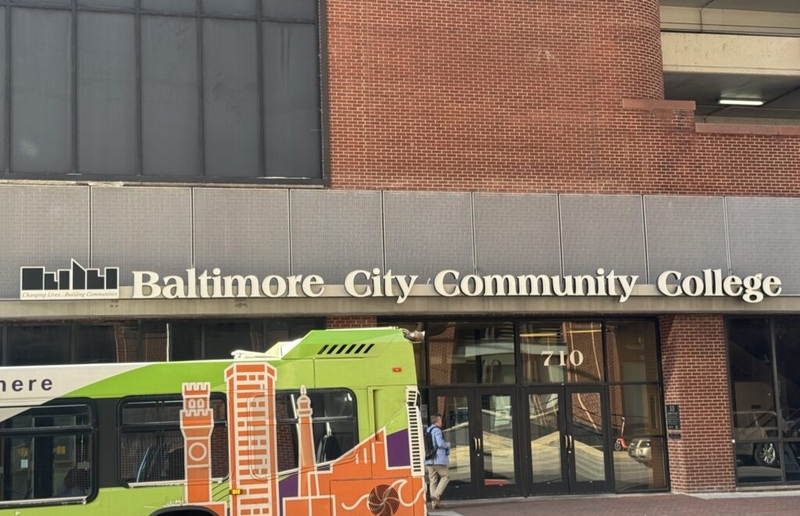
Baltimore City Community College's downtown location. (File photo by William J. Ford/Maryland Matters)
The president of Baltimore City Community College defended the school against a recent state audit that found management problems and the potential payment of financial aid to nonexistent “ghost students,” but said Wednesday that improvements remain a work in progress.
“The audit at this point, is served to assist to validate the state of college for the new day, and we’ve been working for that new day,” said BCCC President and CEO Debra McCurdy in testimony to the legislature’s Joint Audit and Evaluation Committee.
“These findings can be taken care of. They can be fixed so that we can demonstrate continuous improvement in operation at the institution,” she said.
But state lawmakers appeared unimpressed with the progress. And Legislative Auditor Brian Tanen, noting some repeat violations in this summer’s audit from an audit in 2022, rated the latest audit of the school “unsatisfactory.”

The state audit, released in June by Tanen’s office, found that the college apparently awarded $264,000 in financial aid to 145 potentially fictitious or “ghost students,” and didn’t adhere to procurement laws. It also said the school could not account for more than 20,000 missing items such as laptops and other computer equipment, worth a total of about $20 million.
In terms of the AI-generated fake students identified in the audit, McCurdy said that is a national concern that’s not just happening at the community college.
McCurdy, who became president of the school in 2019, attributed some of the challenges to a vacancy rate that exceeds 25% for BCCC positions.
McCurdy said new leadership has been hired to help get the school back on track, some of whom sat beside her Wednesday. McCurdy said the new staff came to the college after the publication of a 2022 audit.
Committee co-chair Del. Jared Solomon (D-Montgomery) read a portion of the 2022 audit, which said the school planned to invest in new software to keep track of its inventory. But the 2026 audit said the school couldn’t account for more than 20,000 missing items such as laptops and other computer equipment totaling about $20 million.
“With all due respect … this response is almost verbatim to what you’re telling us today. How long should we expect to give you grace that this is going to be fixed?” Solomon asked. “And again, where are those 20,000 items? How many of them are lost?”
The school’s controller, Eileen Waitsman, said most of the unaccounted-for items “were older assets” with a net value of less than $40,000.
“They were not located, and so that’s why they were identified as missing,” Waitsman said.
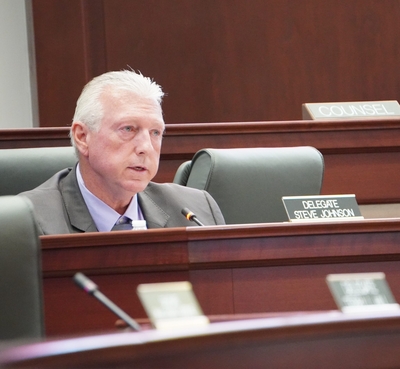
Del. Steve Johnson (D-Harford) asked why the school doesn’t conduct competitive bids and keeps track of any documentation.
Anna Lansaw, executive director of procurement and auxiliary services at the college, said the school was awarded statutory delegation in July 2021 to operate “under our own purview. A lot of the procurements that are conducted are conducted in inter-cooperative government purchases that are excluded from a formal procurement process.”
Lansaw challenged the audit finding that the school did not have formal contracts.
“Even though we did not do a formalized executed contract, we did do purchase orders because these are only one-year agreements,” Lansaw said.
“You understand how this could attract scrutiny on a pretty huge level. That’s why we have the questions today,” Johnson said.
“Yes sir,” said Lansaw, who added future grant-funded contracts will include formal, written agreements.
The audit committee’s meeting comes slightly more than two weeks after the community college’s faculty ratified its first-ever contract.
Faculty members, represented by United Academics of Maryland Local 6628, an affiliate of American Federation of Teachers-Maryland, voted unanimously on the contract that includes a 3.25% raise and a $1,000 bonus in the first year. It also establishes wage increases of at least 8.25% over the three-year contract, “clearer criteria for promotion, and critical protections, including a successorship agreement that ensures faculty keep their union in the event of a merger or reduction in force.”

Annapolis, MD