Sheehy seeks to extend nationwide concealed carry privileges to some veterans
Aug 07, 2026 | 4:36 pm ET
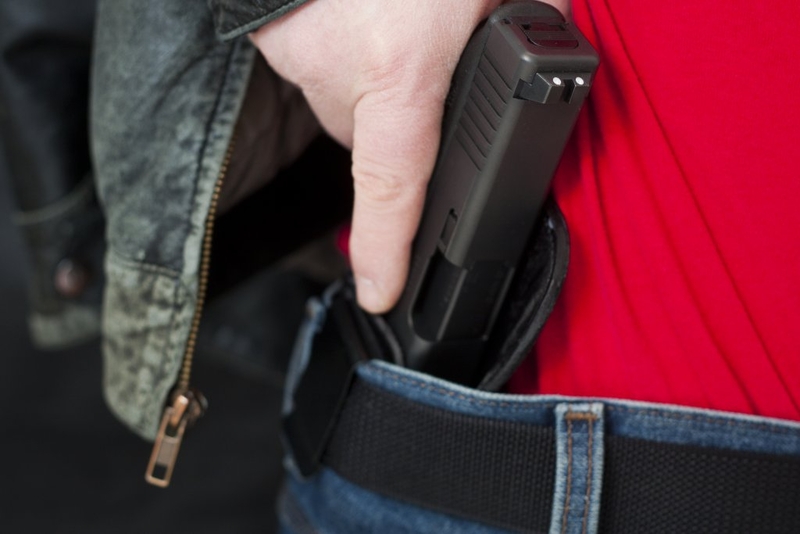
Description
Photo illustration by Getty Images.
Under new legislation proposed by Montana Sen. Tim Sheehy, veteran “qualified special operators” would be given the ability to conceal-carry firearms across state lines without a specific permit in the state, a privilege available to retired law enforcement officers since 2004.
A press release from Sheehy’s office says it would build on that framework by extending carry privileges to a “narrowly defined group” of military veterans.
“Our Special Operations Forces spend their careers protecting the American people with unmatched discipline, judgment, and professionalism,” Sheehy said in a press release. “This bill honors that reality by giving qualified special operators the same nationwide concealed carry privileges already afforded to retired law enforcement officers.”
Specifically, the bill would allow special operations veterans to concealed carry nationwide, with a requirement to have firearms qualification test and a federal Department of Justice course called, “Concealed Carry Use of Force in Society.”
Kevin Michalowski, a U.S. Navy veteran and a counselor with the U.S. Concealed Carry Association said he was in strong support of the legislation.
“I don’t see a downside for this this legislation because we’re talking about some of the most highly trained, most motivated, most effective people in the military, and they’ve gone through tons and tons of training, specifically about deadly force decision making,” Michalowski said in an interview.
The law currently allows “qualified” retired law enforcement officers to essentially have a nationwide concealed-carry permit. Michalowski said that in order to keep the nationwide permit, retired law enforcement officers have to recertify every year — it’s every five years for state concealed carry permits. He’s also in support of the legislation because moving a firearm across state lines without an ID card is a felony.
“This just continues to show that the these arbitrary boundaries that we call state lines, people shouldn’t be a criminal if they carry a gun from one state to the next,” Michalowski said.
He also urged anyone carrying a gun to get training around the weapon, including “deadly force decision making.”
The bill would also make the carry privilege contingent on, “honorable discharge (if applicable), continued status as a qualified special operator, sobriety, continued federal firearm eligibility, and current training.”
It adds the carry privilege ends “immediately” if any condition of the federal permit fails.
“Our elite warfighters never stop serving, and this bill ensures the law reflects the trust they’ve earned through a lifetime of sacrifice,” Sheehy said in a press release.
Helena, MT