Constitution, We the People parties no longer qualify as Oregon political parties
Aug 07, 2026 | 4:08 pm ET
Description
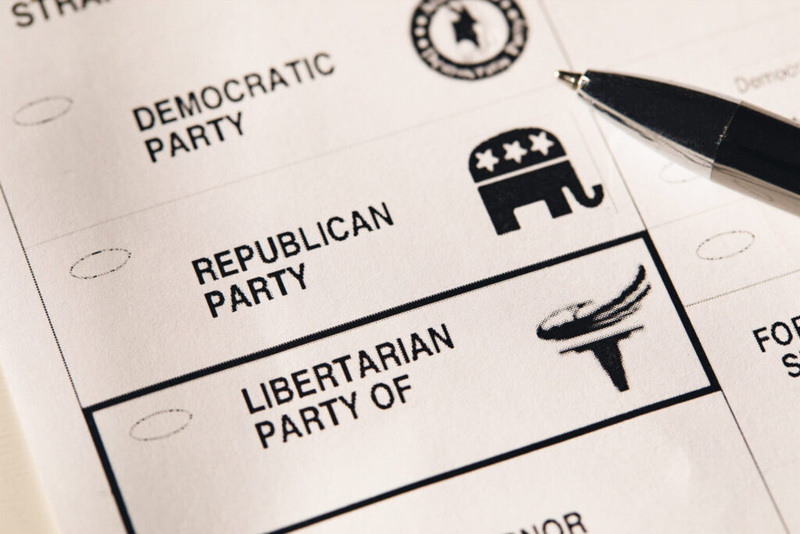
Oregon will have two fewer political parties eligible to nominate candidates. (Getty Images)
Two minor Oregon political parties no longer have enough members to qualify as parties that can nominate candidates, the Oregon Secretary of State’s Office announced Friday.
The right-leaning Constitution Party of Oregon and the We The People Party, created to ensure Health and Human Services Secretary Robert F. Kennedy Jr. could appear on ballots in 2024, both fell short of minimum requirements to maintain party status. That means neither party can nominate candidates for the November general election, though their voters can still participate in elections.
The state now has two major political parties — Democrats and Republicans — and six minor parties: the Independent Party of Oregon, Libertarian Party of Oregon, No Labels Party, Pacific Green Party, Progressive Party and Working Families Party. Nonaffiliated voters who choose not to register with any party are Oregon’s largest voting bloc, representing nearly 32% of the state’s more than 3 million registered voters.
To maintain minor party status, parties need to either have registered members equal to .25% of all registered voters — or at least 7,692 voters under current registration numbers — or have registered voters equal to .1% of all votes cast for governor and have nominees who secured at least 1% of all votes cast for its presidential or statewide candidate in the past four years.
As of Aug. 4, the We the People Party had 446 members and the Constitution Party had 3,736. The Progressive Party, which has 4,263 registered voters, also fails the first test, but its 2024 secretary of state nominee captured 3.6% of the vote.
Representatives from the We the People and Constitution parties did not respond to phone calls or emails Friday.
Minor party candidates haven’t won major races in Oregon, but they’ve been able to use their status on the ballot to extract concessions from leading candidates worried about losing voters. In 2022, for instance, Nathalie Paravicini, a naturopathic doctor nominated by both the Oregon Progressive Party and Pacific Green Party, withdrew from the race for governor after Democrat Tina Kotek agreed to pursue campaign finance limits. Kotek’s predecessor, Democrat Kate Brown, made a similar promise to the Independent Party of Oregon’s nominee in 2018.
While the left-leaning Working Families Party and centrist Independent Party often cross-nominate Democratic candidates for the Legislature and statewide races, the Constitution Party and Libertarian Party represent voters who tend to align more with Republicans than Democrats and often nominate their own candidates.
In the 2022 race for governor, the 4-percentage-point difference between Kotek and Republican Christine Drazan was smaller than the total number of votes for the Libertarian and Constitution Party nominees and a conservative former Democratic state senator who ran as a nonaffiliated candidate. The state’s closest gubernatorial election in decades, the 2010 matchup between Democrat John Kitzhaber and Republican Chris Dudley, also saw Kitzhaber win by a margin smaller than the total votes received by Libertarian and Constitution Party candidates.
Salem, OR