Rutgers dental school program brings free preventive care to classrooms
Aug 07, 2026 | 6:37 am ET

Description
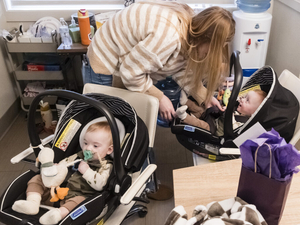
A young patient at a Rutgers dental clinic in Newark during the Give Kids a Smile event, one of several programs the school runs to promote oral health in low-income communities. (Photo courtesy of Rutgers School of Dental Medicine.)
It started in a classroom at Hillcrest Elementary School in Franklin Township with a team from Rutgers School of Dental Medicine armed with portable dental equipment, oral health props, and plenty of new toothbrushes.
Over multiple days starting in February, the Rutgers team visited all seven elementary schools in the Somerset County district, conducting cursory check-ups and applying dental sealants – plastic coatings that significantly reduce the chance of decay – to some 200 students who had signed up. About 2,000 kids took home oral-health goody bags.
The Rutgers program launched to provide these preventative oral health services for free to low-income schools throughout the state. The team is now planning visits in the fall to schools in Buena in Atlantic County, according to Dr. Mary Beth Giacona, a pediatric dentist and associate professor at Rutgers, who spearheaded the program and is eager to expand its reach.

“A lot of people put a lot of effort into making this happen and I think it’s going to be one of those true snowball situations where that first little gleam – that first little starter snowball, that took so much time and effort – then just kind of builds as it rolls along under its own momentum,” Giacona told the New Jersey Monitor.
Providing dental sealants in schools is nothing new, Giacona said, but she felt strongly that as New Jersey’s only dental school, Rutgers should be involved in this work. A 2012 report from the nonprofit Pew Research Center gave New Jersey an F for its lack of preventative pediatric dental programs, noting that between one-fourth and one-half of schools with the poorest students had access to sealants.
Sealants prevent decay by filling the crevices in the permanent molars where tartar and bacteria easily collect, Giacona said, areas that are the origin for 90% of all tooth decay. Children who are Black, Hispanic, or from low-income families are more likely to have decay, she added.
Giacona said failing to protect these permanent teeth, which emerge around age 6, is “almost a guarantee” that tooth decay will follow, “because the risk is so high for unsealed molars.”
New Jersey also has one of the nation’s lowest levels of fluoridated water, with roughly 16% of its water infused with the mineral that helps prevent tooth decay, versus the 72% average nationwide.
A 2025 report from the nonprofit New Jersey Health Care Quality Institute notes more than one-third of all third graders in New Jersey had untreated dental disease, compared to one-fifth nationwide, and on any given day 15% of Garden State kids this age had urgent oral health needs. The report was based on data collected by the Department of Health in 2023 as part of its work to create the state’s five-year oral health plan, following the 2019 hire of New Jersey’s first statewide dental director in decades.
Giacona said the state has supported the program and recently provided funding, a total of $55,000 in two grants it received early this year. She also credited Nashon Hornsby, the health department’s assistant commissioner of health promotion, as an “oral health champion” in Trenton.
Hornsby said the state is proud to support a program like this, which advances health equity and gives kids a chance to thrive on multiple levels.
“Oral health is not just about teeth; it’s about supporting overall health. When preventive oral health services are available in schools, families face fewer barriers to care, children receive services before small problems become bigger ones, and we can prevent dental disease before it starts, leading to improved health, lower absenteeism, and better learning outcomes,” Hornsby told the New Jersey Monitor by email.
The Rutgers dental school sealant program does not replace regular dental check-ups with X-rays that provide a fuller picture of potential decay, Giacona stressed. But she also knows that accessing care can be a challenge for busy families, even if they do have insurance.
Medicaid, the publicly funded insurance plan that covers 40% of New Jersey children, includes preventative dental benefits, but the Quality Institute report documented how it can be hard to find pediatric dentists who accept the plan.
In their classroom visits, the Rutgers team conducts a visual check of students’ teeth to fill out a “report card” that includes three checkboxes: no obvious problems, some obvious problems, and urgent needs. They also try to identify if the child has a dentist they see regularly and will try and connect them with services if needed, including at the college’s dental clinic in Newark, which welcomes Medicaid patients.
Students from the Crossroads School in Westfield, a Union County program for kids with autism, have been coming to the Rutgers clinic for several years, Giacona said. Her team is now working to include Crossroads in the school-based sealant program, along with the Douglas Development Disability Center, a similar school run by Rutgers in East Brunswick. Several charter schools in Newark are also interested in the sealant program, she said.
Rutgers dental students will also be visiting back-to-school events later this month in Buena and Franklin, Giacona said, to answer questions about the program and sign families up to participate. Securing the registration and consent forms from parents, and legal agreements with schools, takes significant time and effort, she said.
“That’s really the most labor-intensive part,” she said, adding, “We can’t just show up and pull kids out of classrooms.”
Giacona said the state funding will allow the team to expand the program further by purchasing a second portable dental chair, laptops, and other equipment. Rutgers covers the dentists’ salaries and some of the overhead and the team can bill Medicaid for students covered by the plan.
“I think the driving force behind those of us who want to do public health outreach, especially for the pediatric population, is that (tooth decay) is highly preventable, yet timing is everything,” Giacona said.
Trenton, NJ