Oregon universal health care board punts single-payer report over funding uncertainty
Aug 06, 2026 | 7:59 pm ET

Description
Voters say the cost of healthcare will be a major factor in how they vote in this year's midterm elections. (Getty Images)
A state board in charge of developing a universal health plan for all Oregonians will delay the release of its final report to lawmakers, citing uncertainty over how to pay for it.
The Universal Health Plan Governance Board voted unanimously Thursday morning to extend its deadline to Dec. 1 for its report that will describe the state’s transition to a single-payer system where a public corporation would offer what’s promised to be more generous coverage at a lower cost to qualifying Oregon residents. The report was originally scheduled for release Sept. 15.
Even with the extra time, none of the board’s nine members expressed confidence the report would answer the perplexing question of how to finance a state-based, single-payer health care system.
“What we have is not a comprehensive plan,” Dr. Bruce Goldberg, a former state health official and board member, said during the meeting. “It’s some sort of an interim report.”
With the board leaving financial issues unsettled, Oregon’s path to single-payer is murky even after voters enshrined the right to health care access in the state constitution in 2022. Uncertainty over finances helped sink efforts to enact single-payer health care in Vermont and California.
Legislative prospects remain murky
The situation also raises questions about whether Oregon is closer to single-payer following more than two years of work by the board and after a similar state task force produced its final report in 2022.
Cherryl Ramirez, a board member who serves as head of the Association of Oregon Community Mental Health Programs, served on the earlier task force. At Thursday’s meeting, she said the board doesn’t “seem much farther along” than the task force without a semblance of a finance and revenue plan.
However, Valdez Bravo, president of advocacy group Health Care for All Oregon, said in an interview he’s optimistic that financial issues can be resolved in time for a 2028 legislative referral that will ask voters to approve a single-payer system that would be fully implemented by 2032.
“Health care is a human right,” he said. “Oregonians affirmed that, and this plan will finally take us to a point where that’s a reality and not an aspiration.”
State Rep. Travis Nelson, a Portland Democrat and a chief co-sponsor of the bill that created the board, said lawmakers will make an effort to advance single-payer during next year’s six-month legislative session. But he said much depends on the board’s final product, and that might mean a delay on a legislative referral to voters.
“At the end of the day, I think the Legislature is going to have to get down to the final details,” said state Sen. Deb Patterson, a Salem Democrat who chairs the Senate Health Care Committee. “But they need to have a framework that does include some type of financial plan.”
Dr. Helen Bellanca, the board’s chair, said the board is in the process of proposing legislation that would provide additional funding for public engagement and a more detailed economic analysis.
Patterson said she wasn’t sure if that was possible considering challenges from federal funding cuts. But she said she would try if “that truly is what is needed.”
Funding model relies on higher taxes
As its original deadline approached, the board turned its attention during its July meetings to a potential revenue model for a single-payer health care system developed by a now-disbanded finance committee, the Legislative Revenue Office and multiple consultants.
The model is premised on the idea that there’s already enough money in Oregon’s fractured health care system and that redirecting it through one insurer could lower costs while improving care. The new plan would spend roughly $75.2 billion annually starting in 2032, according to estimates
The upside is the plan would offer “very robust benefits,” including dental, vision and fertility with little or any cost-sharing and predictable costs, Bellanca said during the board’s July 22 meeting
The model’s downsides, she said, include the “sticker shock” of taxes on individuals and businesses that would be needed to fill the estimated $30 billion to $35.5 billion funding gap not covered by federal and state funds. The model presented to the board called for slightly more than half of the funding gap to be filled with an employer payroll tax.
Most businesses, she said, would pay less in taxes under the model than they now pay to insure their employees and would be relieved of administering health benefits. The accompanying personal income tax would be progressive, taxing wealthier households at higher rates capped at about 14% of their income.
But members of the board expressed misgivings about having to sell a complicated tax structure to the public and how the 14% income tax figure could be misconstrued by opponents. Bellanca noted that it ran counter to recommendations from Gov. Tina Kotek’s business advisory group that called for lowering taxes.
“We don’t have the weapons to fight the 30-second sound bite,” said Chunhuei Chi, Oregon State University health care finance scholar and board member. He said the board didn’t have adequate public input, pointing out that the state spent years getting feedback to develop the Oregon Health Plan, the state’s Medicaid program.
Goldberg, a former state health official and board member, said it left too many questions unanswered and recommended the board leave out a revenue strategy in its report to lawmakers.
“My big question is, does our plan save money or not?” he said. “Is it going to cost people more or less? And I don’t know that we have a clear statement about that.”
Bellanca said that she didn’t think anyone on the board considered its work to be “any way near a final plan.”
Questions remain about single-payer cost savings
A key unanswered question for the board is about potential savings from moving to a single-payer system.
Research broadly shows that single-payer has fewer administrative costs from standardized billing, contracting and patient record-keeping. The most recent figures presented to the board show that a single-payer plan in Oregon would have a 3% administrative cost.
But Dr. John Santa, a single-payer advocate who served on the board’s finance committee, said the model likely significantly underestimates potential savings. He pointed out that Harvard economist William Hsiao told the board that administrative savings could be as high as 10%.
However, Goldberg questioned the 3% figure at the board’s July 22 meeting, saying it wasn’t supported by a business plan.
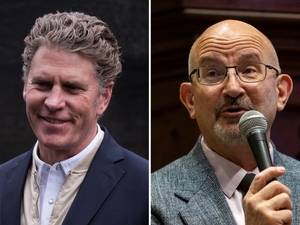
Jeff Gudman, an investor and former candidate for state treasurer, said there are bigger problems with the board’s work so far. He was a member of the board’s finance committee who signed on to a minority report that said the model overstated revenues while understanding expenses, among other concerns.
He also noted that what the new universal health plan is expected to spend in a year is significantly higher than the roughly $19 billion that is currently budgeted for one year of the state’s General Fund.
“That is a non-trivial matter,” he said.
“The governing board doesn’t have any good choices. They only have the least worst choice,” he said. That choice, he said, is asking lawmakers for money to continue its work.
Salem, OR