Farm bill proposal fails in US Senate ag committee over SNAP error rate issue
Aug 06, 2026 | 6:00 pm ET
Description
The Senate Agriculture Committee clashed over SNAP error rate policy, and failed to advance updated farm bill legislation. (Photo by Cami Koons/Iowa Capital Dispatch)
Farm bill progress stalled Thursday as the U.S. Senate Agriculture Committee failed to move forward its version of the omnibus legislation due to a conflict over when states will shoulder a share of federal nutrition assistance costs.
While the bill included bipartisan language from more than 100 bills, Democrats were unwilling to budge on their demand for a two-year extension to the One Big Beautiful Bill Act policy that requires states to pay for part of their Supplemental Nutrition Assistance Program if they have SNAP payment error rates in excess of 6%.
Chairman John Boozman amended the bill to extend the deadline one year, as a compromise, along with additional funding for an emergency food assistance program.
In his opening remarks, the Republican from Arkansas said the amendments made to the draft are the “best and final offer” to address Democrats’ concerns with SNAP.
“Should this legislation be defeated today, current law will remain in effect, and states who poorly administer SNAP programs will begin to pay for the portion of the benefit cost next year,” Boozman said in his opening remarks.
Republicans were without a majority in the room due to the absence of Sen. Mitch McConnell of Kentucky, who has been hospitalized and in rehabilitation since June. Sen. Tommy Tuberville, an Alabama Republican, was also not present during the final vote on the bill, allowing Democrats to win the vote against the bill by one vote.
Farm groups expressed disappointment in another delay to the farm bill, which has not been reauthorized since 2018, especially since the Senate version included a provision for year-round, nationwide E15 sought by ethanol and corn producers.
Other groups celebrated that policies like the Save Our Bacon Act, which would block individual state rules on the growing conditions of agricultural products, were not advanced.
Sen. Chuck Grassley, R-Iowa, said in the seven farm bills that he has worked on, “this is the first one I can recall that we’re not doing on a bipartisan basis.”
Grassley spoke in response to an amendment proposed by Sen. Peter Welch, a Vermont Democrat, to mandate an audit on farming operations that have multiple farm managers or people eligible to receive subsidy payments. He said it was a bill he had worked on with Welch, but since “this has turned out to be a partisan markup, I can’t vote for an amendment that I agree with you on.”
“We can’t have a partisan deal on the floor of the United States Senate, or we don’t get anything done for the family farmers,” Grassley said.
SNAP error rate extension
SNAP error rates are calculated with a series of state and federal reviews to measure the accuracy of states in determining who is eligible for SNAP and how much they receive.
Rates for 2025 showed nine states were below the 6% threshold set by the 2025 tax and spending law.
Depending on how high their error rate is, states will be saddled with 5%, 10% or 15% of SNAP benefits costs in their state starting Oct. 2027, unless the state has an error rate at or above 13.34%, making it eligible for an extension.
Democrats said expanding the two-year extension to all states, rather than just those with the highest error rates, would give other states the same flexibility.
Senate Agriculture Committee ranking member Amy Klobuchar said as the law currently stands, mid-range error rate states like her home of Minnesota would have to pay millions to continue SNAP benefits in the state, while states with higher error rates “get off scot-free” for two years.
GOP cuts in federal food aid scramble passage of long-delayed farm bill
“It’s not just about the time, it’s about the equal footing,” Klobuchar said in her opening remarks. “And while again, I appreciate that one year has been included in this bill … it is a Band-aid because one year from now, again, you’re going to have the same thing play out.”
The error rate issue dominated conversation, even on amendments that proposed other changes.
Sen. Michael Bennet, a Colorado Democrat, said exemptions for states with the highest error rates was “completely irrational” as it means when certain states lower their error rates, they are now on the hook to pay, whereas they otherwise would have been exempt for two years.
“If you are interested in, and I’m sure everybody here is, in creating a set of incentives that actually will lead to better results, that will allow us to attack fraud and abuse and waste in these systems, that is not the system that we have today,” Bennet said.
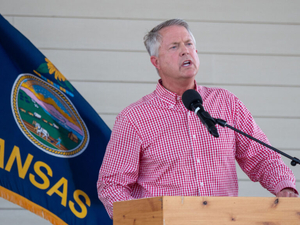
Sen. Roger Marshall, R-Kansas, questioned why his colleagues across the aisle felt states would be incapable of lowering their error rates in the offered time span.
“Why is it a misconception that we don’t think that these states can get their error rates down in the next year and a half?” Marshall said. “Is that just impossible to expect that the states can become more competent?”
Senate Majority Leader John Thune of South Dakota said Boozman’s amendment for a one-year delay would give states “a chance to get in compliance.”
“We’ve got to get a bill, if we want to pass a farm bill, that’s something that can pass the House and be signed into law by the president,” Thune said. “So the negotiations around this were with that in mind.”
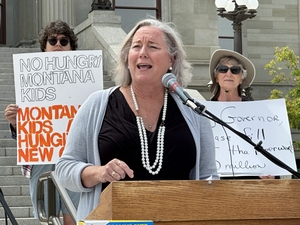
Sharon Parrott, president of the Center on Budget and Policy Priorities, said in a statement the Senate’s farm bill proposal would have been a “step in the right direction” but ultimately “doesn’t do enough for people losing the help they need to afford groceries.”
Parrott said states are adding access barriers to SNAP, and thus enrolling fewer people, in an effort to lower their error rates that will leave them on the hook for millions in the upcoming years.
“When Congress returns this fall, policymakers must work on a bipartisan basis to advance legislation that addresses the unfolding crisis without making deeper cuts to food assistance in later years,” Parrott said.
Other farm bill considerations
While SNAP policy has dominated farm bill debate in both the House and the Senate, the bill also stipulates the policies that farmers rely on for things like indemnity payments, or conservation work, marketing assistance, disaster payments and support for rural development
Senate farm bill draft focuses on farm economy, keeps ‘Big Beautiful’ SNAP cuts
Boozman said he wanted to “put more farm into the farm bill” with the Agricultural Act of 2026, or as he called it the Farm Bill 2.0.
While the initial draft of the bill omitted year-round, nationwide access to E15, a fuel blend with 15% of ethanol, an updated version included the provision, much to the support of committee members across the aisle.
Farm states and agriculture commodity groups have pushed for many years for year round, nationwide E15 legislation, since the added ethanol demand would boost corn demand.
National Corn Growers Association President Jed Bower said Thursday the association was “extremely disappointed” the Senate committee was unable to pass the bill that “was particularly important to corn growers.”
“We implore senators to approve a bipartisan farm bill that extends consumer access to E15 and serves the interests of America’s farmers,” Bower said in a statement. “We are running out of time in this Congress and urge action as quickly as possible.”
Klobuchar said that while it would be preferable to pass E15 as part of a farm bill, she would push for a standalone vote to get the policy passed in the Senate.
Senators debated other amendments to the bill, including additional support for specialty crop farmers, reform to disaster grants and conservation program expansions.
Senators did not debate language that would block laws like California’s Proposition 12, which stipulates certain proteins sold in the state must come from animals raised under specific animal confinement regulations. Proponents of the Save Our Bacon Act say it protects interstate commerce and shields farmers from costly upgrades to comply with the state rules.
Many animal rights and environmental groups opposed the language and celebrated that senators kept it out of the bill discussion.
“A Farm Bill that fails to protect farmers from corporate consolidation, invest in real climate solutions and ensure healthy, affordable food for all is not a solution – it’s just more of the same,” Food & Water Watch Food Policy Director Rebecca Wolf said in a statement. “Senate Democrats were smart to reject this deeply flawed Republican bill. They must continue to do so in September.”
The committee passed an amendment with a bipartisan vote of 17-6 to implement Mandatory Country of Origin Labeling on beef.
National Farmers Union President Rob Larew said in a statement the adoption of the amendment was one of the “encouraging signs of bipartisanship” in the markup.
“Family farmers can’t afford more delay, so it’s disappointing that the Senate Agriculture Committee did not come to an agreement on the farm bill,” Larew said.
Boozman said struggling farmers are being held “hostage” by the refusal to reach a compromise on the bill.
“This is really not about SNAP recipients, this is about allowing states to continue making error rates that are unimaginable,” Boozman said in closing. “They’re off the chart, and there’s no reason that we can’t help them, get them straight, in a year.”
Boozman recessed the meeting, leaving it open for the committee to reconvene.
Klobuchar, in a statement following the markup, said she was “committed to continuing to work on the bill.”
American Farm Bureau Federation President Zippy Duvall said the “stakes are too high” for farmers to allow another year without an updated farm bill.
“We urge senators to return to the table, work across party lines, and advance a farm bill out of committee in order to continue the negotiations toward a bipartisan farm bill that provides the long-term support and certainty our farmers, ranchers and rural communities need,” Duvall said.
Des Moines, IA