For more than 100K Ohio Medicaid recipients, worries build about the future of home care
Aug 06, 2026 | 4:00 am ET
Description
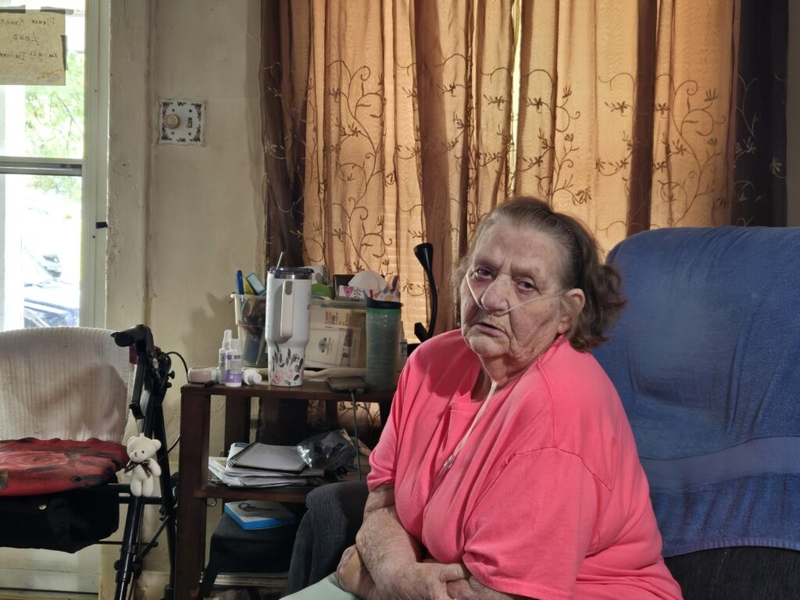
Dorothy Valentine, 80, of Dayton. (Photo by Marty Schladen, Ohio Capital Journal.)
DAYTON — Few nonresidents of nursing homes know more about what they’re like than Dorothy Valentine. For decades, she worked in them, caring for “her” residents.
Despite the hard work, weird hours, and low pay, it was her favorite job, she said.
“I loved my residents,” Valentine said. “I always spoiled them. I almost got fired for spoiling my residents. I love people.”
Valentine, 80, spoke last week surrounded by medicines and medical devices in the living room of her modest duplex just west of downtown Dayton.
She said that as much as she loved caring for people in nursing homes in Ohio and Texas, she dreads being in one herself because she knows how the quality of care can slip.
So, suffering from several serious infirmities, Valentine hopes to spend the rest of her days at home, with a son caring for her full-time and receiving other services as needed.
But, along with the rest of the nearly 140,000 Ohioans getting Medicaid-supported community care, she faces uncertainty.
Donald Trump’s One Big Beautiful Bill Act last year cut nearly $1 trillion from Medicaid over 10 years.
The most drastic provisions take effect Jan. 1. Before they do, Republican officials are highlighting what they say is rampant fraud in Medicaid-supported home care programs.
So, forced to find savings, those programs might seem a likely place for state Medicaid officials to start, which is what is worrying residents of their own homes like Valentine.
Polling shows that 62% of Americans think Medicare, the federal retirement program, pays for long-term nursing-home care, but it doesn’t. Medicaid does.
That’s why millions of American families with loved ones in the nursing home are forced to spend down their wealth until they qualify for Medicaid and then the federal-state health program foots the bill.
Care for seniors is sucking wealth out of families — especially in Ohio
The University of Pennsylvania’s Leonard Davis Institute of Health Economics in July reported that it is mandatory for states receiving Medicaid dollars to finance nursing-home care, but not in-home care.
Home-based care has become increasingly popular in recent decades. In 2022 it represented 65% of all Medicaid expenditures on long-term care, the U.S. Centers for Medicare and Medicaid Services reported.
“Either more people are going to go into nursing homes, which may not be consistent with their preferences, or people who stay at home may have to get their needs met by their family members or close friends who don’t get paid to do it,” the University of Pennsylvania quoted Rachel M. Werner, executive director of its Institute for Health Economics, as saying.
In addition to not being preferred by some seniors, nursing-home care is significantly more expensive than home-based care.
A Place for Mom, a care-referral company based in New York, estimates that a semi-private room in a nursing home is 48% more expensive than the median cost of full-time, home-based care.
Even if it is more expensive and she doesn’t want to be there, nursing homes might be where people like Valentine are headed.
“I don’t want to be in no nursing home because of the way they treat you,” she said. “They don’t change you. I used to change my patients every two hours whether they needed it or not. I always cleaned them up.”
As it is now, her 63-year-old son Clifford lives with her and provides around-the-clock care. His mother’s respiratory and heart problems are acute enough that even trips to the store have to be kept brief as possible because he doesn’t want his mother to be alone, he said.
Ohio provides support through Medicaid waivers for family members who care for their loved ones. But Clifford hasn’t applied for it out of fear that household income will exceed limits for other benefits such as his mother’s Social Security or federal food assistance.
The Roosevelt Institute in April published a report saying that such unpaid caregivers provided $600 billion worth of services in 2021 and stunted their own economic prospects in the process.
Clifford Valentine said he nursed his wife through a terminal illness before caring for his mother.
“It’s kind of rough, but I’ve always done it,” he said.
Feds, Ohio Republicans focus on individual cases of Medicaid fraud, but what about corporations?
Some Republican political leaders say Medicaid programs for home care are the object of rampant fraud. In June, acting U.S. Attorney General Todd Blanche and other cabinet officials came to Ohio to highlight what they said was massive fraud in Medicaid generally.
And in a May radio interview, Ohio Auditor and state AG nominee Keith Faber said massive Medicaid home-care fraud isn’t being detected because “grandma’s never going to rat out” relatives who are being paid to care for her but are neglecting her instead. His campaign didn’t respond when asked to document an instance in which that actually happened.
With all the politics around the issue, people receiving and providing Medicaid support for home-based care are keeping their heads down.
In Dorothy Valentine’s case, she has Cityblock coordinating care on behalf of Molina Healthcare, which operates managed-care programs for Medicaid patients and those who, like Valentine, are eligible for both Medicaid and Medicare.
Cityblock is paid a flat, per-member fee to coordinate services with an eye toward limiting costs through things like keeping them healthy enough to avoid hospital stays. The more savings it creates, the more money it makes.
Jenny Edelston, a spokeswoman, said policymakers should think hard about what might be lost by cutting funding for such programs. They help keep people out of hospitals and nursing homes, she said.
“Without particular attention to the impact of cuts on high-value (home-and community-based) health services, reduced funding can lead to short term pressure on Medicaid (managed-care organizations) — which may in turn cause (the care organizations) to pull back on investing in partnerships that leverage (home-and-community-based services) to avoid acute care down the line,” Edelston said in an email.
For Valentine, it’s a question of where she’ll spend her remaining days.
“This is where I want to be,” she said. “If it wasn’t for Cityblock, I don’t know what I’d do.”
Columbus, OH